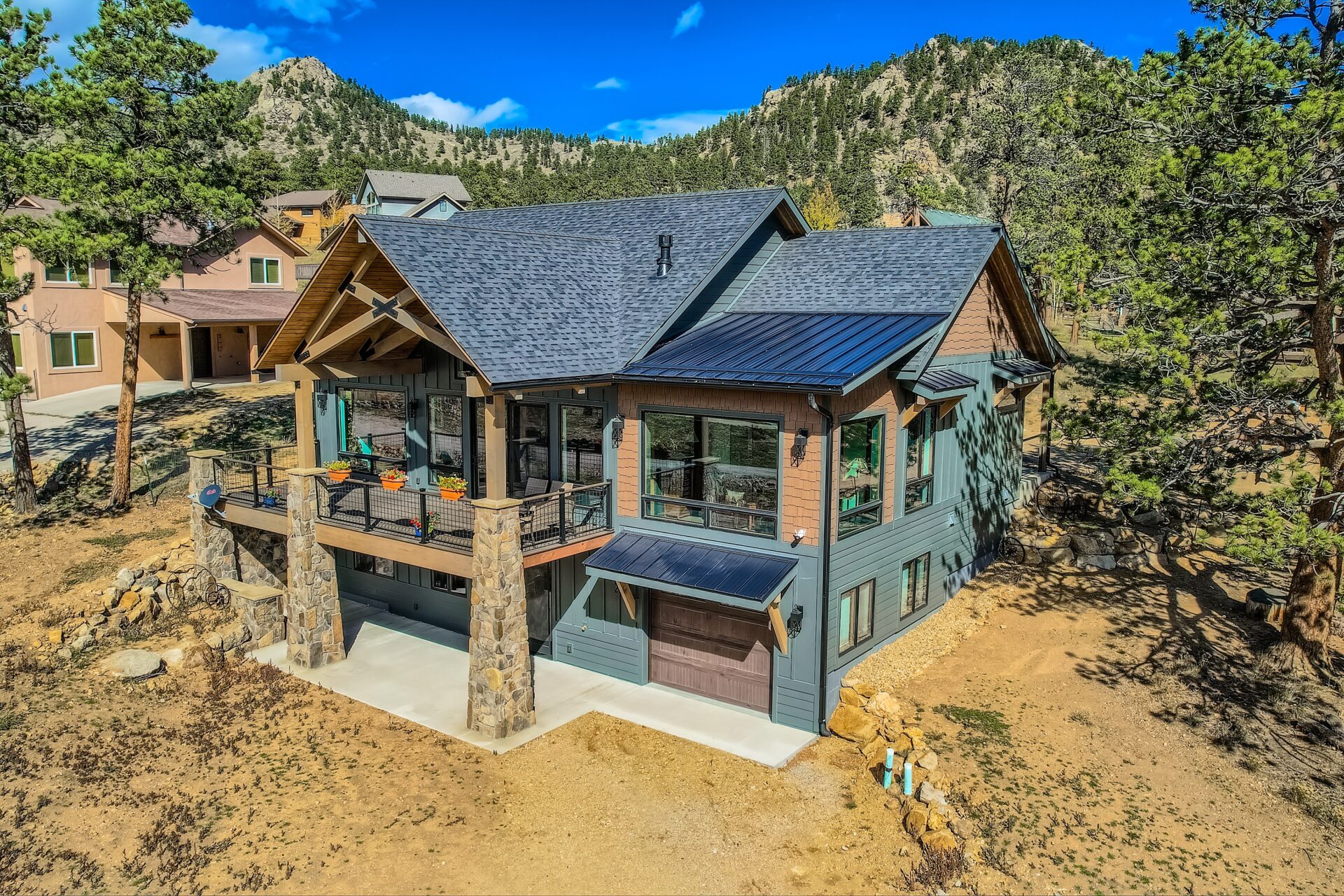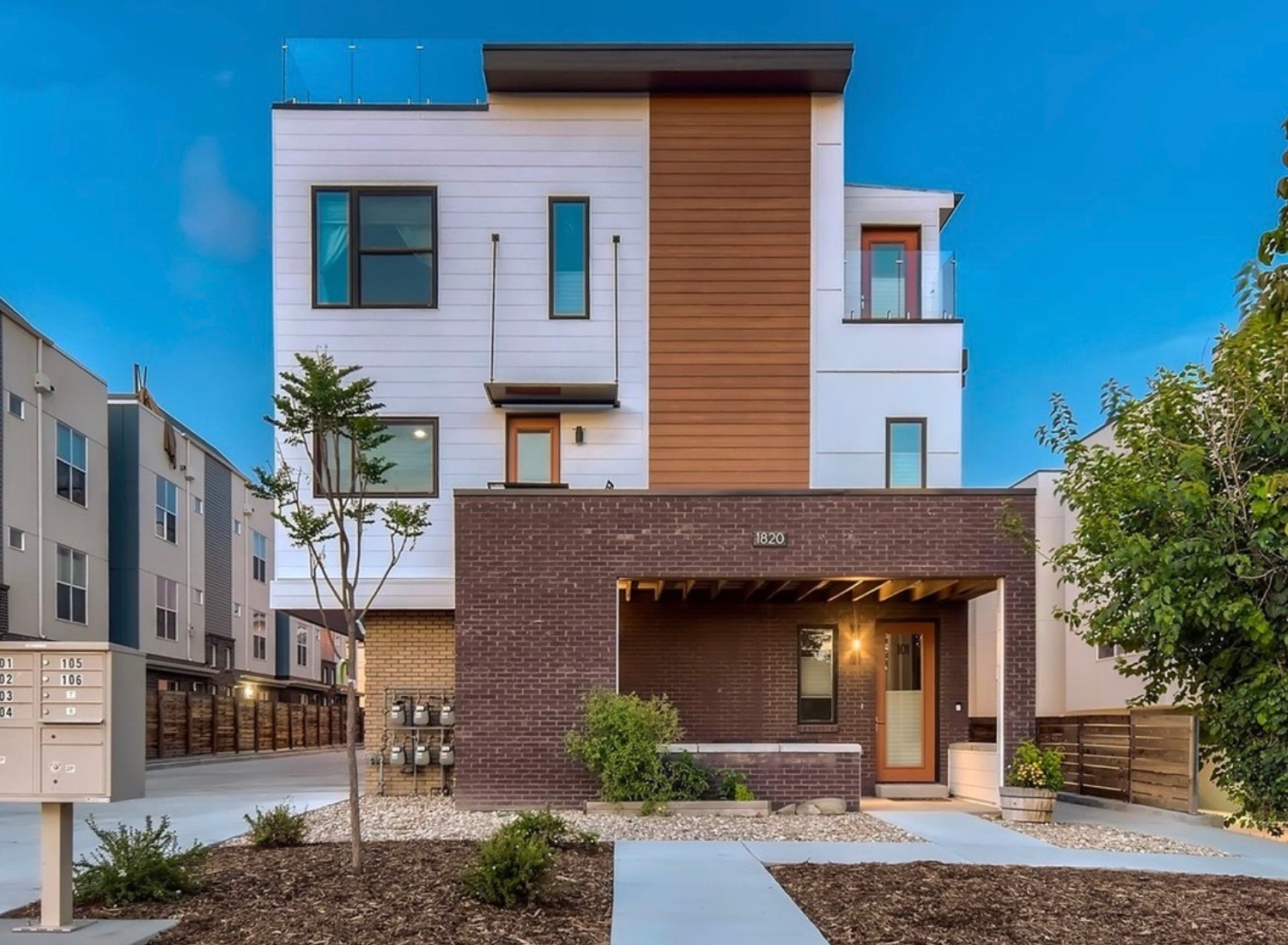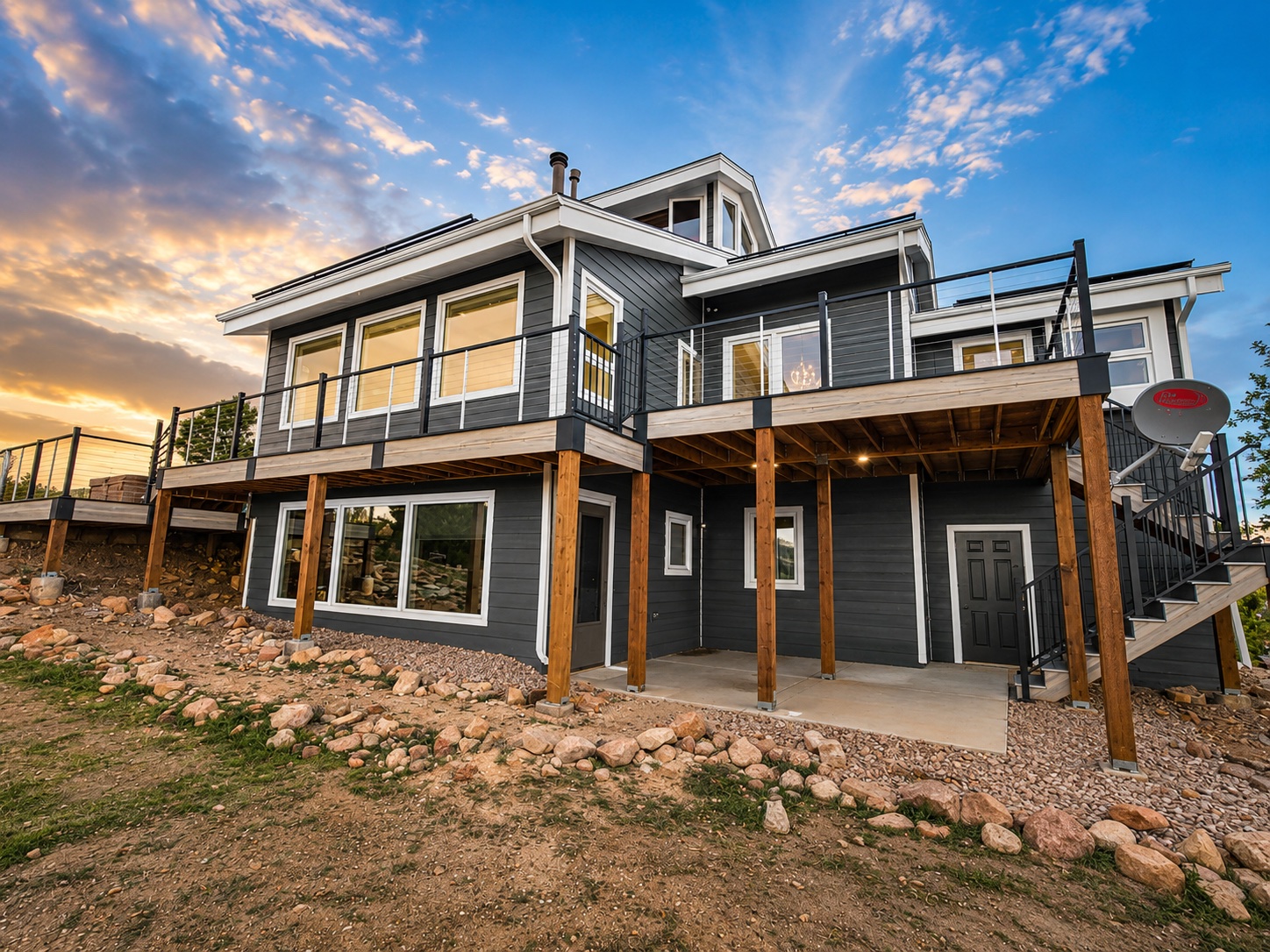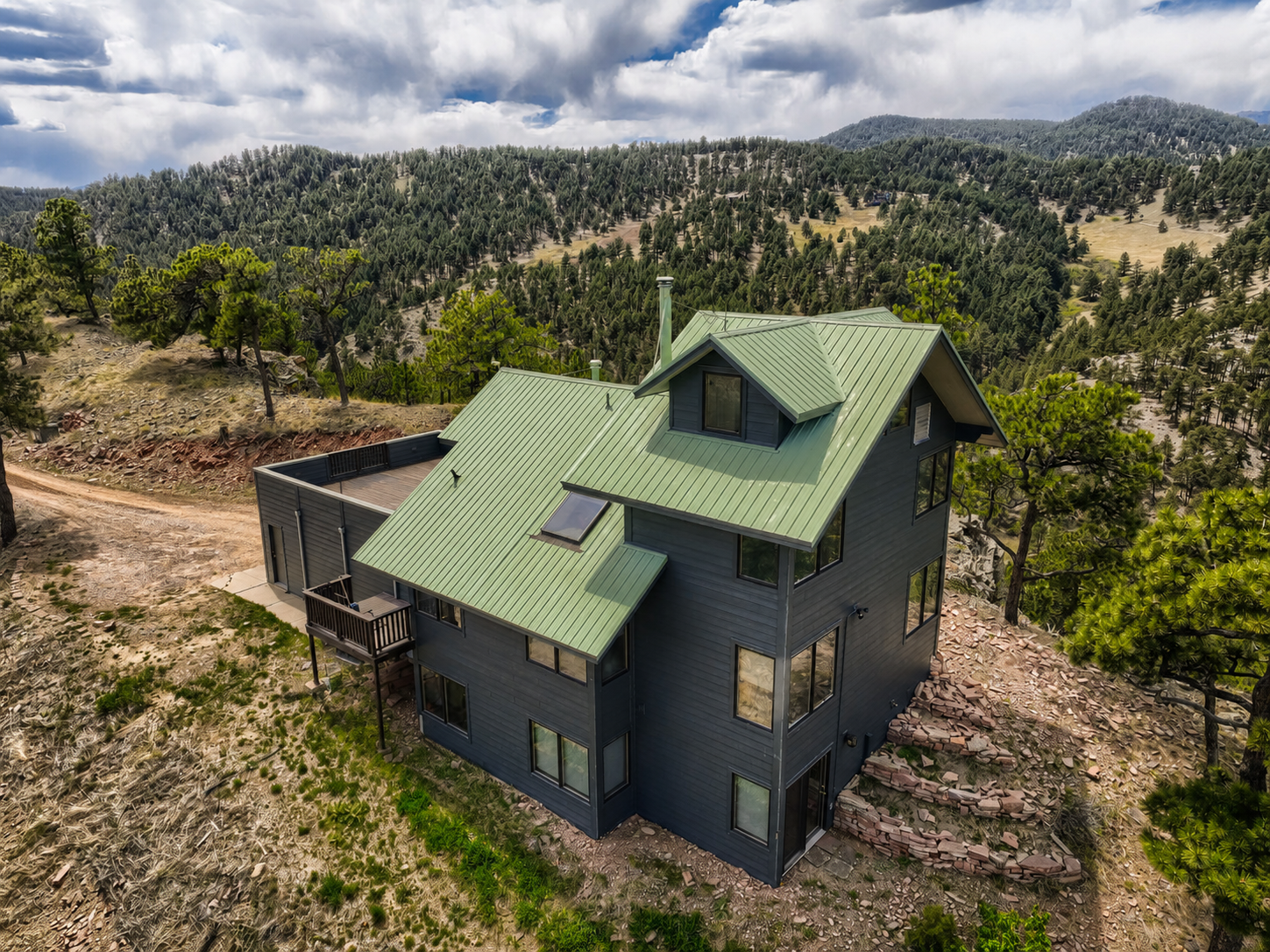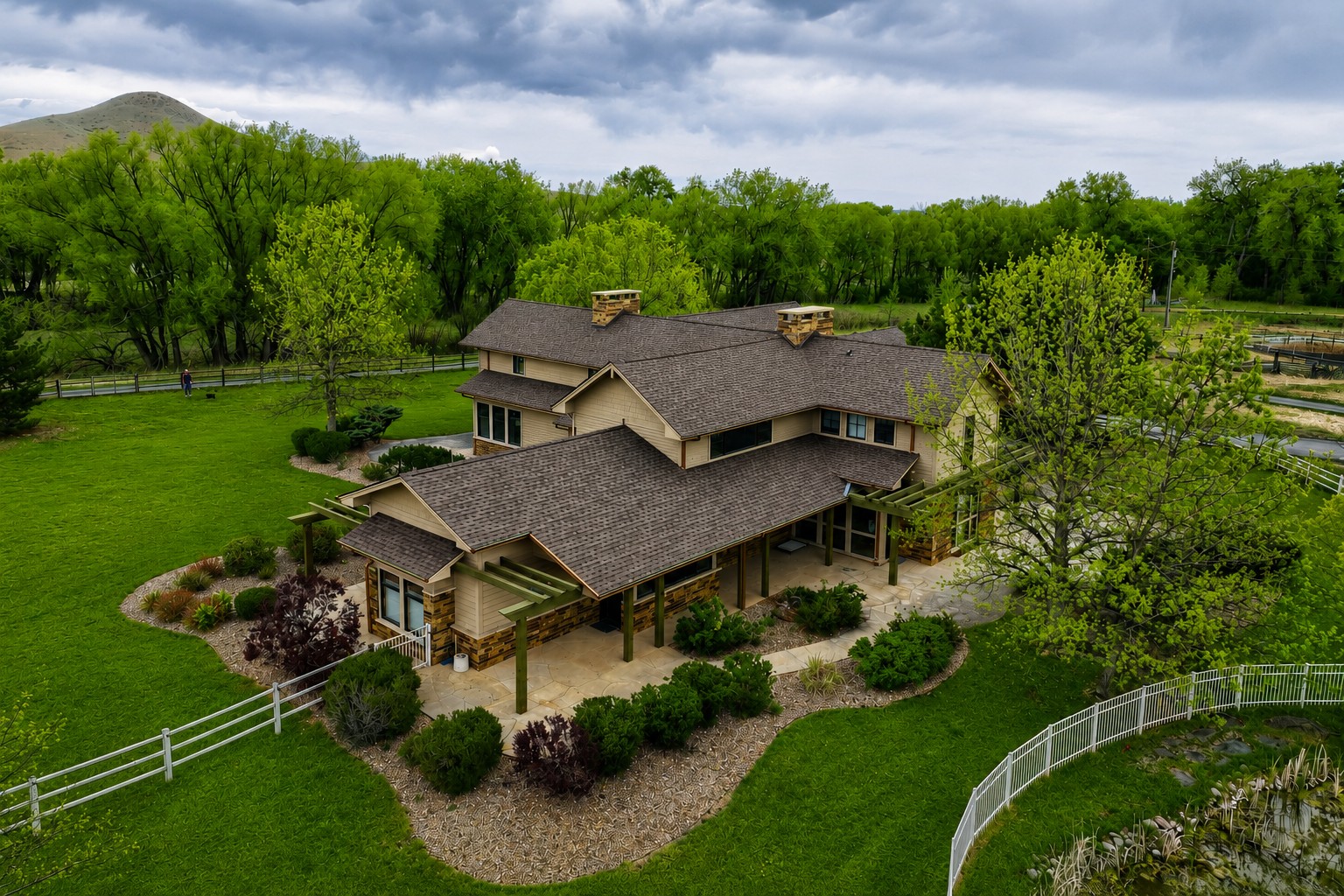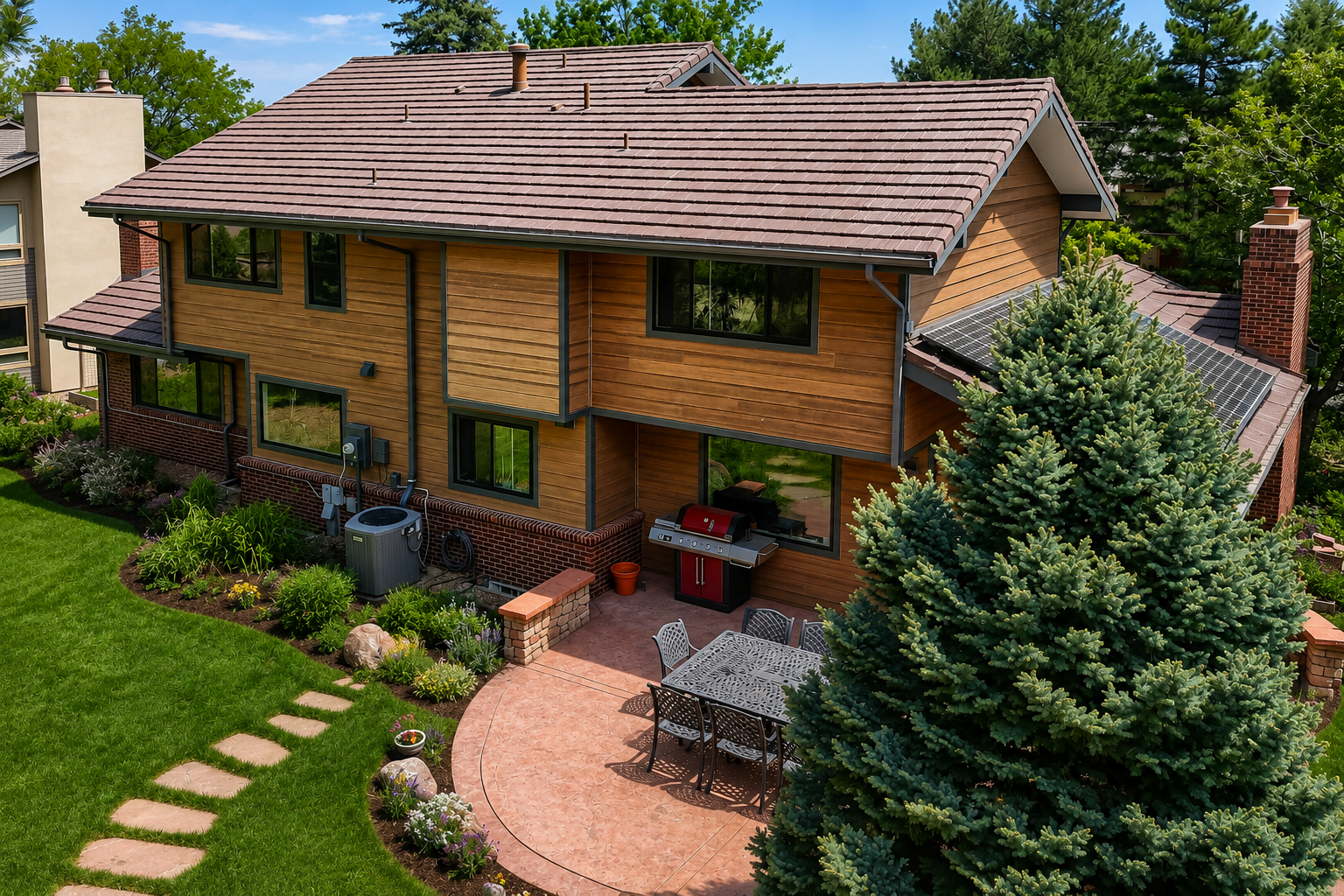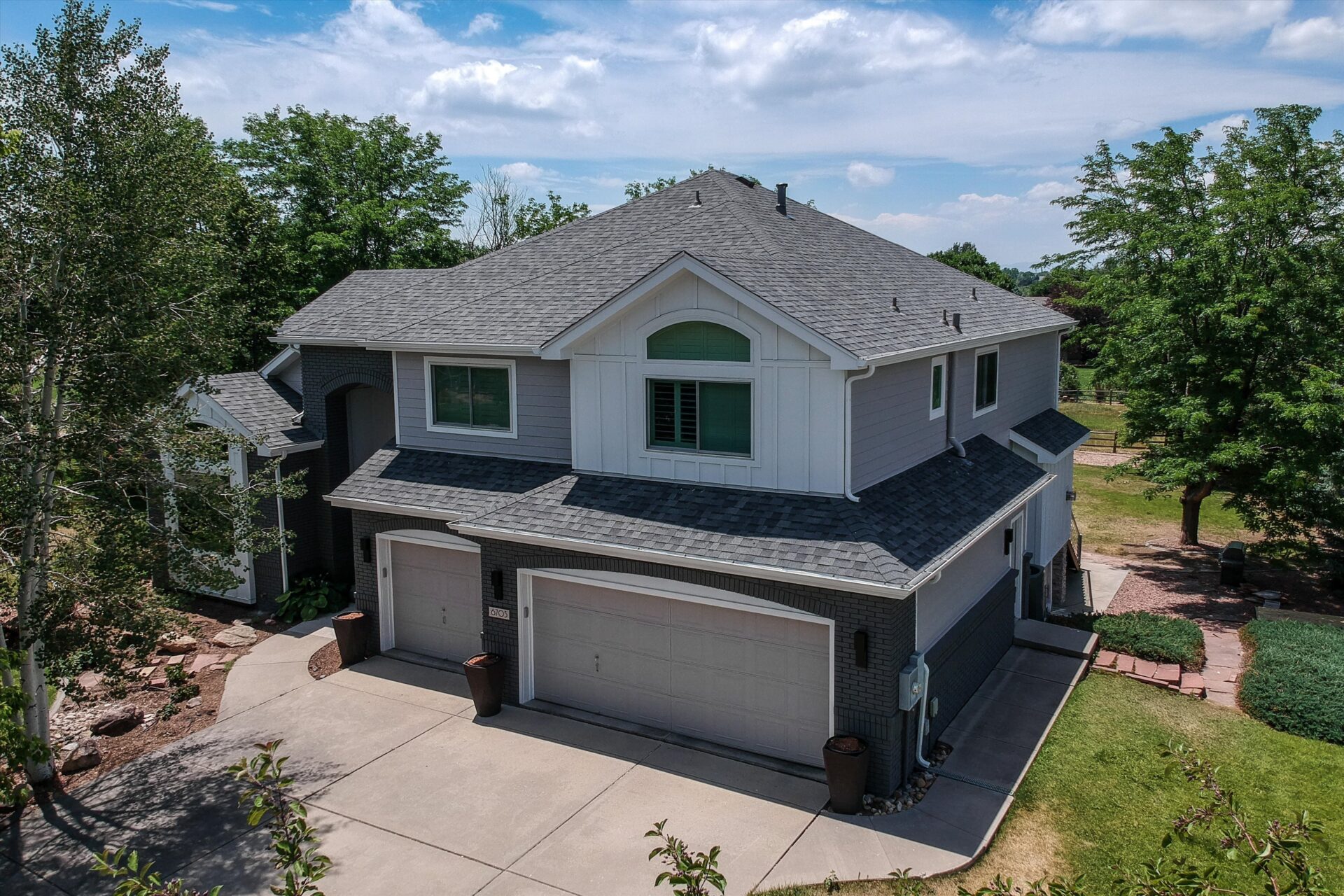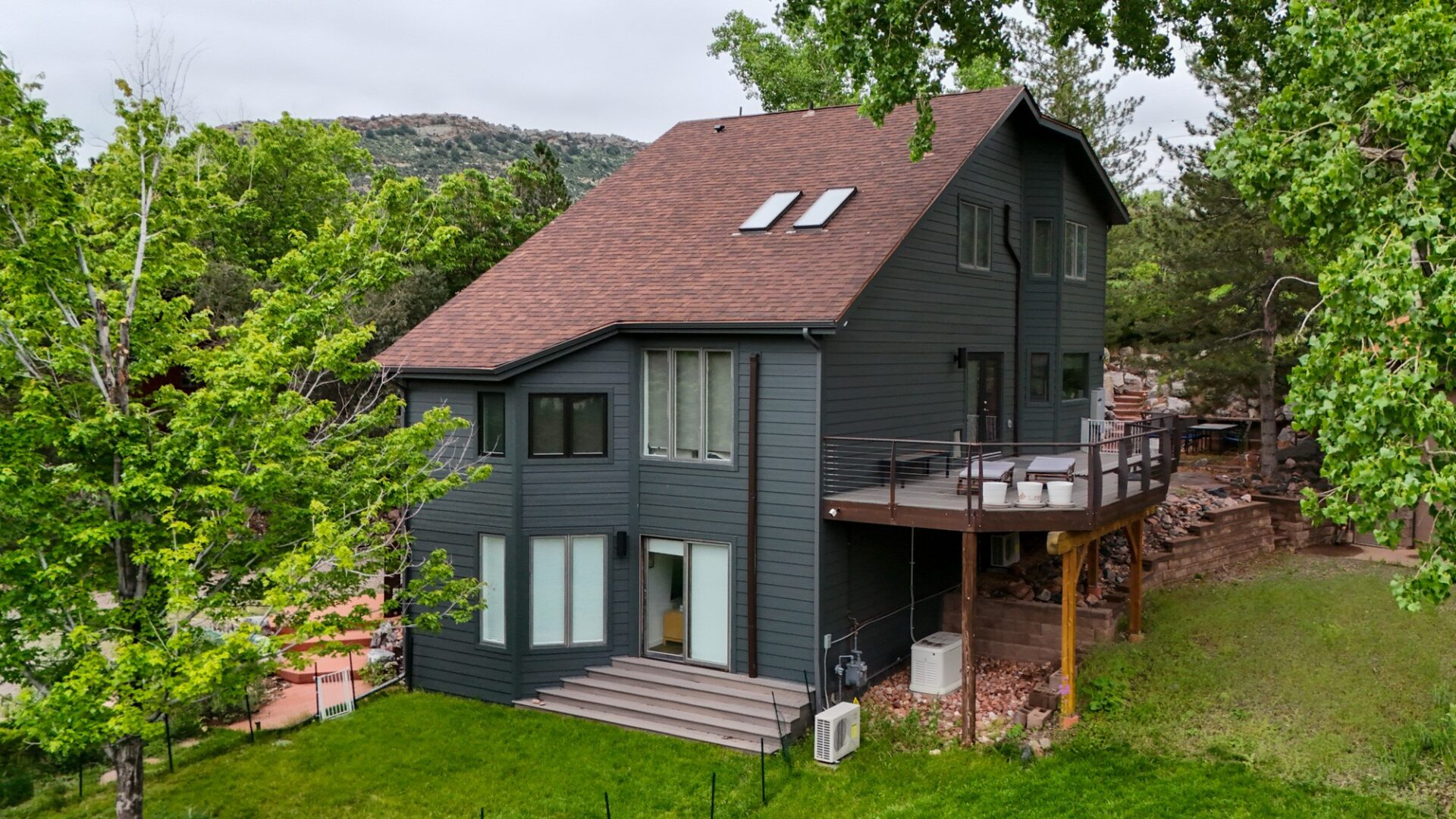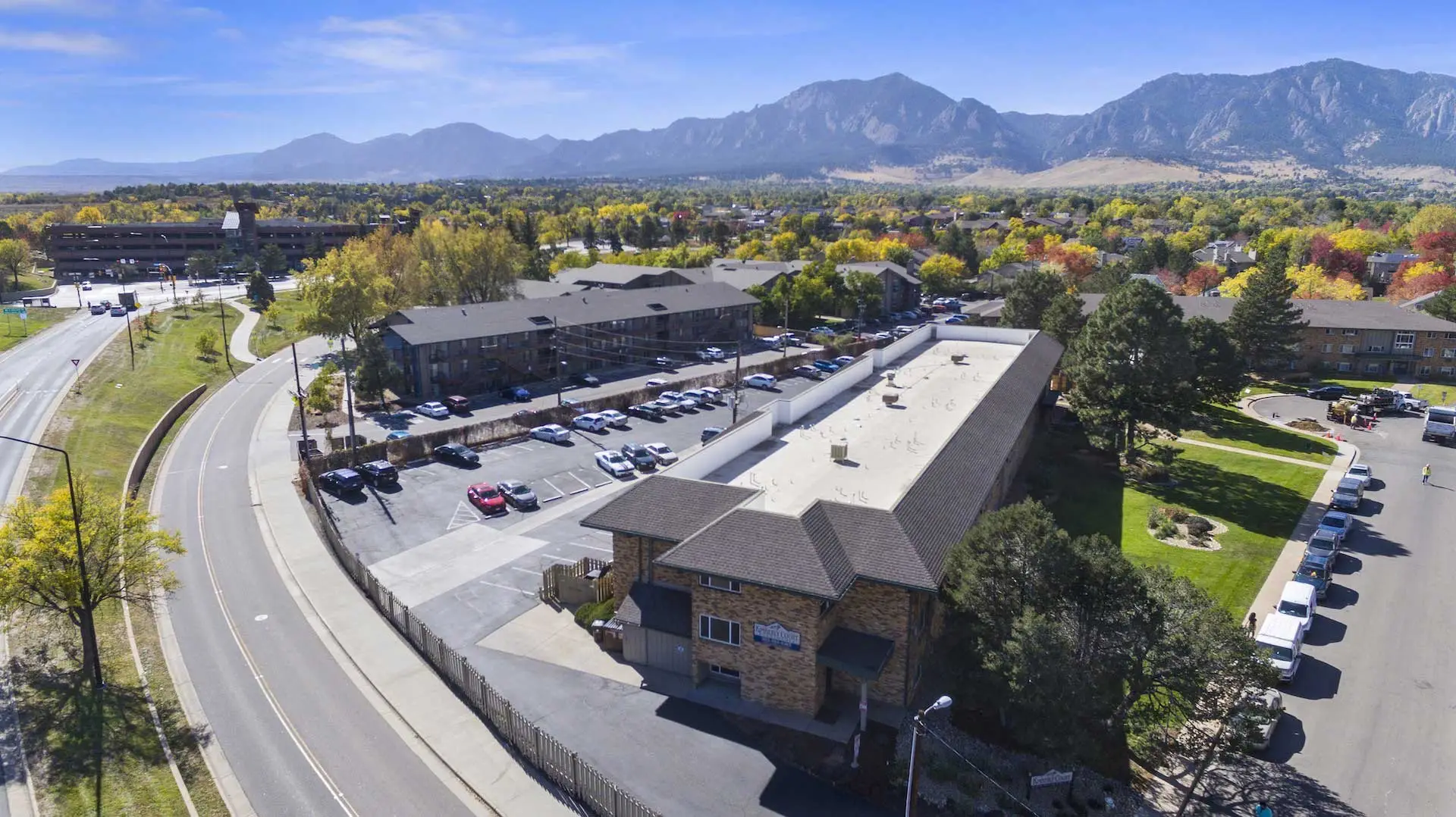
Houses with black siding, built for Colorado.
Bold, modern, and made to last through Front Range hail, snow, and sun. We install two ways to go black — James Hardie Midnight Black fiber cement and Vesta black steel. Never vinyl.
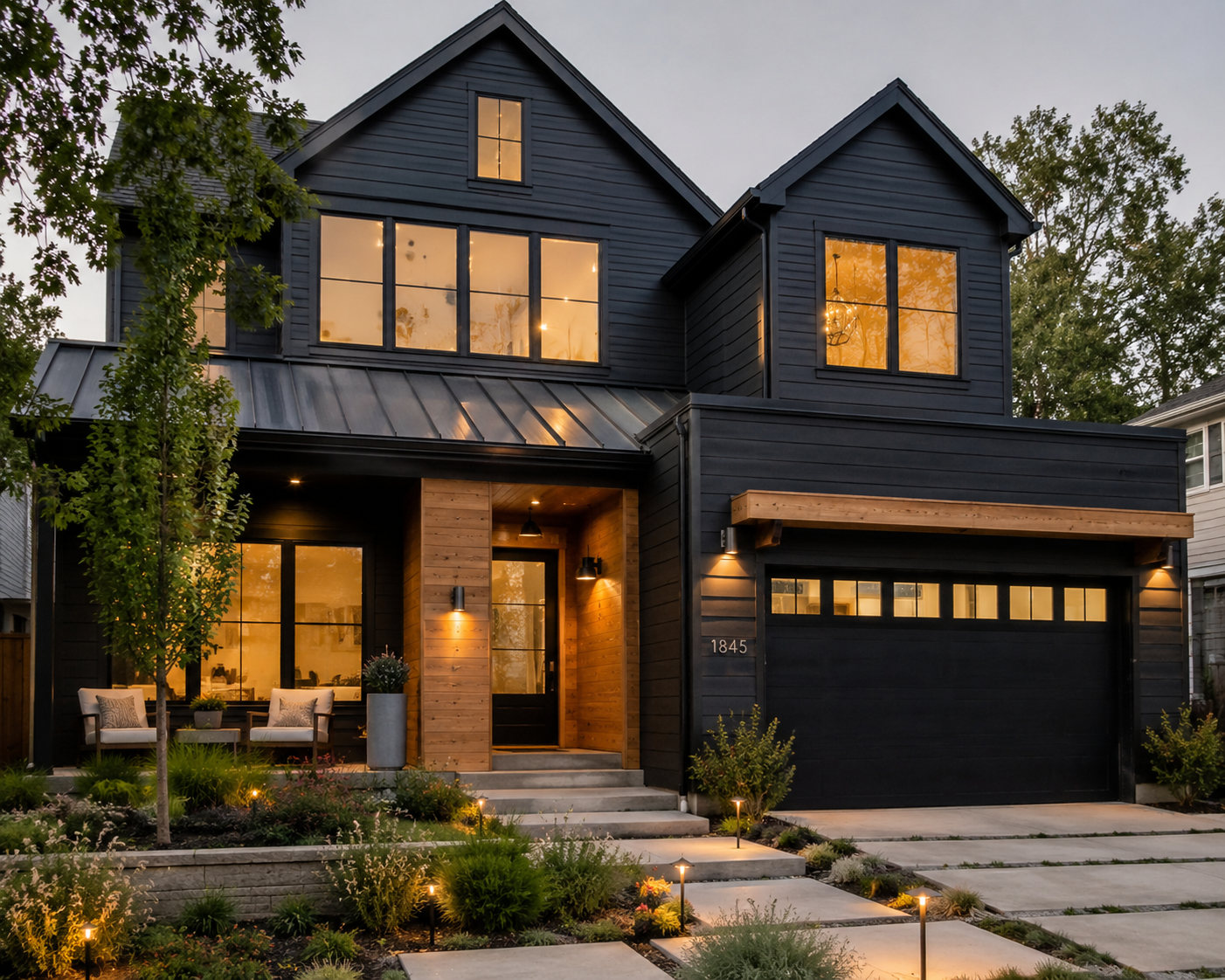
Vesta black steel siding
Fiber cement & steel — we don’t install vinyl
Serving Northern Colorado & the Front Range
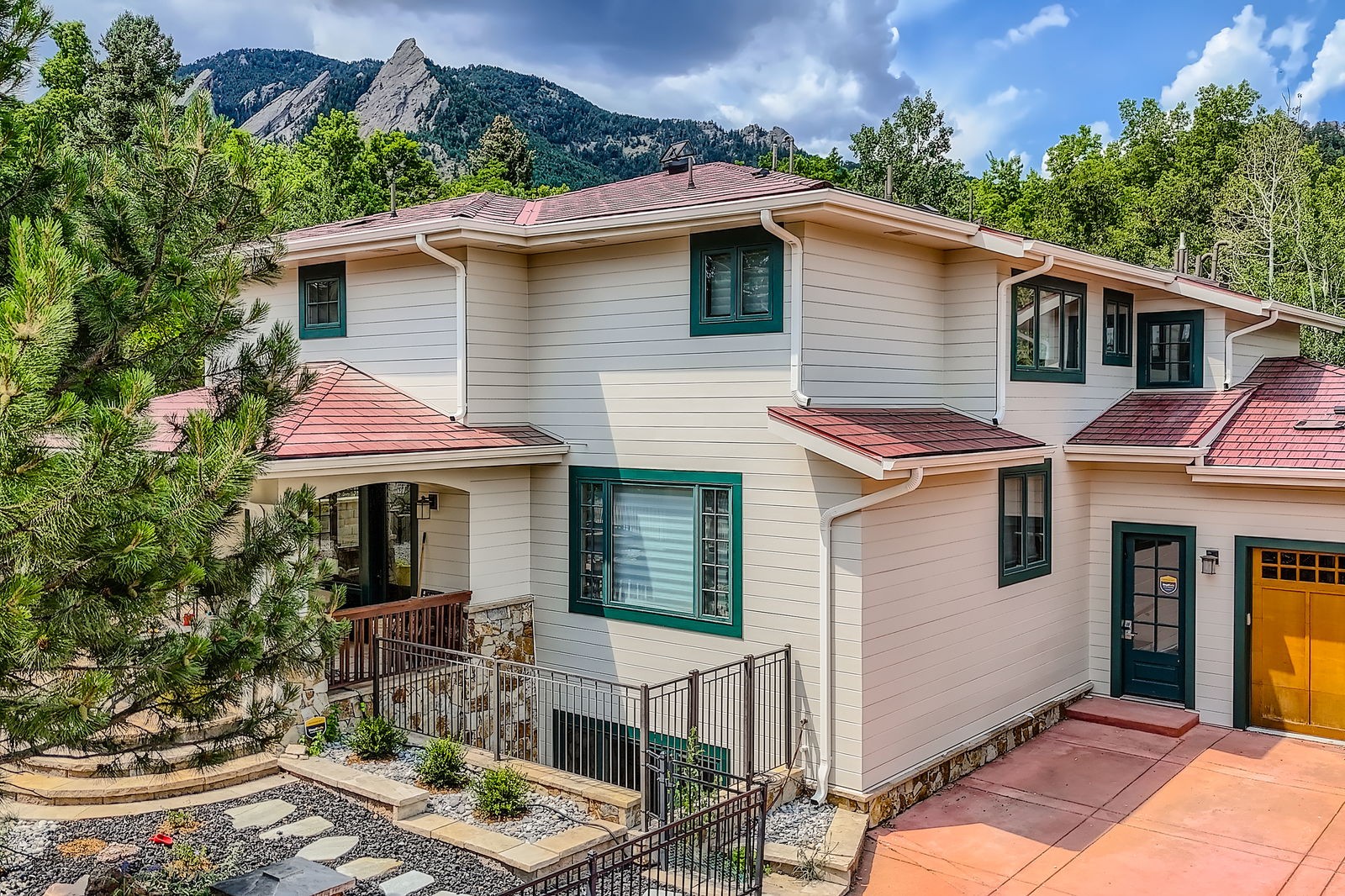
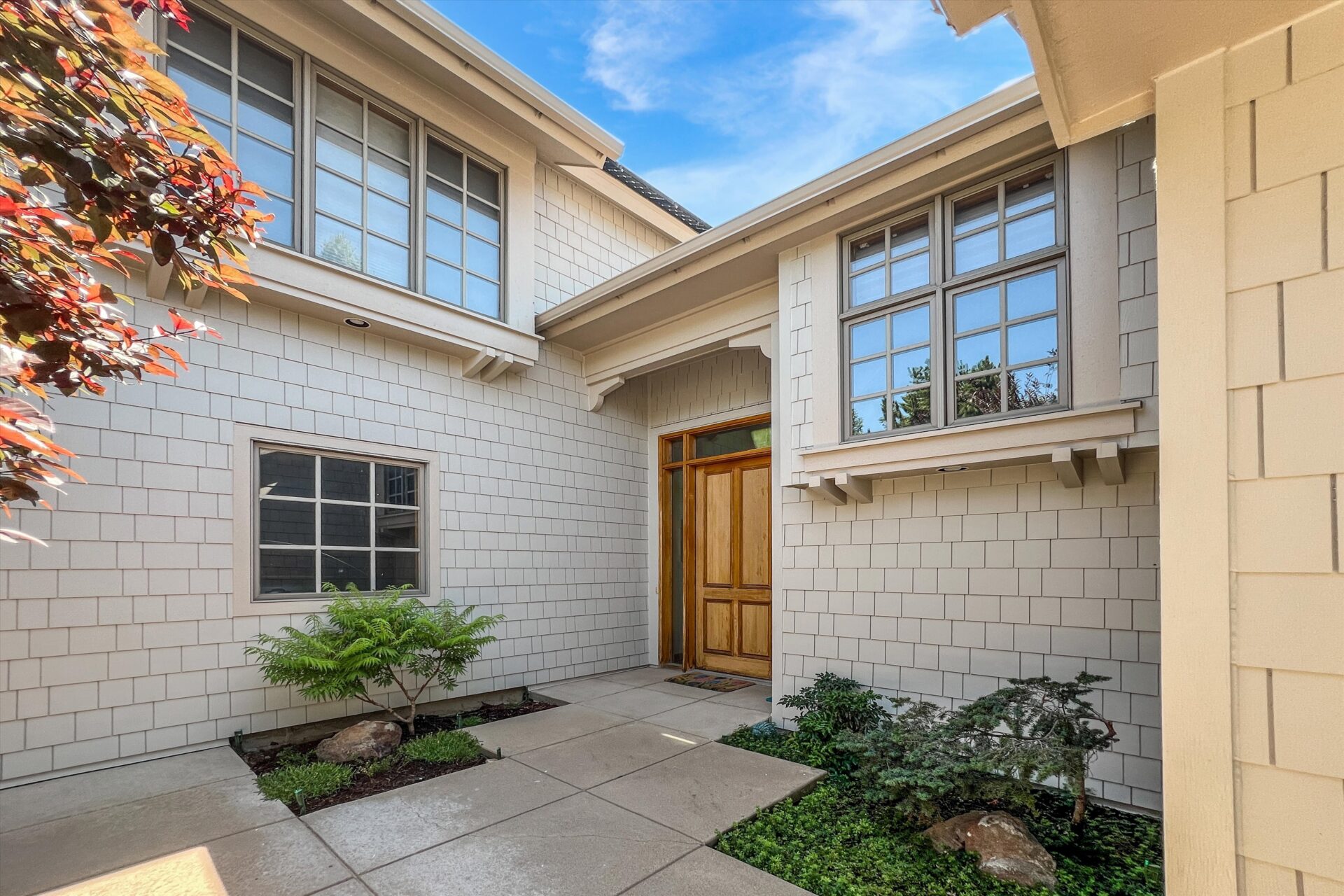
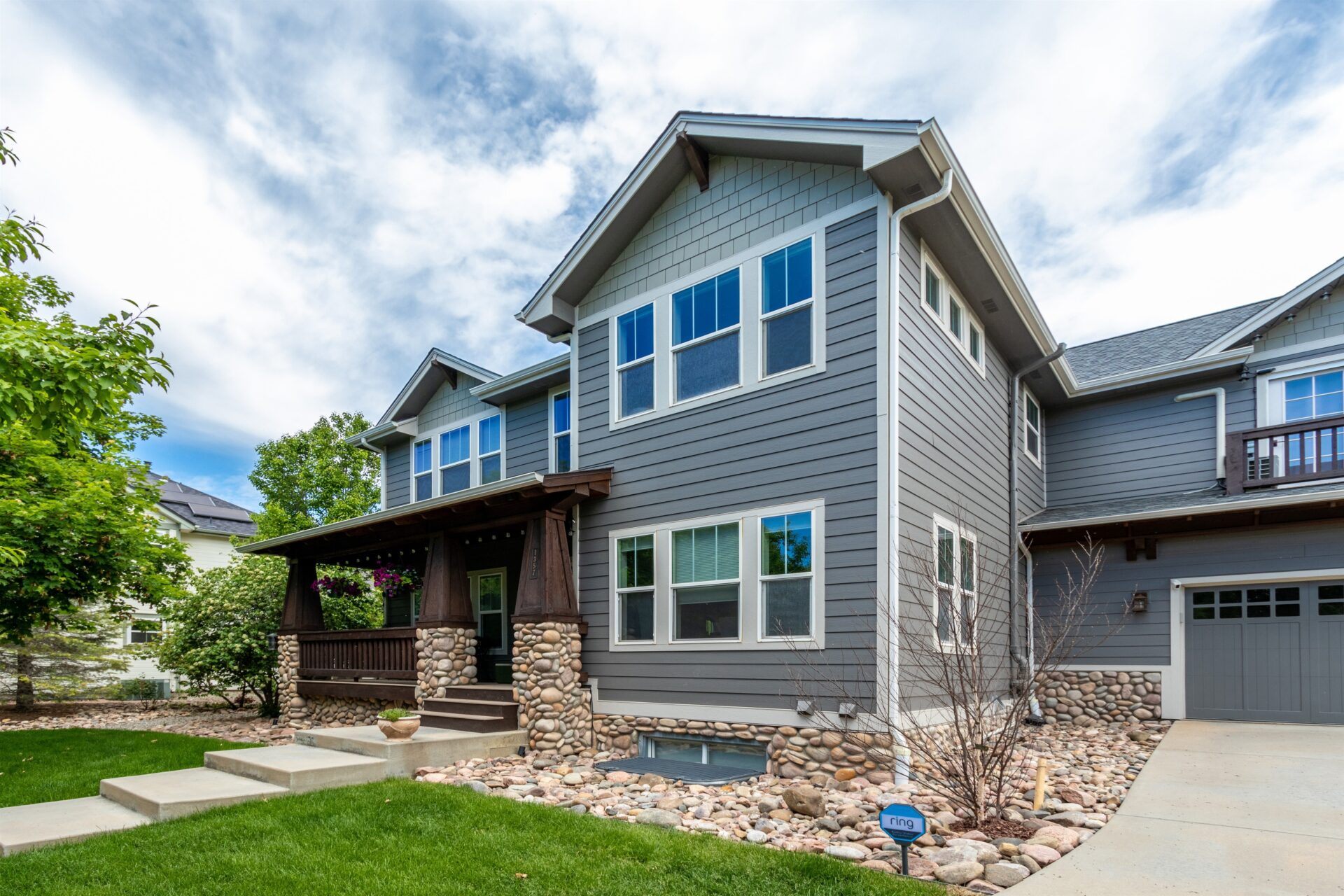
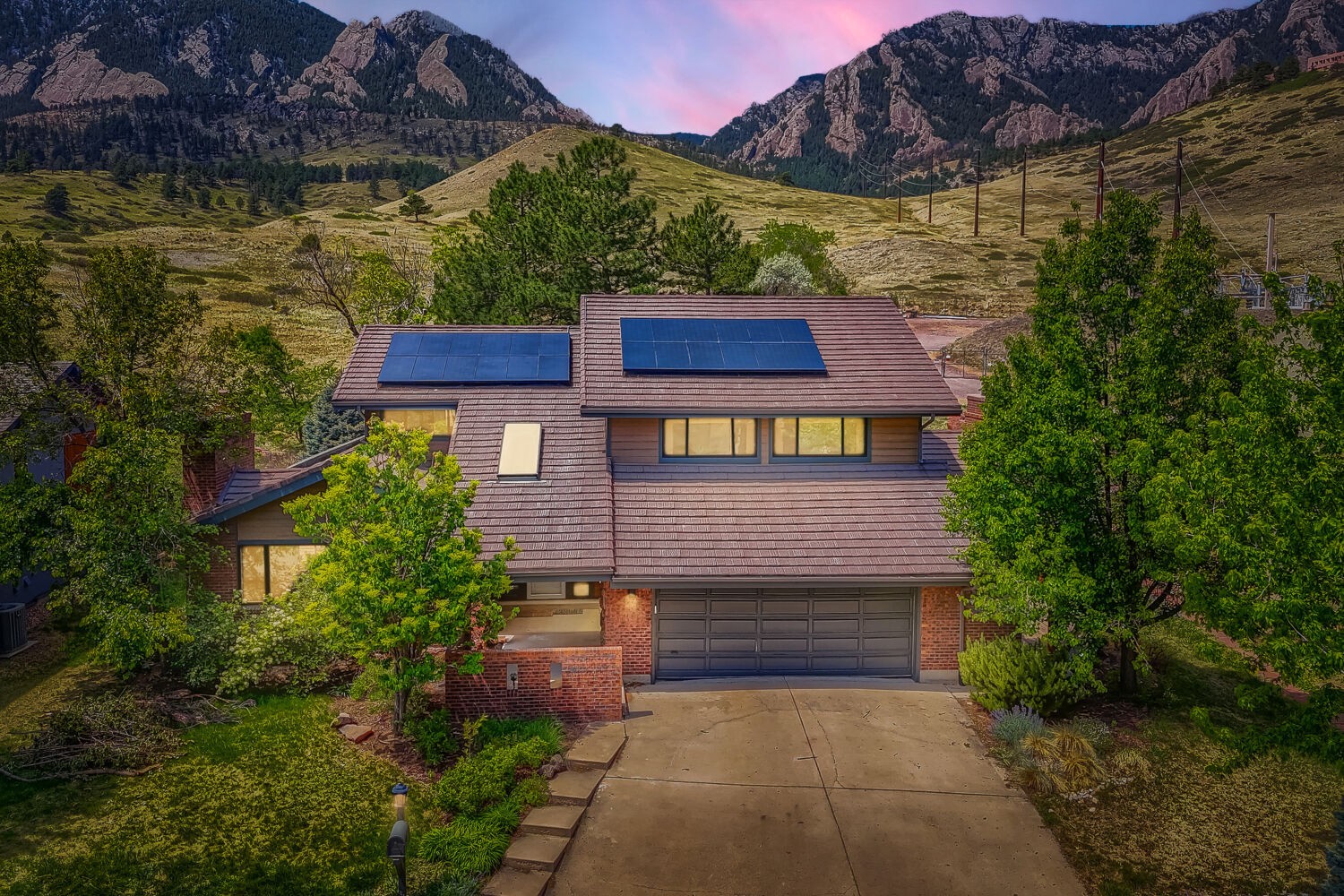
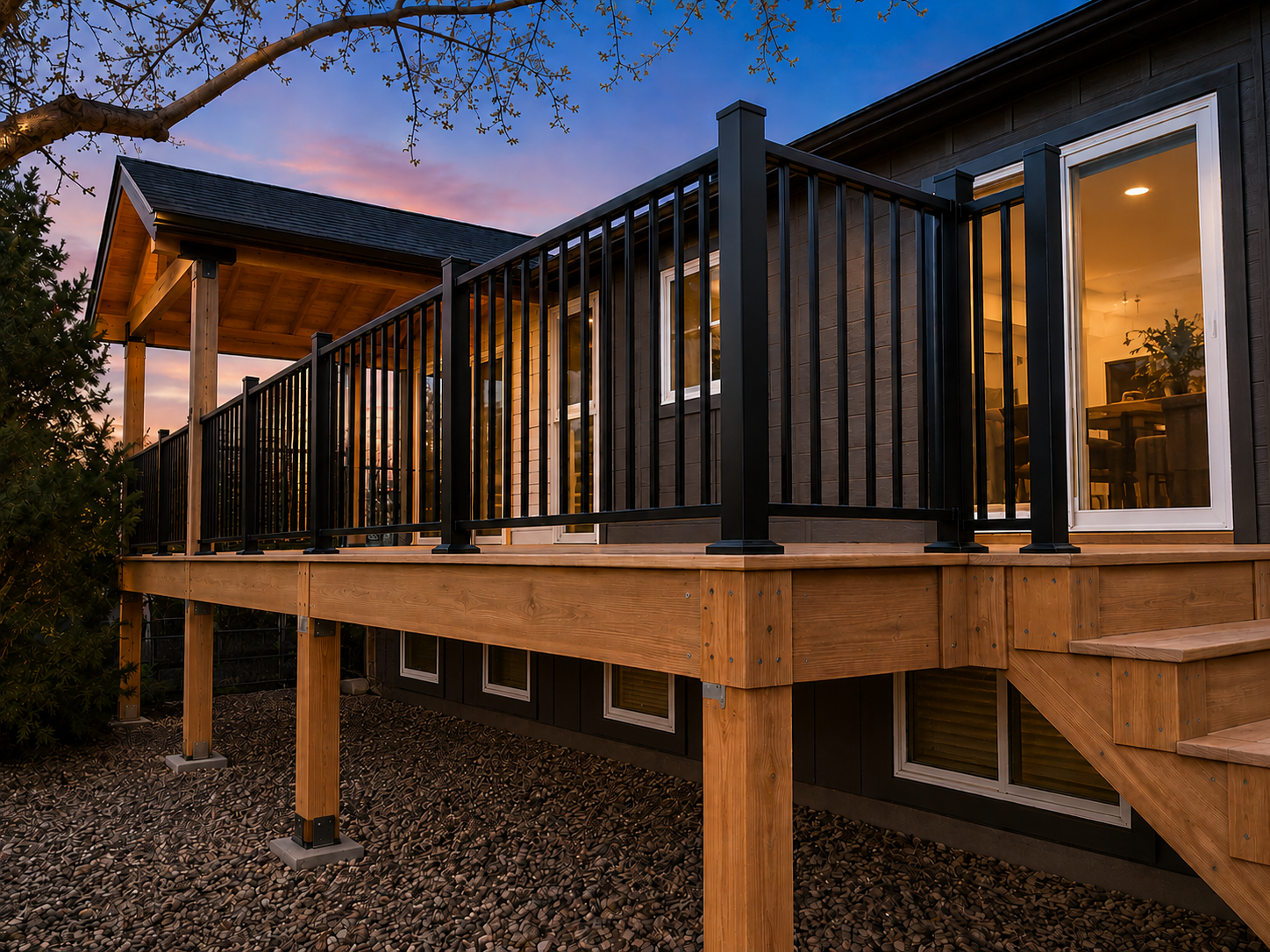
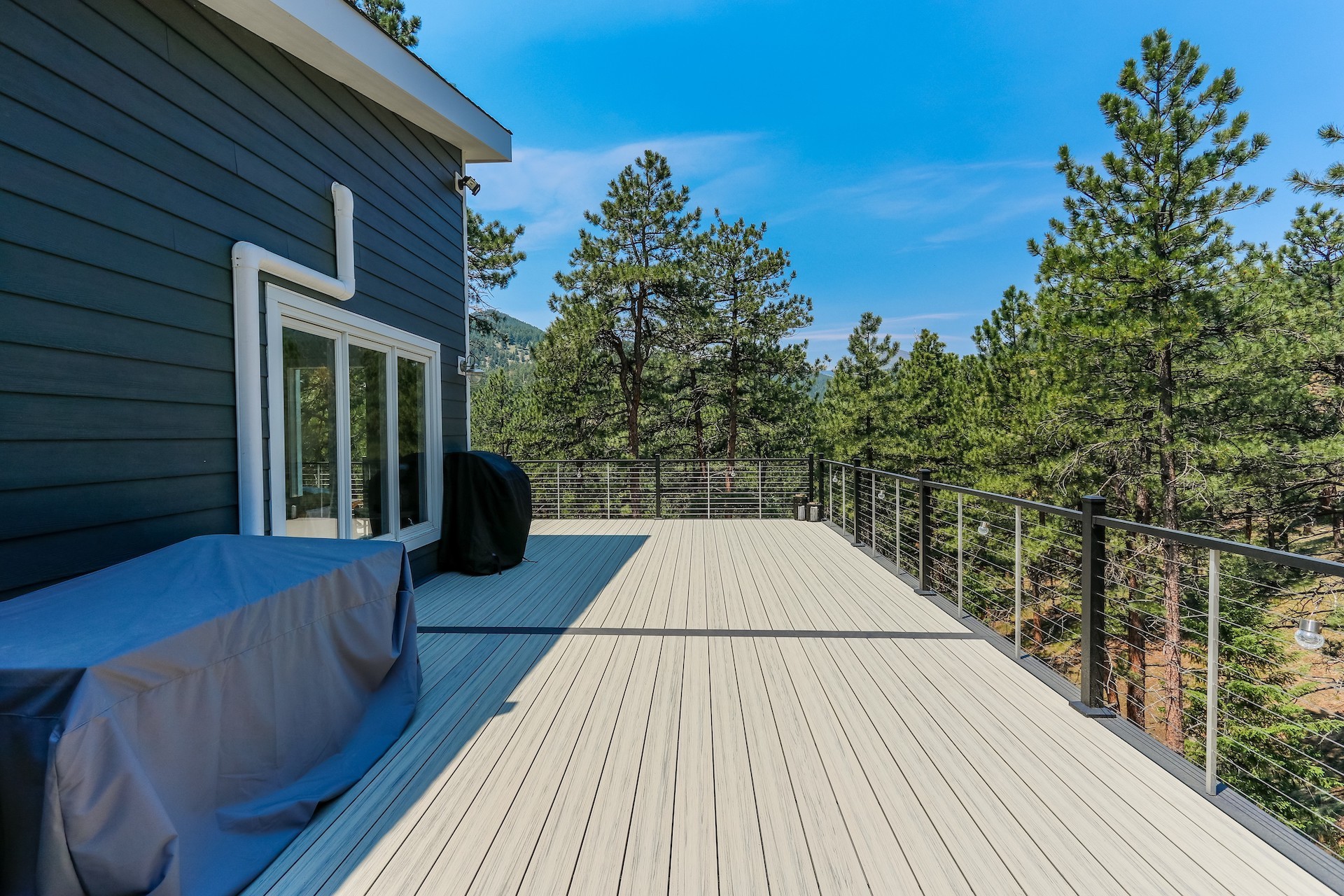
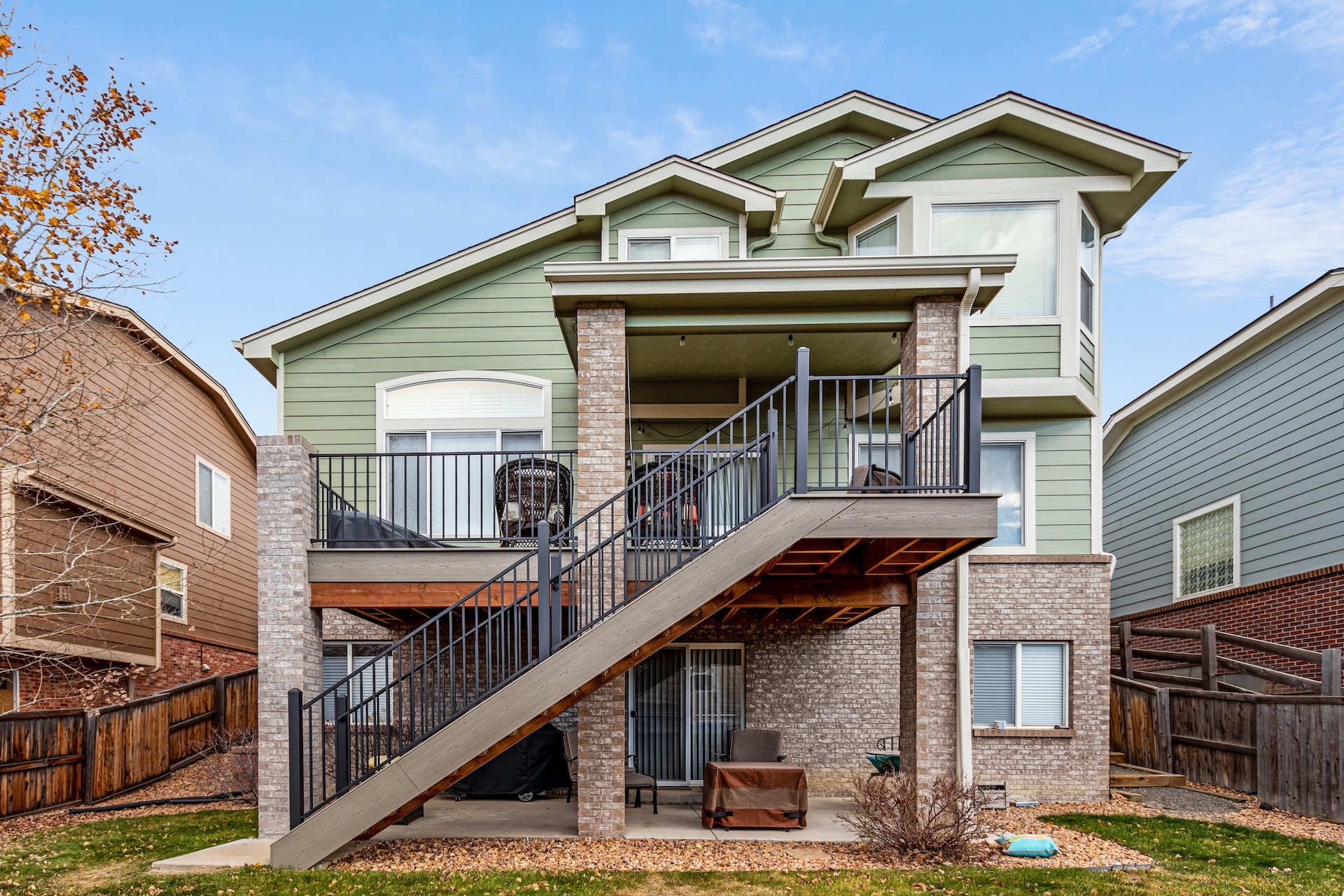
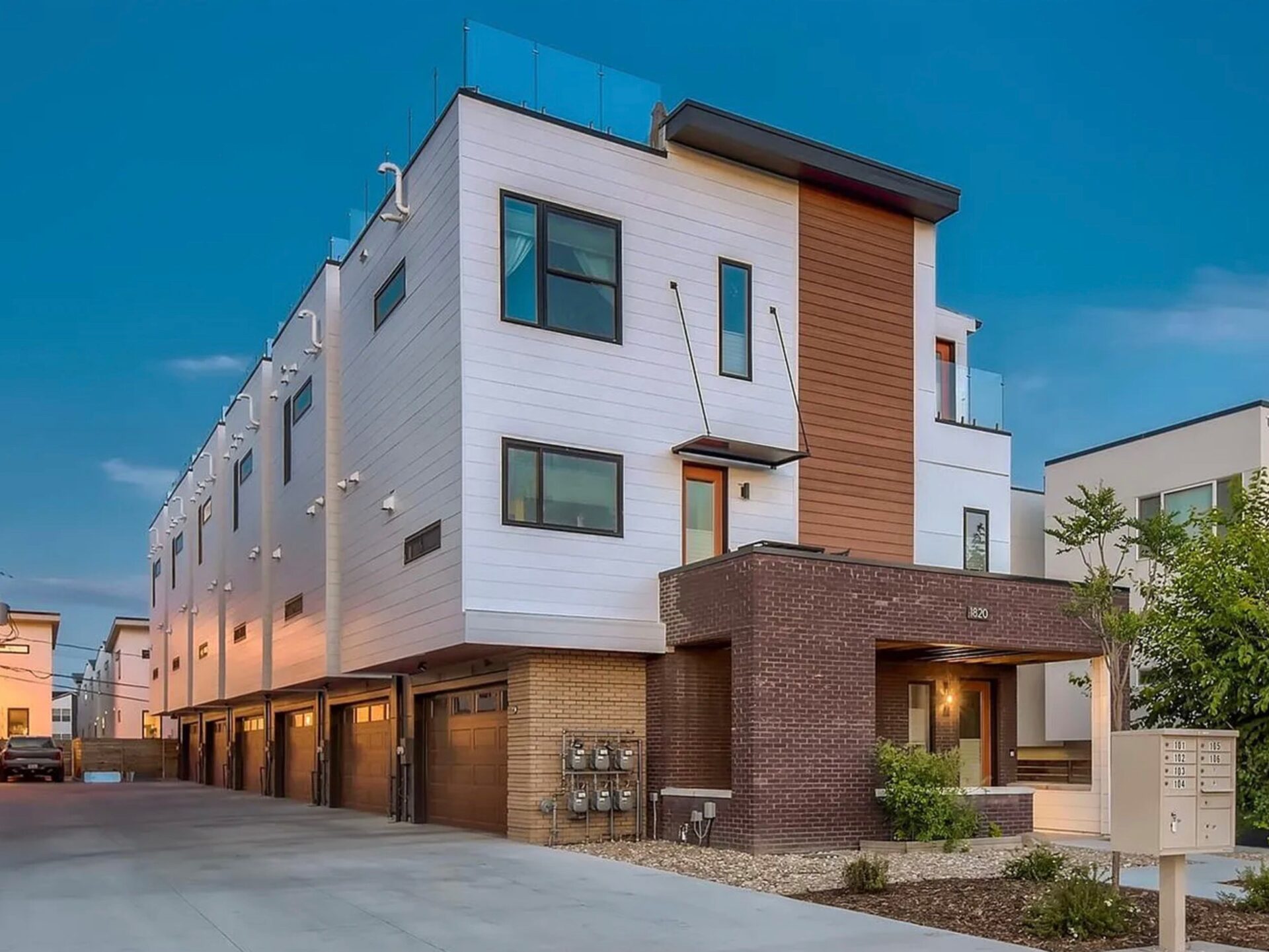
Black siding house ideas
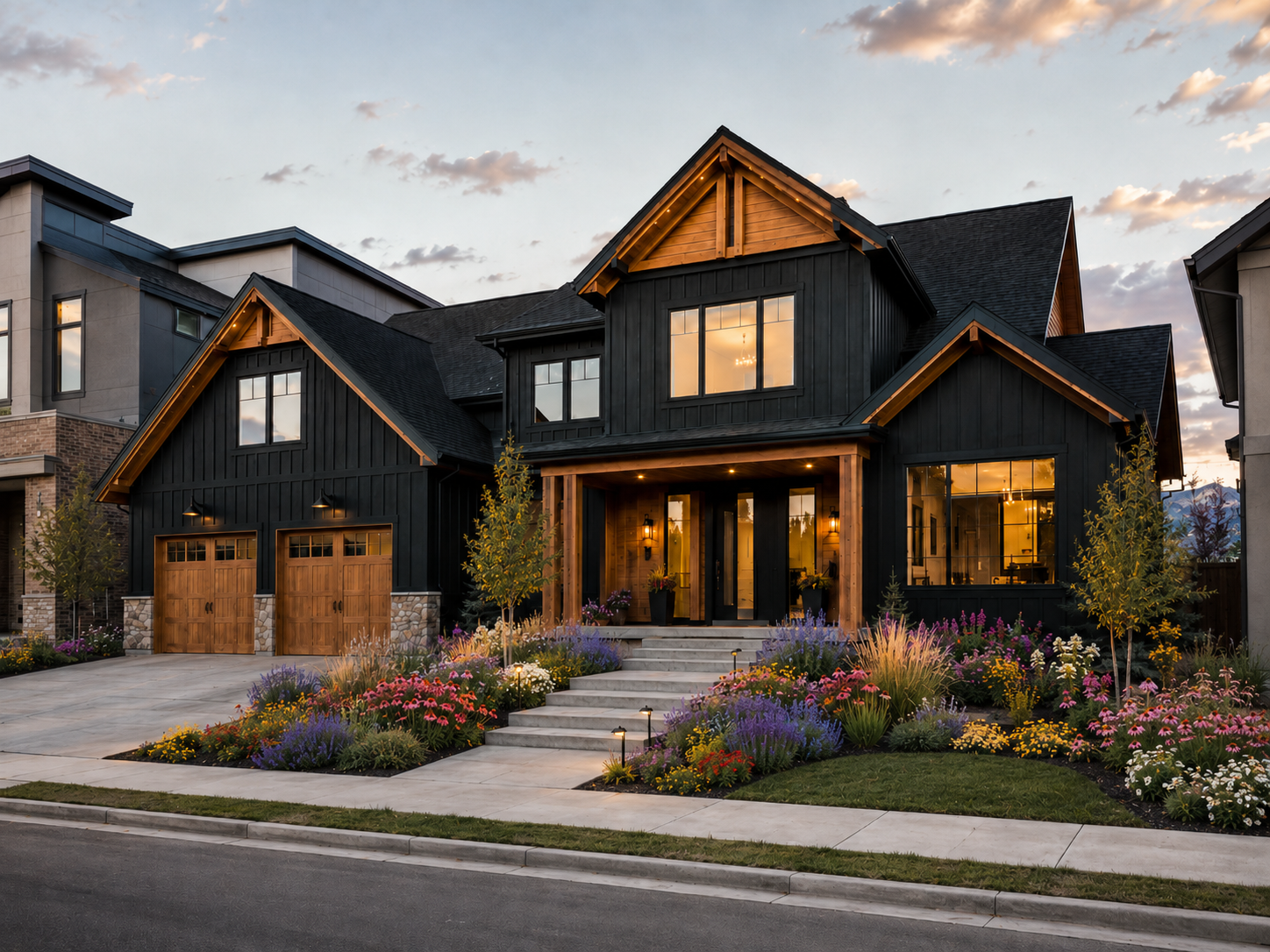
Real looks for Colorado homes — from sleek modern facades to black ranch exteriors, board & batten, and black trim over lighter siding. Every one of these can be built in Hardie Midnight Black fiber cement or Vesta black steel.
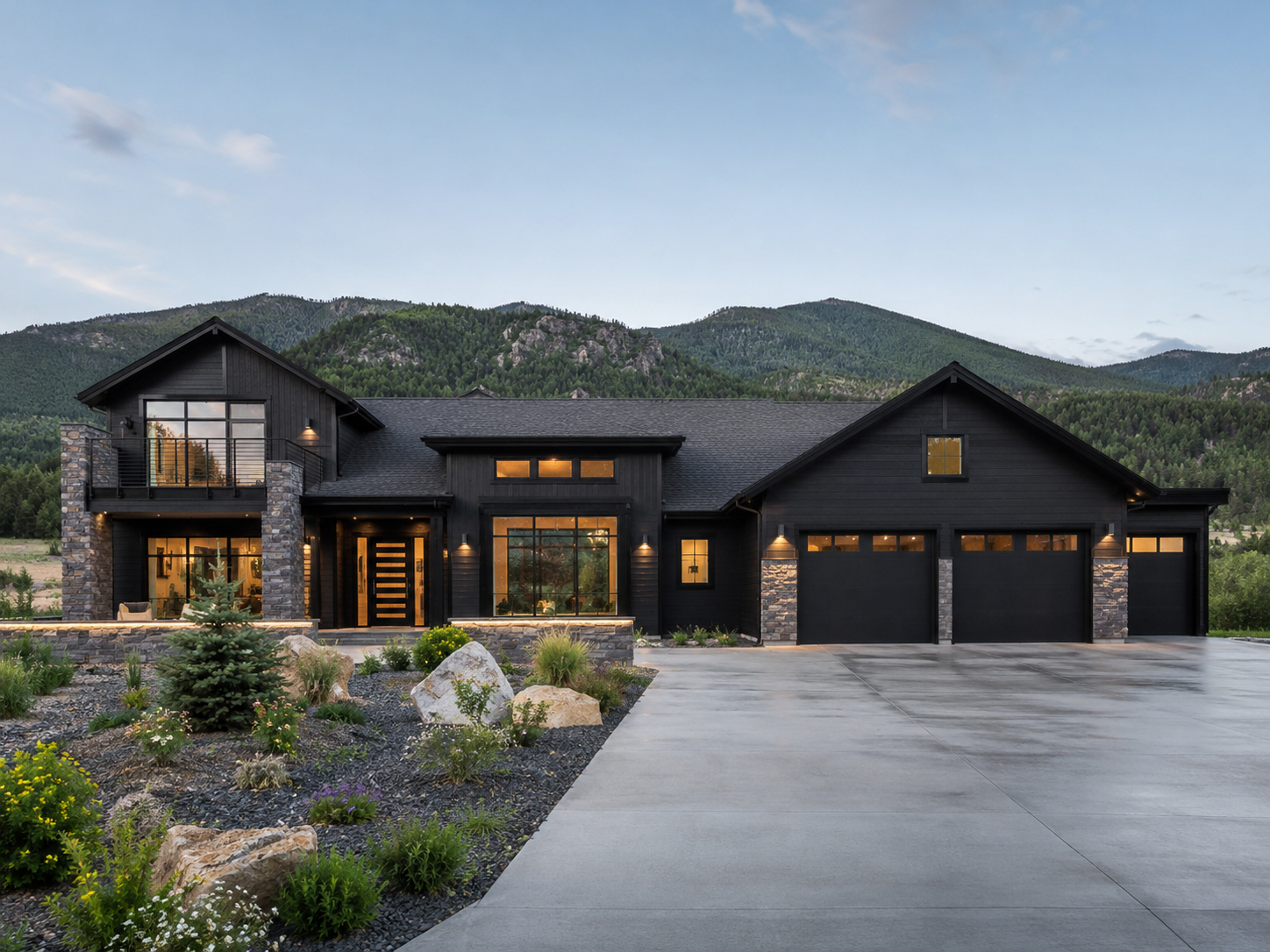
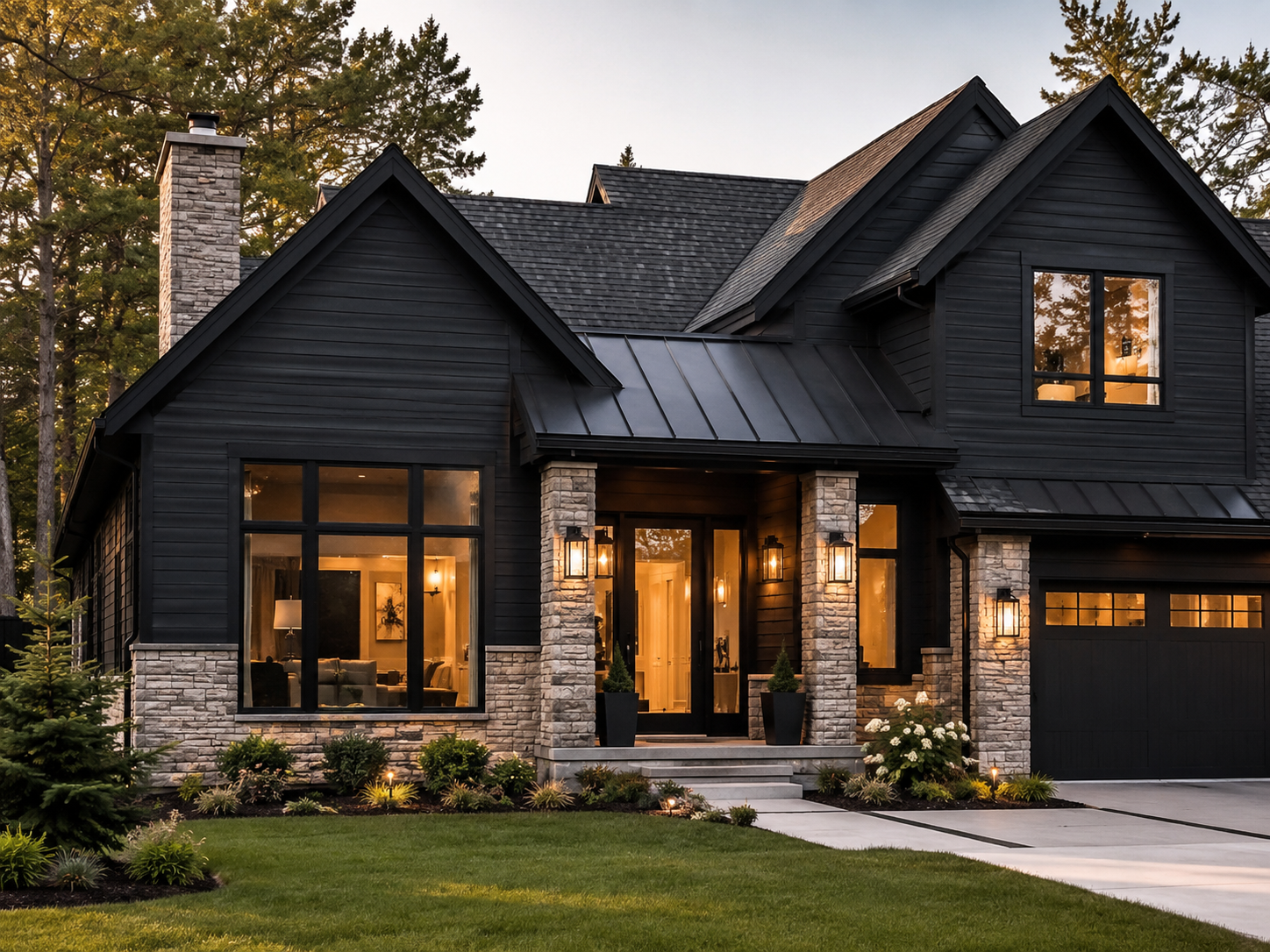
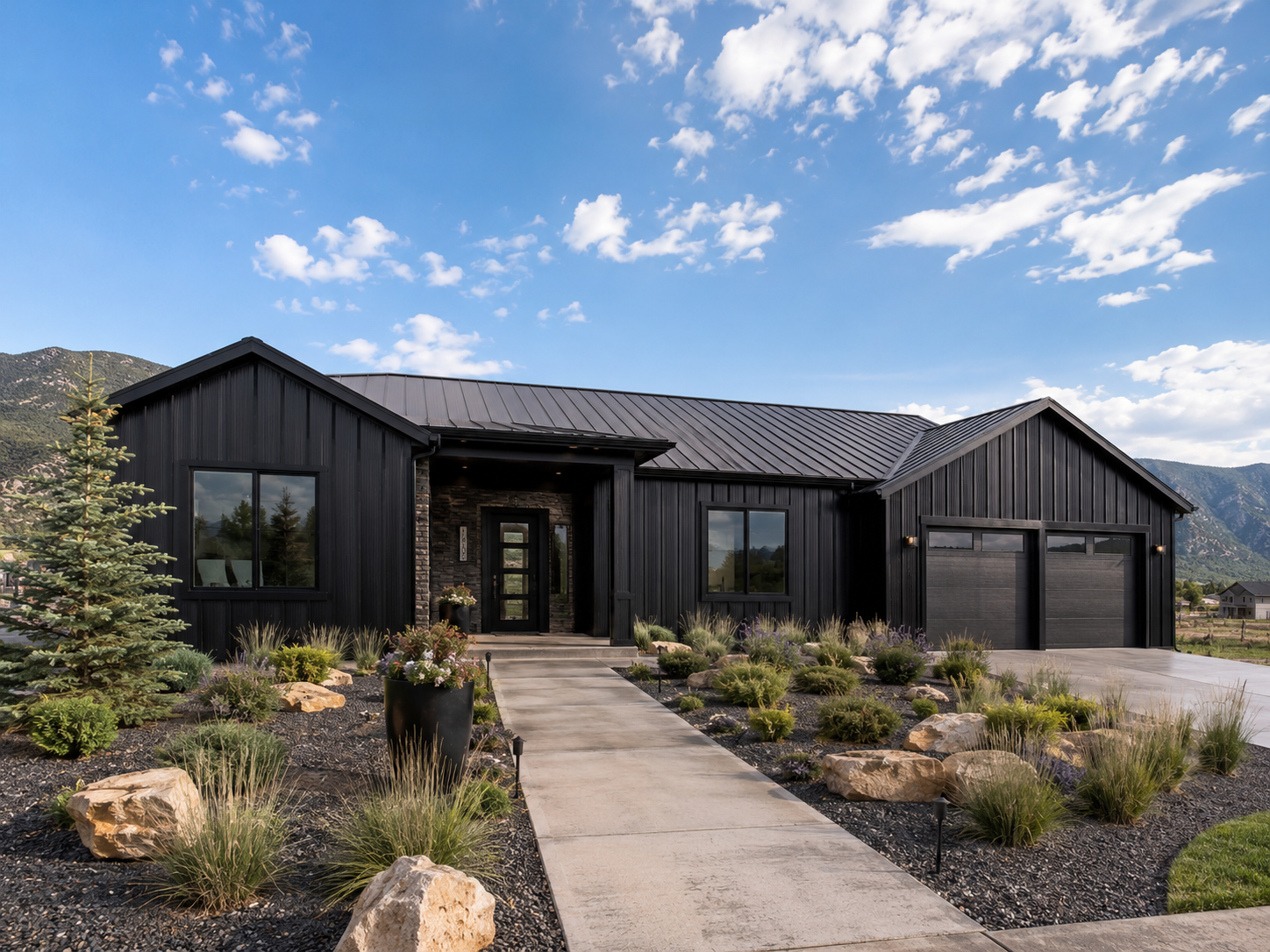
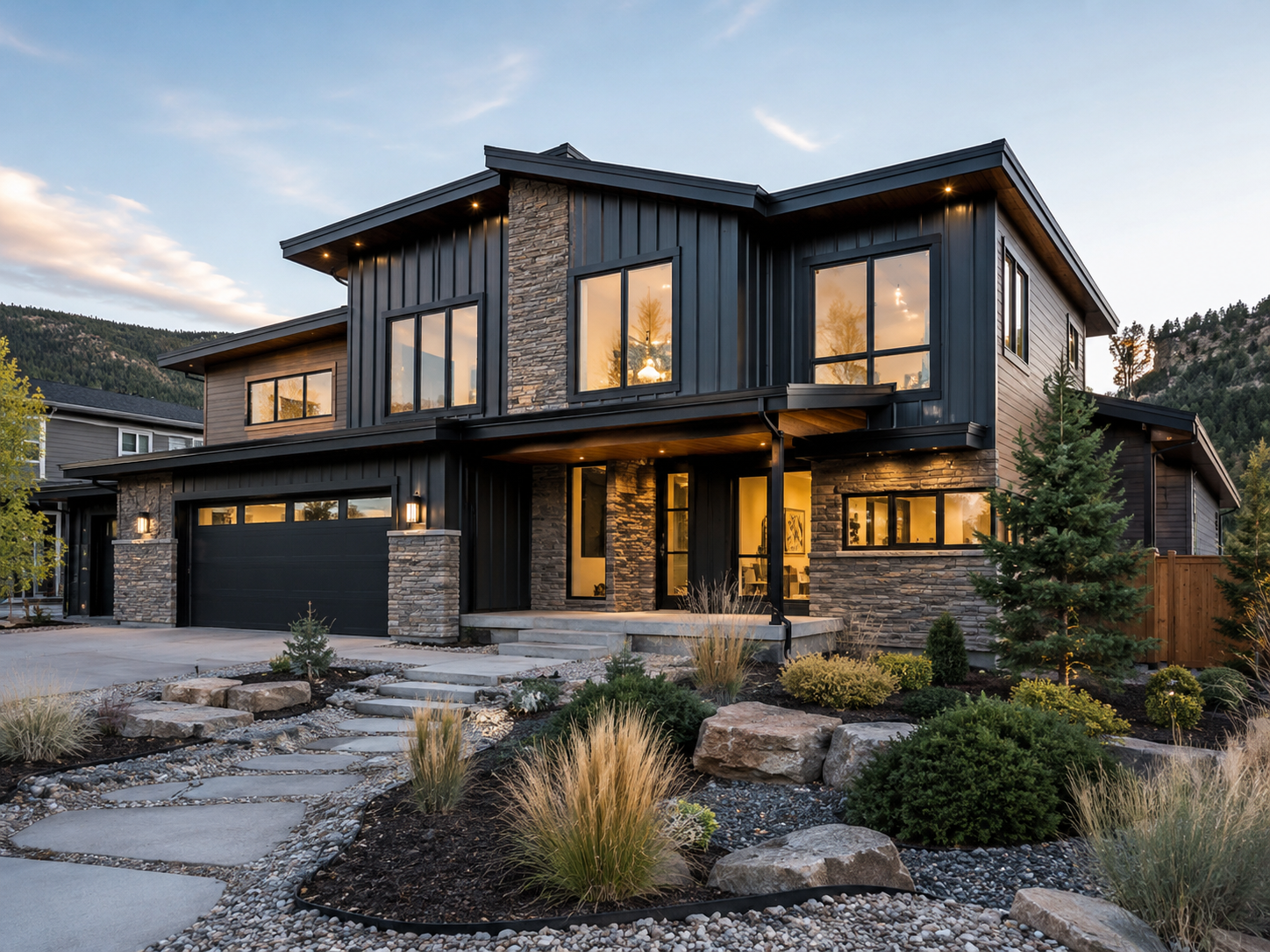
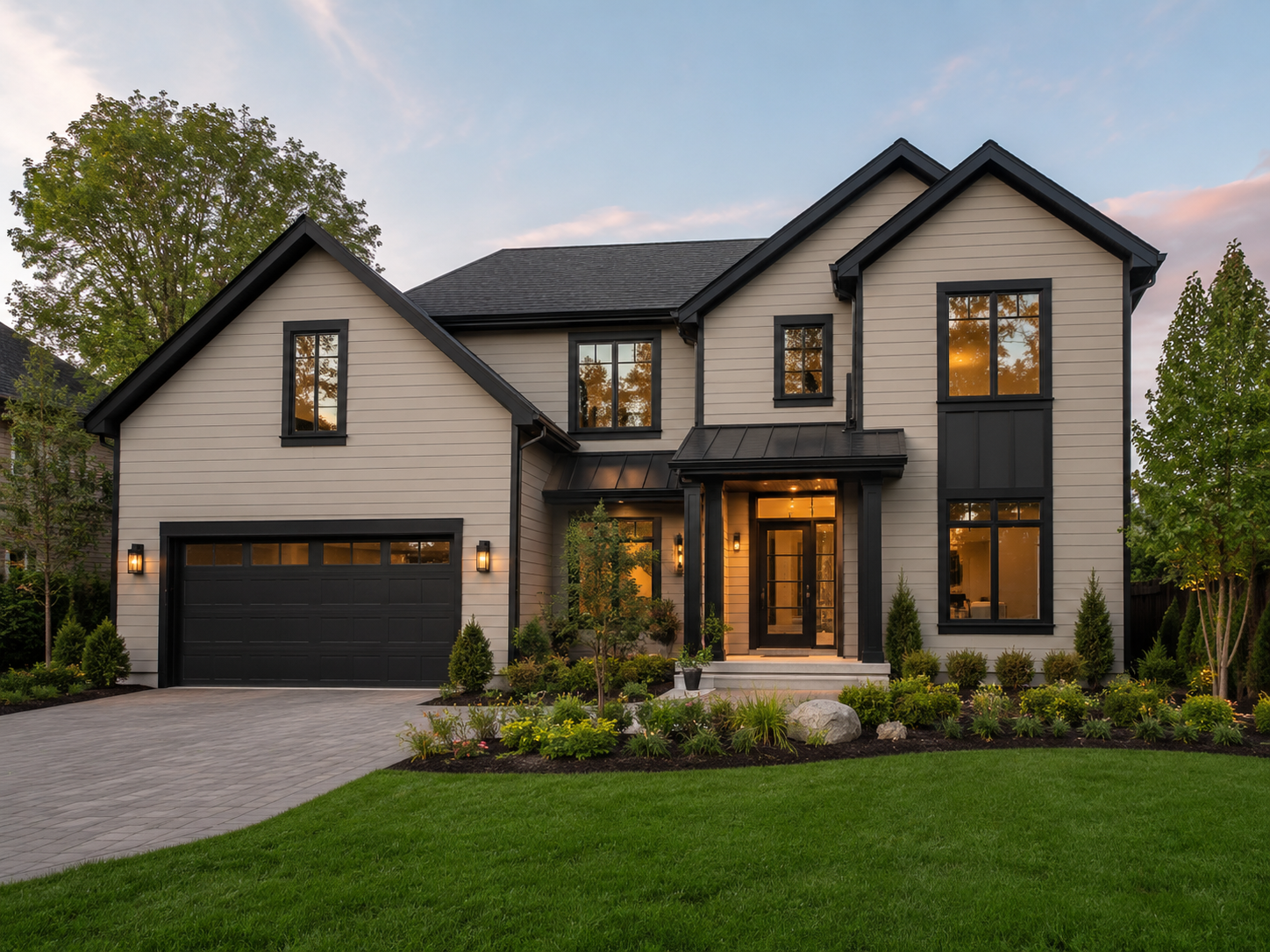
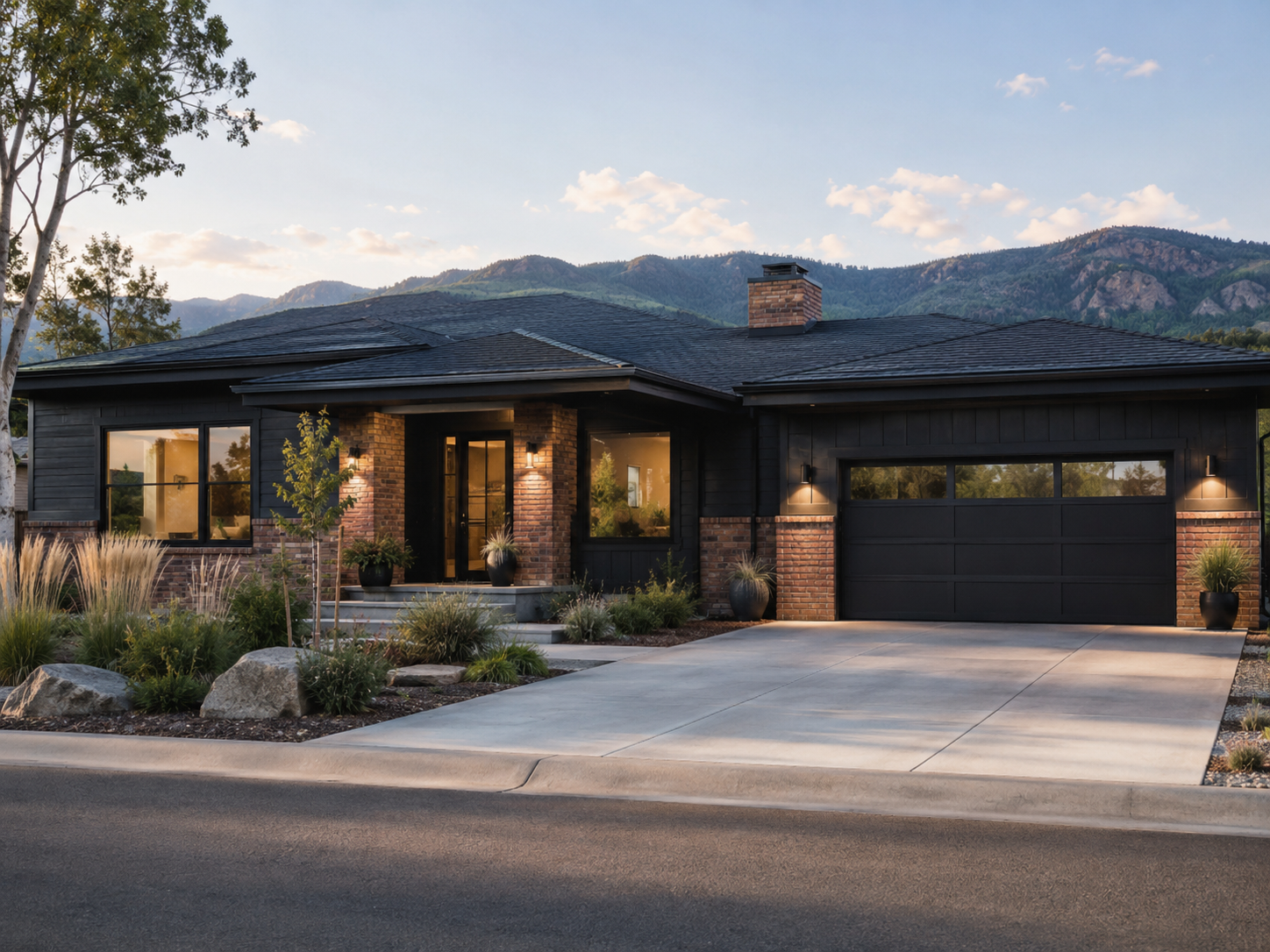
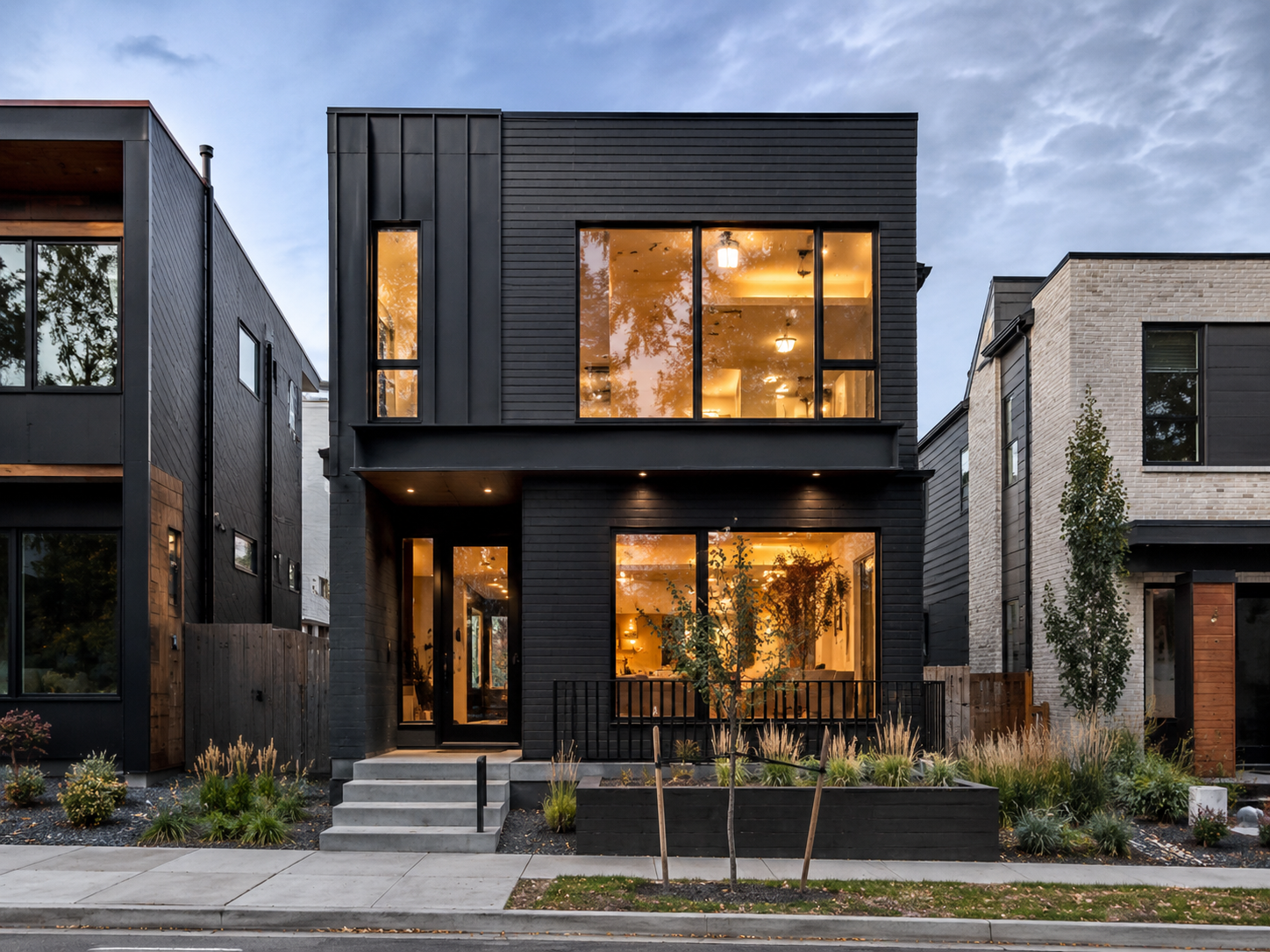
Two ways to go black
Both deliver a deep, lasting black with a factory-baked finish and a Class A / noncombustible fire rating. The difference is the look and the feel — warm matte fiber cement, or sleek architectural steel.
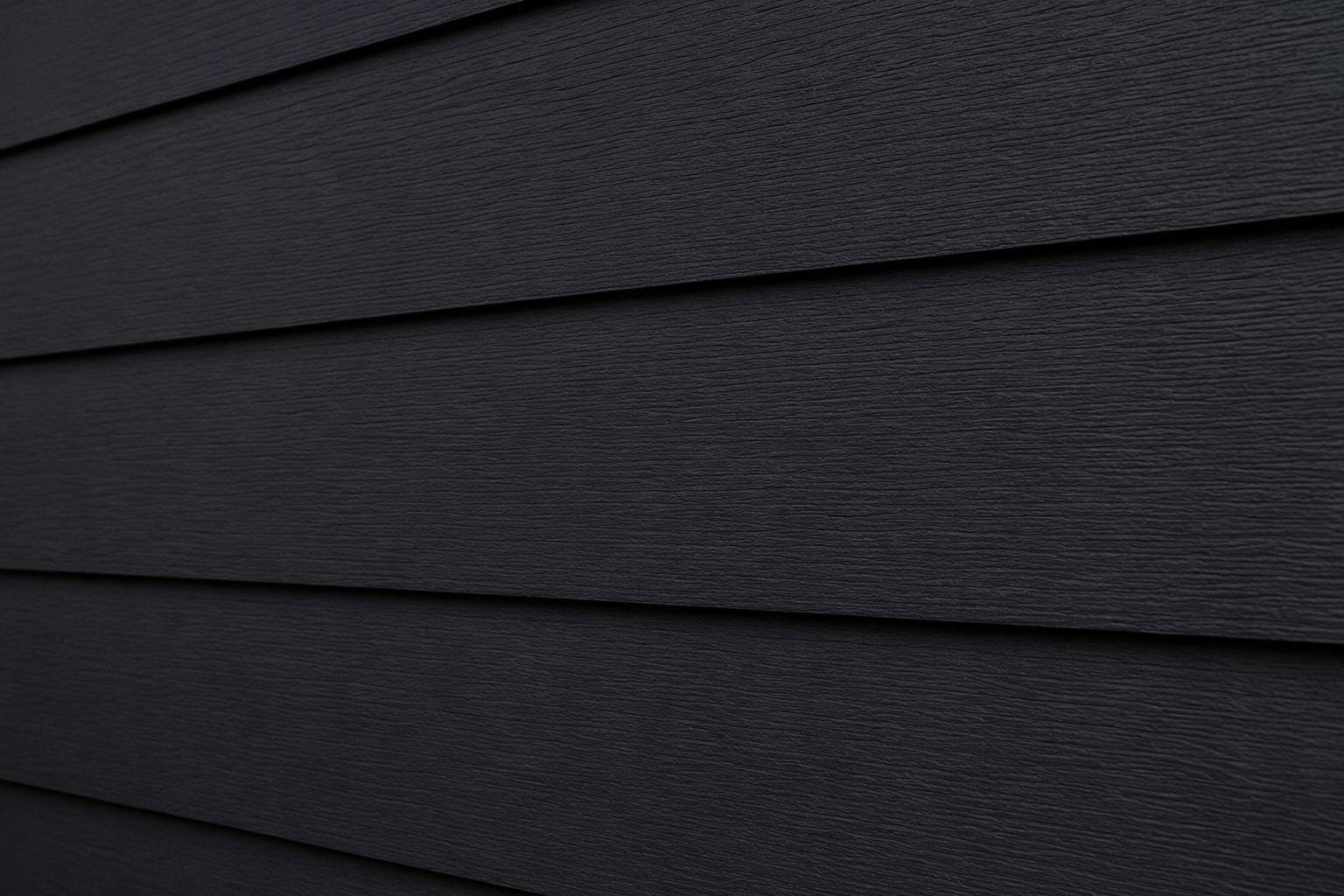
James Hardie Midnight Black
The boldest color in James Hardie’s Statement Collection — a rich, warm black with a subtle woodgrain or smooth finish. Baked-on ColorPlus Technology resists fading, chipping, and cracking far better than field-applied paint.
- HZ5-engineered for Colorado freeze-thaw, snow, ice & hail
- Noncombustible fiber cement (ASTM E136) — wildfire smart
- Lap, panel & board-and-batten profiles; matching HardieTrim in Midnight Black
- Won’t rot; resists pests, termites & woodpeckers
- 30-year board / 15-year ColorPlus finish warranty
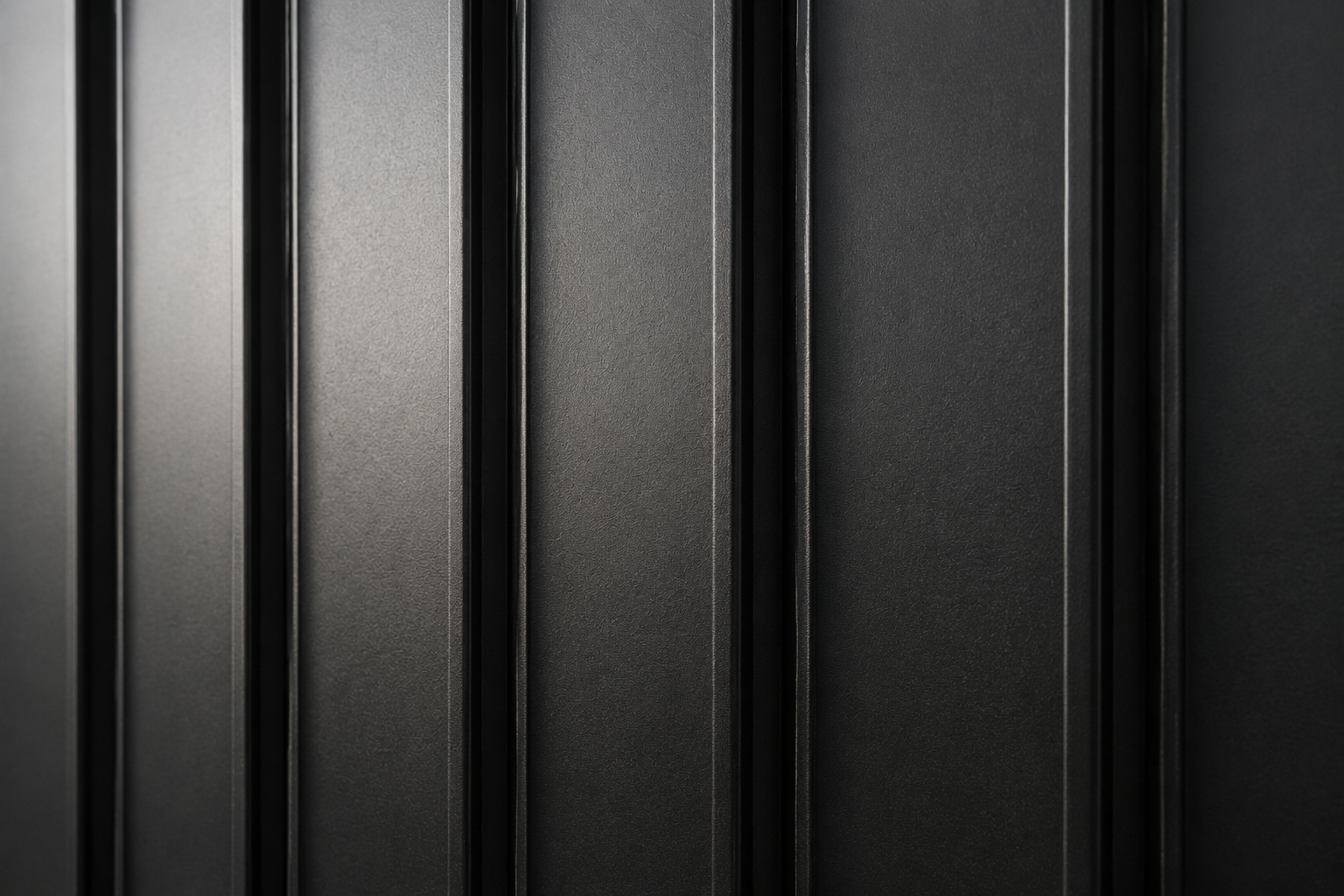
Vesta Black Steel Siding
US-made 25-gauge steel with a sleek, contemporary reveal — the “badass” black look. A Kynar 500 PVDF coating (the same class used on metal roofing) holds deep color and fights fade, chalk, and chips.
- Class A fire rating — won’t melt, crack, rot, or hold mold
- Kynar 500 finish reflects UV to resist fading at altitude
- CarbonTech90 galvanization guards the steel core from corrosion
- Lap, Dutch lap, vertical & 6″/10″ board-and-batten profiles
- Residential Lifetime Limited Warranty (fade included)
Does black siding hold up here? Yes — with the right material.
The Front Range throws hail, intense high-altitude UV, freeze-thaw swings, and wildfire risk at every exterior. That’s exactly why we install fiber cement and steel, and never vinyl.
Hail & impact
Fiber cement and steel shrug off the hail that dents and cracks lesser siding across Colorado.
Wildfire smart
Both materials are noncombustible / Class A — a real advantage in foothills and WUI zones.
High-UV color
ColorPlus and Kynar 500 finishes are engineered to keep deep black from chalking or fading.
Freeze-thaw
HZ5 Hardie and coated steel handle the daily temperature swings that split cheaper siding.
Black siding pairings that work
Going fully black is only one option. These are the combinations Colorado homeowners ask for most — and each one is easy to render in Hardie or Vesta.
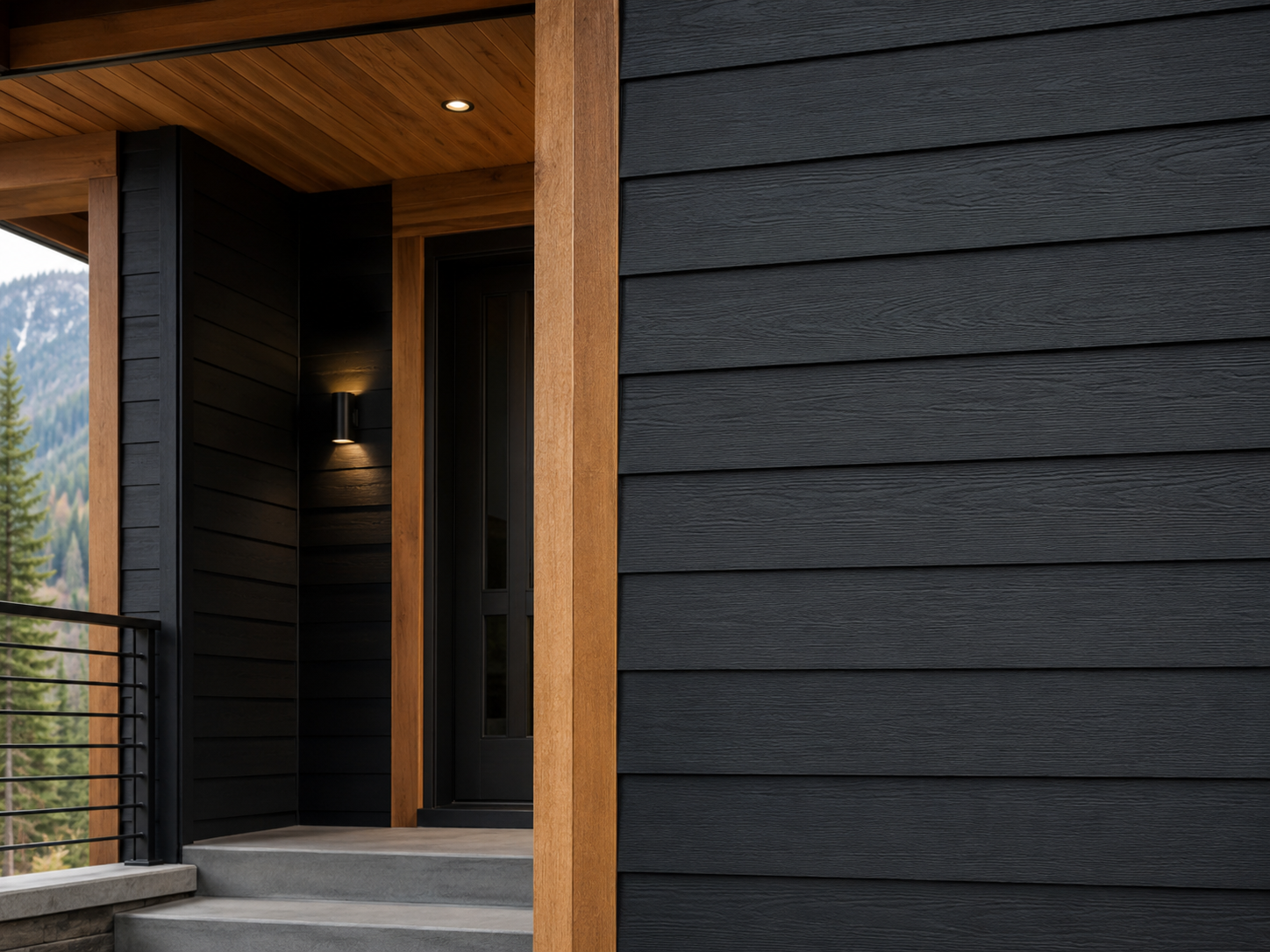
Black + wood
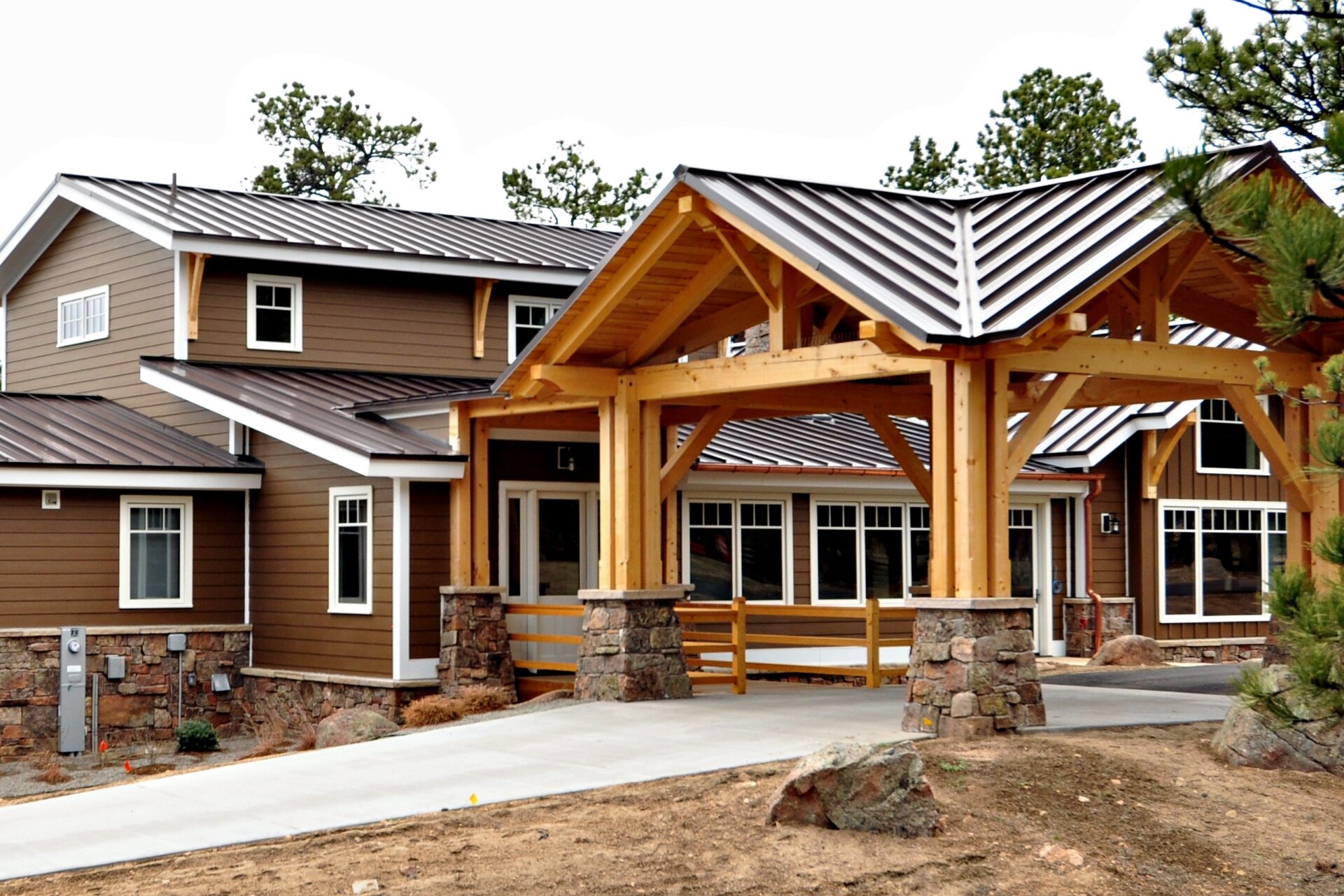
Cedar tones and timber beams warm up a dark facade — the mountain-modern classic.
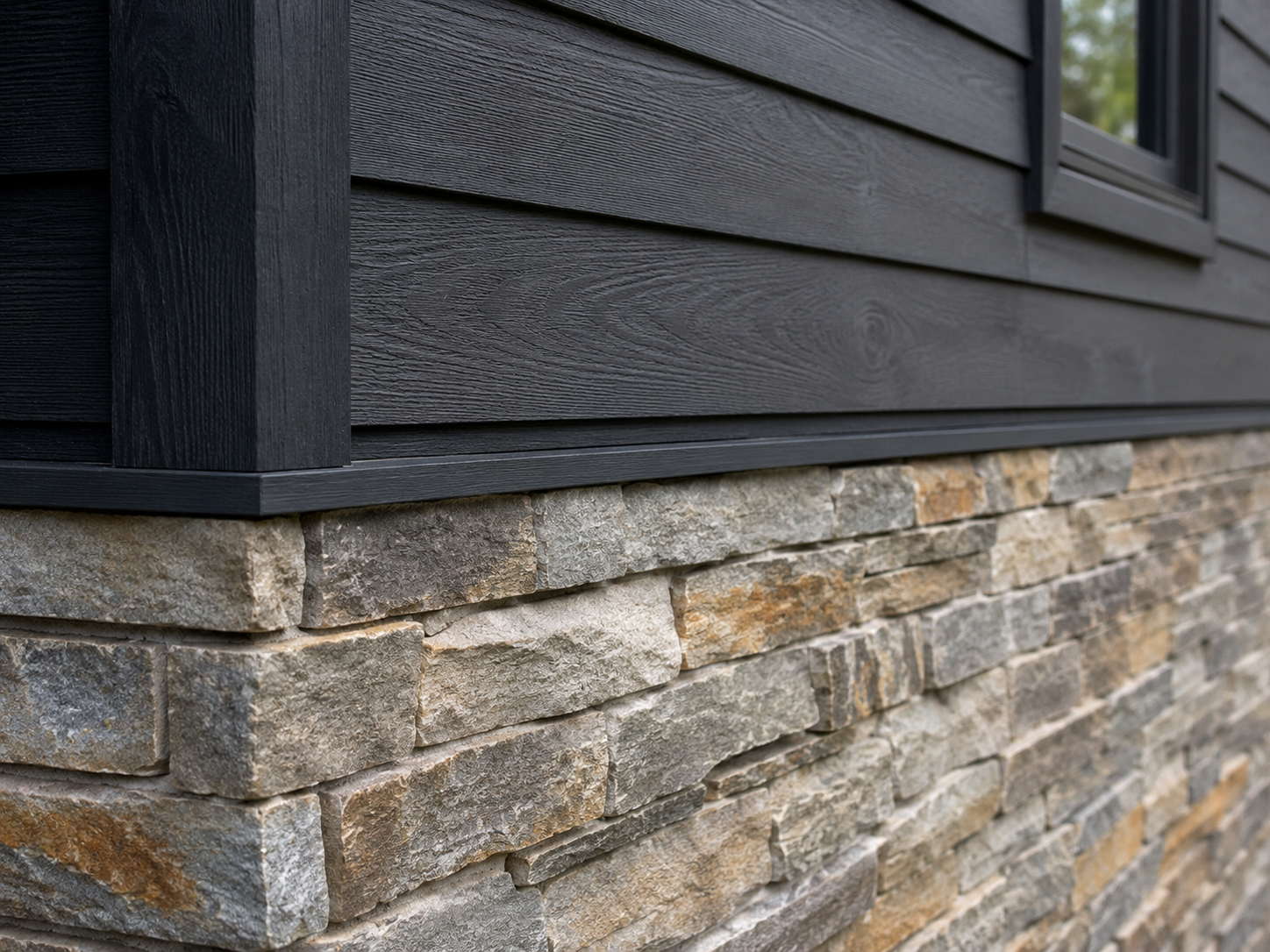
Black + stone
A stone base grounds the house and adds texture against smooth black siding.
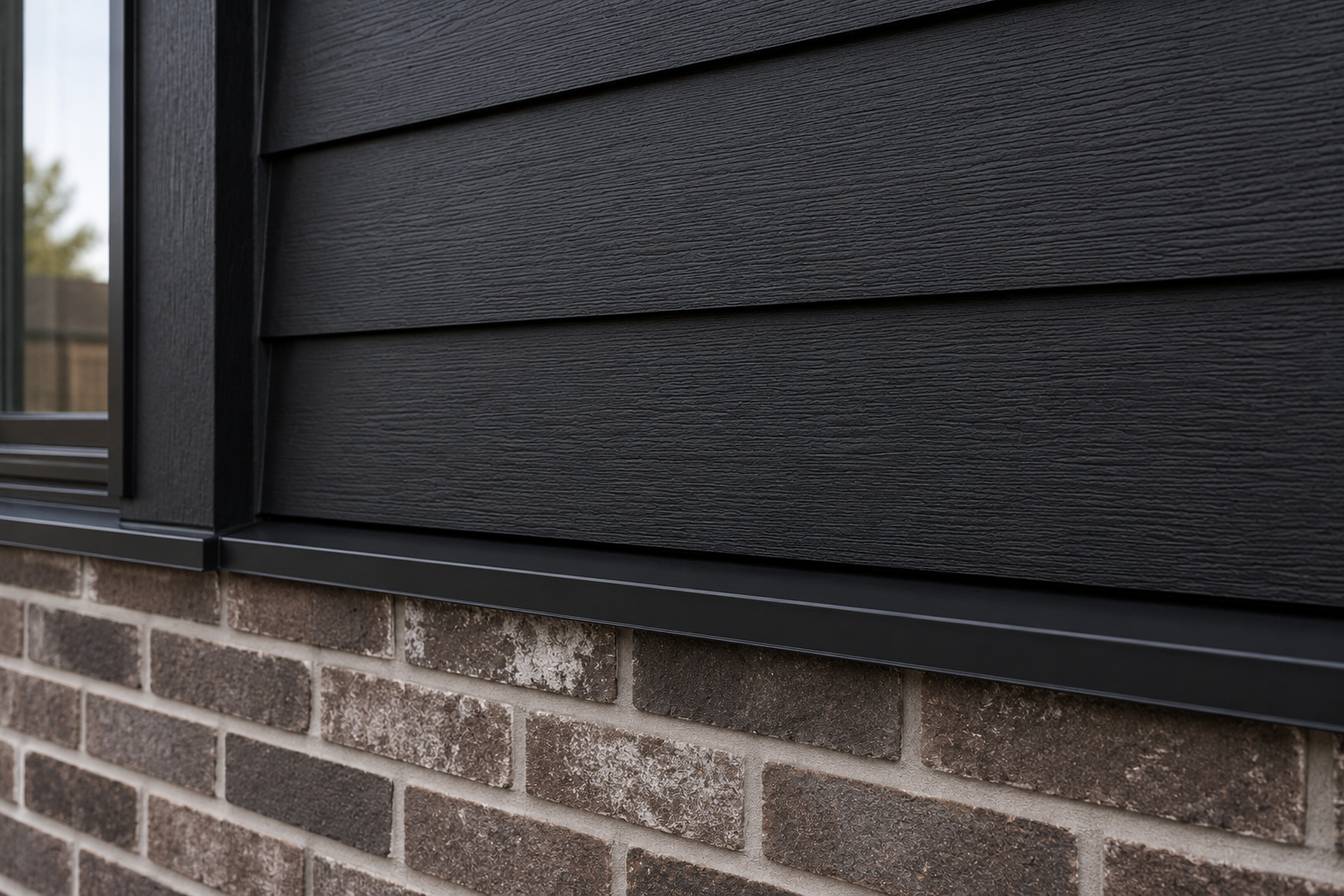
Black + brick
Modern black over brick blends contemporary and classic.
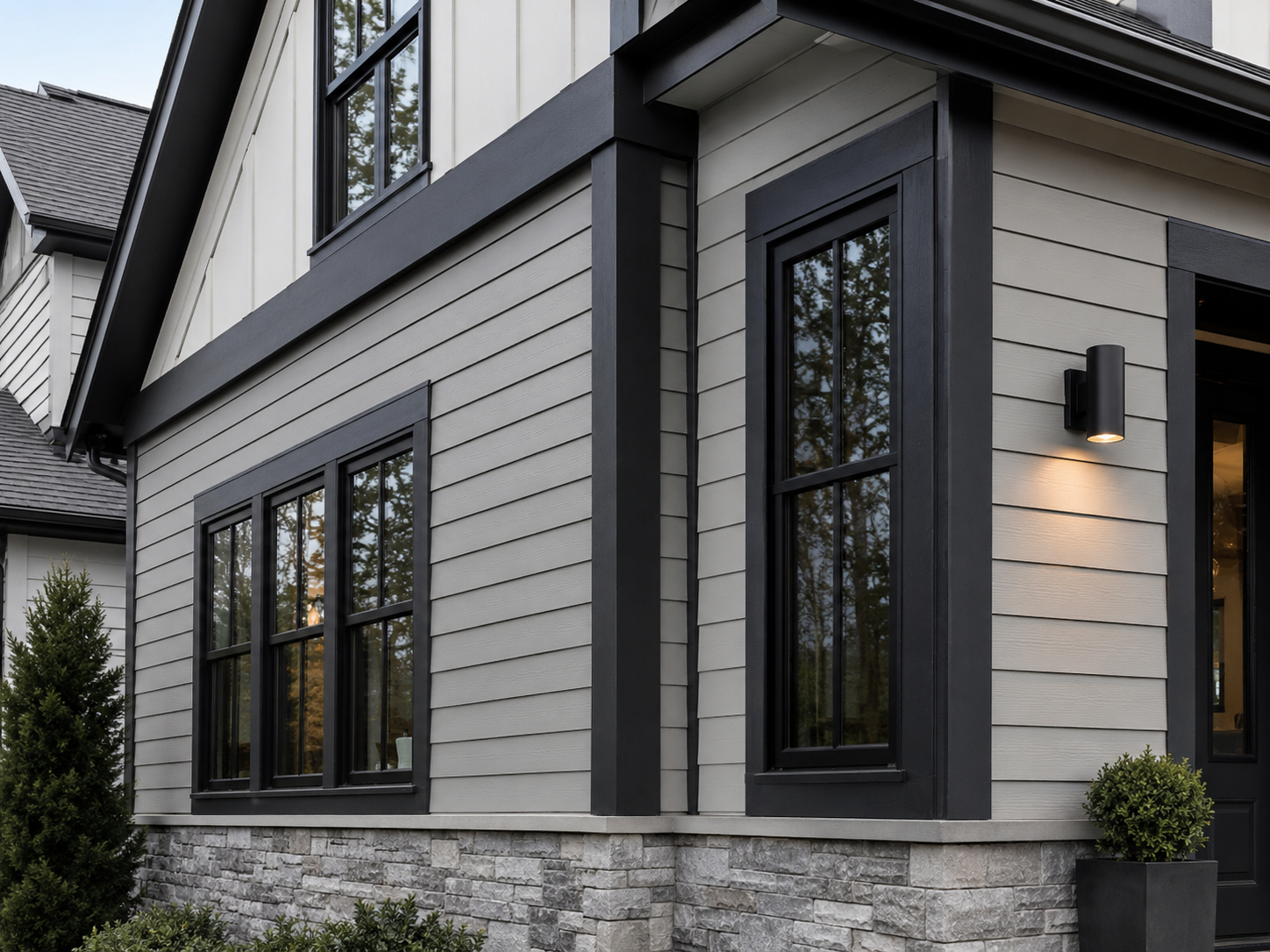
Black trim & accents
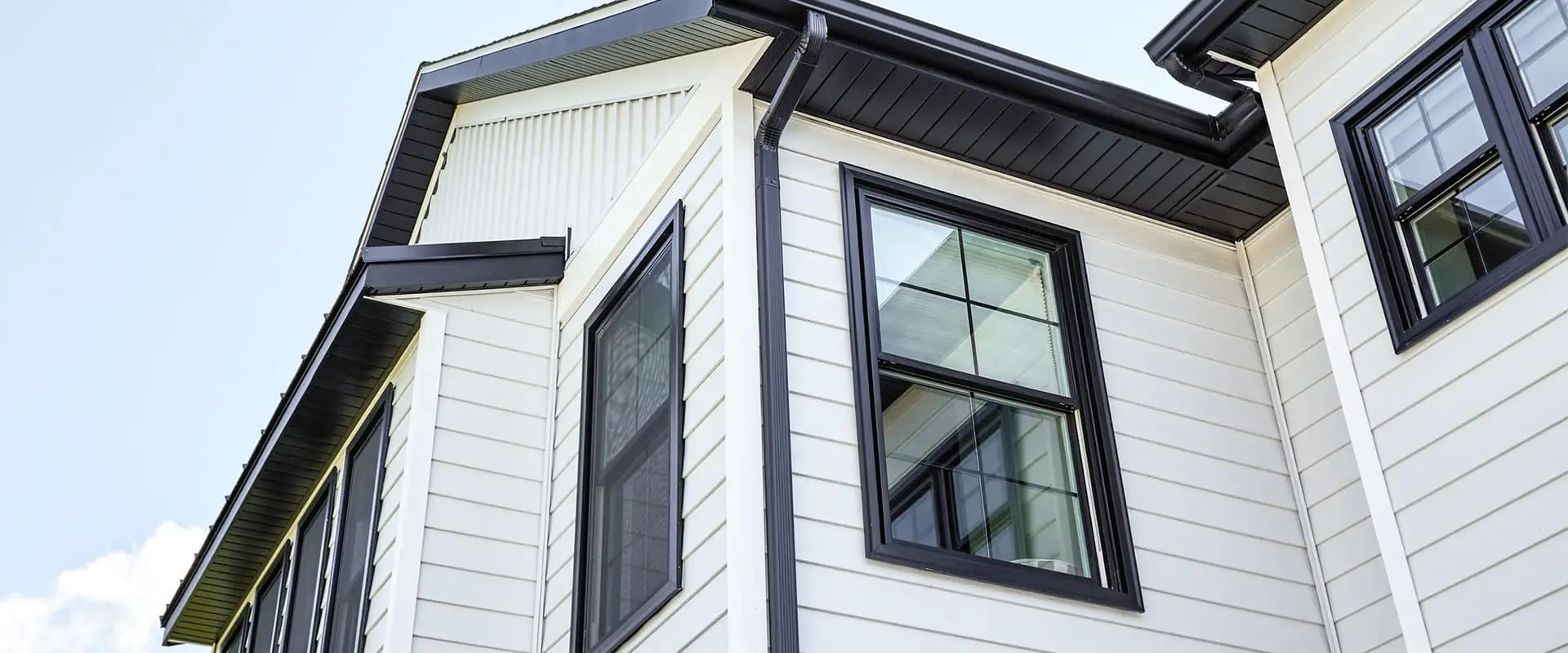
Black windows, trim, and fascia over white or gray siding for high contrast.
Why we build black in fiber cement & steel — not vinyl
Black is the hardest color to get right in vinyl. Dark vinyl can absorb enough heat to warp, buckle, or distort, and lower-grade finishes chalk and fade in Colorado’s UV. That’s why Northern Lights Exteriors builds every black exterior in James Hardie fiber cement or Vesta steel instead.
You get the same deep black look you’re after — with a factory finish, a real warranty, and materials engineered for heat, hail, and fire.
We don’t install vinyl.
Every project uses fiber cement or steel — period. It costs a little more up front and pays off in durability, color retention, and curb appeal that lasts.
Black siding FAQ
Does black siding make a house hotter?
A darker exterior absorbs more solar heat than a light one, but on a well-built wall it rarely changes indoor comfort in a noticeable way. The bigger issue is the material: vinyl can warp or buckle in high heat, which is one reason we don’t install it. Fiber cement and steel hold their shape, and good insulation and ventilation matter far more for comfort than siding color.
Does black siding fade in Colorado’s sun?
Cheap painted or vinyl black can chalk and fade, especially at altitude where UV is intense. The two products we install are built to resist it — Hardie Midnight Black uses baked-on ColorPlus Technology, and Vesta steel uses an aerospace-grade Kynar 500 finish. Both hold deep color far longer than field-applied paint.
What are the best black siding options?
For Colorado homes we recommend James Hardie Midnight Black fiber cement for a warm matte lap or board-and-batten look, and Vesta black steel for a sleek, contemporary metal look with crisp reveals. Both come in vertical and horizontal profiles and both are Class A / noncombustible. We do not install vinyl.
Can I pair black siding with stone, brick, or wood?
Yes — those are some of the most requested looks. Black with warm cedar is the signature mountain-modern combination; black with stone or brick adds texture and grounds the facade; and black trim over lighter siding gives high contrast without going all-black. We help you pick the mix that suits your home.
Is black siding a good idea in Colorado?
When the material fits the climate, yes. Hardie Midnight Black is HZ5-engineered for freeze-thaw, snow, ice, and hail, and Vesta steel resists denting and won’t rot or melt. Both are noncombustible, which matters in wildfire-prone foothills, and black pairs beautifully with the stone-and-timber styles common across the Front Range.
How much does black siding cost to install?
It depends on your home’s size, wall complexity, the material, and any trim or repair work. Both are premium, long-life products, so they cost more up front than vinyl but less over their lifetime. We give you a detailed written quote after a free on-site consultation.
See your home in black.
Book a no-pressure consultation and we’ll walk you through Midnight Black fiber cement, Vesta black steel, and the accent combinations that fit your home and street — with real samples in hand.
Part of our Denver siding contractors guide — compare materials, cost and installers there.