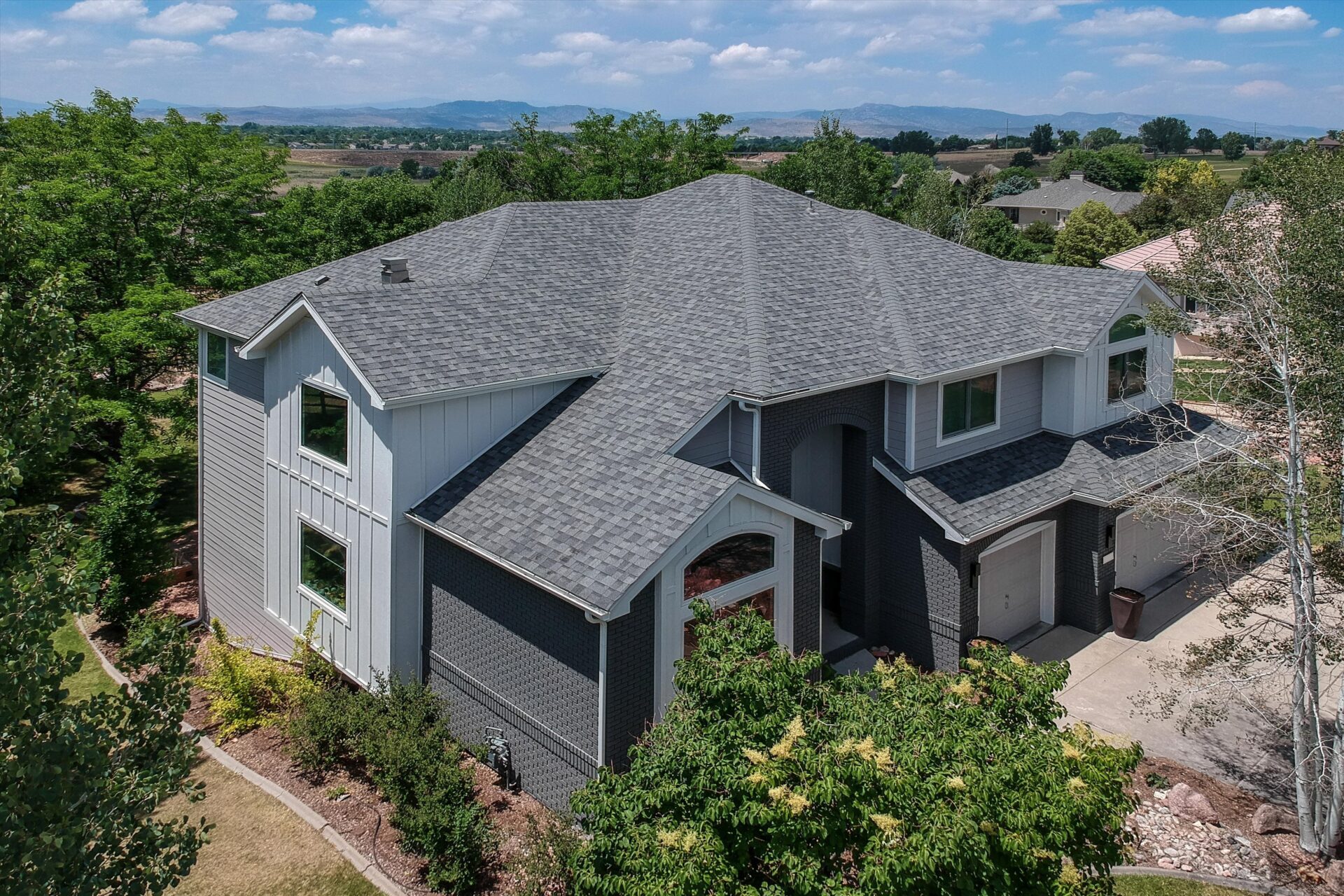
Exterior Doors · Colorado Front Range
Exterior Door Installation & Replacement in Colorado
Entry, patio, sliding, storm and garage doors — installed by the same company that handles your windows and siding, so the opening, the flashing and the cladding around it are one contractor’s responsibility instead of three.
Quick Answer: Who Replaces Exterior Doors in Colorado?
Northern Lights Exteriors installs and replaces exterior doors across the Colorado Front Range and into the foothills. Entry doors come primarily from Therma-Tru and ProVia, with an aluminum-clad wood entry door available from Pella. Sliding patio doors are available from the same manufacturers whose windows we install — Andersen, Pella, Marvin and Anlin. We also handle storm doors and garage doors. We have worked on Colorado exteriors since 2001 and are a Pella Certified Contractor. Doors most often go in alongside a window or siding project, because the door opening, its flashing and the cladding around it are all the same detail — but we will quote a door-only job. We replace exterior doors rather than refinish them, and we do not do interior doors.
What We Install
Entry & Front Doors
Fiberglass and steel entry systems from Therma-Tru and ProVia, plus an aluminum-clad wood entry door from Pella where the look of real wood matters and the maintenance of real wood does not. Fiberglass is the workhorse at altitude: it will not swell, rot or take on the seasonal movement that leaves a wood slab sticking in July and gapping in January.
Patio & Sliding Doors
Sliding patio doors from Andersen, Pella, Marvin and Anlin — the same manufacturers whose windows we install, so a door and the windows around it can be specified as one package with matching frames, finishes and glass. Worth doing together: a patio door is mostly glass, and it is usually the largest single source of heat loss on that wall.
Storm Doors
Added protection on an entry that takes weather or afternoon sun, and a way to get airflow without leaving the main door open. Specified to suit the entry door behind it — a full-glass storm door on a dark, sun-facing slab can trap enough heat to affect the door behind it, which is a detail worth getting right rather than guessing at.
Garage Doors
We handle garage doors as part of the exterior. Because the garage is usually the largest opening on the front of the house, it is also the one where the surrounding trim, flashing and siding most often get left half-finished when the door is treated as a separate trade.
Why Doors Fail Here Specifically
Colorado is hard on doors in ways that have nothing to do with the door’s quality. Four things do most of the damage:
Altitude and UV. Front Range sun is more intense than the sun a door was likely tested under. Finishes chalk, dark slabs run hot, and a south- or west-facing entry ages years faster than the identical door on the north side of the same house.
Freeze-thaw and daily swing. A 40-degree swing between afternoon and night is ordinary here. Materials expand and contract through that cycle every day, and the joint that survives it is the one that was detailed for movement rather than caulked tight.
Wind-driven rain and snow. Water does not simply fall on a Front Range door, it gets pushed sideways into the head and the jambs. A door that sheds a vertical rain can still leak in a spring storm if the head flashing and the sill pan were skipped.
Settlement. Expansive soils move houses, and a door is the first place anyone notices — a slab that latches in one season and drags in the next is often reporting on the frame, not on itself.
Which is why a door that is genuinely failing and a door that was simply installed out of square look identical from the inside, and only one of them is fixed by buying a new door.
The Install Is the Product
Two crews can hang the same door out of the same box and get different results ten years apart. The difference is entirely in the opening.
A door we install gets the frame set plumb, level and square before anything is fastened, because every operating problem a door will ever have starts there. It gets a sill pan under the threshold so that any water reaching the sub-sill is directed back out rather than into the floor framing, where it will do its damage quietly for years. It gets head flashing lapped correctly over the weather barrier, so gravity keeps water outside without depending on sealant. The shim spaces get insulated with a low-expansion foam that will not bow the jambs. And the threshold and weatherstripping get adjusted after the door is hung, not before.
None of that is visible when the trim goes on, which is exactly why it gets skipped. It is also why the most common door failure we are called to look at is not a bad door — it is a good door in an opening that was never flashed.
Doors and the Rest of the Exterior
Most of the doors we install go in as part of a window or siding project, and that is usually the right way to buy them. The door opening, the window openings beside it and the cladding that ties them together are one continuous weather barrier. When a door is bought separately, someone has to own the seam where the new door meets siding that a different company installed — and in practice nobody does.
Specifying doors and windows together also means one order, one delivery, one crew, one set of finishes that actually match, and one warranty conversation if something goes wrong later. If you are already replacing windows, adding the patio door to the same order is the cheapest it will ever be to do.
That said, we will quote a door-only job. If the entry door is the problem and the rest of the exterior is fine, we are not going to tell you to replace the windows to get it. See our replacement windows and siding pages if the project is bigger than one opening, or the exterior remodeling contractor overview if it is the whole house.
Doors in Wildfire (WUI) Areas
If your address falls inside a mapped wildland-urban interface area under the 2025 Colorado Wildfire Resiliency Code, the door schedule is not a free choice. In Class 2 areas an exterior door must be approved noncombustible construction, solid core wood not less than 1¾ inches thick, or carry a fire protection rating of not less than 20 minutes. Any glazing within the door follows the window rule — tempered glass, multilayered glazed panels, glass block, or a 20-minute rating. Single-pane annealed glass meets none of them.
Garage doors are treated separately: they are excepted from the door construction requirement, but the perimeter gap has to be controlled to no more than one-eighth of an inch — achieved with tested weather-stripping, by overlapping the door onto the jambs and headers, or by covering the jambs and headers with metal flashing. It is a small detail that decides whether embers get under the door.
Adoption is happening jurisdiction by jurisdiction, so the requirement depends on your specific address rather than your county. We confirm what applies before we write a door schedule, because a door ordered against the wrong assumption is a six-week problem, not a six-day one.
Full detail on what passes, why the whole assembly matters and how to keep a made-to-order door from failing plan review: WUI & fire-rated doors.
You Will Know Where Your Doors Are
Doors are a special-order product. They are built to your opening, and the gap between signing and installing is where most of the frustration in this trade lives — not because the wait is long, but because nobody tells you anything during it.
Every Northern Lights Exteriors project runs through our own client portal. Contracts, permits, the delivery and install schedule, inspections, before and after photos, and payments broken out by trade all live in one place you can open whenever you want to, without calling to ask. It is built in-house, and it is the part of the job customers tell us they did not know they were missing.
What We Do Not Do
Worth saying plainly, so nobody spends a phone call finding out:
Interior doors. We are an exterior contractor. Bedroom, closet and passage doors are not our trade and we will point you elsewhere.
Refinishing and restoration. We replace exterior doors; we do not strip, refinish or restore an existing slab. If what you have is a solid door with a tired finish, a refinisher will serve you better and cost you less than we would.
Where We Install Doors
Across the northern Front Range and into the foothills — from Fort Collins, Greeley and Loveland south through Longmont, Boulder, Broomfield and the Denver metro, and west into Golden, Evergreen, Lyons, Nederland and Estes Park — and into the mountains in Summit County. If you are not sure whether your address is in our area, call and ask; it is a short answer.
Exterior Door FAQs
What exterior door brands do you install?
Entry doors come primarily from Therma-Tru and ProVia. Pella also offers an aluminum-clad wood entry door, which is the one to look at when you want real wood on the inside without real wood’s maintenance on the outside. Sliding patio doors are available from Andersen, Pella, Marvin and Anlin — the same manufacturers whose windows we install, so a patio door and the windows around it can be ordered as one matched package. We are a Pella Certified Contractor.
Do you replace just one door, or do I have to do the whole house?
We will quote a single door. Most door work does go in alongside a window or siding project, because the opening and the cladding around it are the same detail and it is more efficient to do at once — but if your entry door is the problem and the rest of the exterior is fine, that is a job we will take on its own.
How long does a replacement door take?
The install is usually a day for a standard entry or patio door. The lead time in front of it is the real variable: exterior doors are built to order, so plan in weeks rather than days between signing and installing, and longer for custom sizes, specialty glass or a door that has to meet a wildfire code requirement. We give you the combined timeline up front rather than quoting install days alone, and you can watch the order move through the client portal.
Is fiberglass or steel better for a Colorado front door?
Fiberglass for most homes here. It handles the daily temperature swing and the UV load at altitude without swelling, rusting or taking a dent, and it holds a finish far longer on a sun-facing elevation. Steel is a reasonable, lower-cost choice on a protected entry with a deep overhang, but it dents, and once the skin is breached at a scratch it will corrode from the inside out. Wood looks the best and asks the most; Pella’s aluminum-clad wood is the way to get the look without signing up for the refinishing cycle.
My door sticks in summer and lets light through in winter. Do I need a new one?
Maybe not, and it is worth finding out before you spend money. That pattern usually reports on the opening rather than the door — a frame gone out of square from settlement, a failed sill, or a slab that was never hung plumb. A new door dropped into the same bad opening will do the same thing. We would rather look at it and tell you it is an adjustment than sell you a door that will not fix the problem.
Do you install patio doors and windows at the same time?
Yes, and it is usually the sensible way to do it. A patio door is mostly glass and is often the single largest source of heat loss on that wall, so replacing the windows around it and leaving it in place tends to disappoint people. Ordering together also gets you matching frames, finishes and glass packages, one delivery and one crew.
Can you do doors that meet the Colorado wildfire code?
Yes. In a Class 2 WUI area an exterior door must be approved noncombustible construction, solid core wood at least 1¾ inches thick, or rated at not less than 20 minutes, and glazing inside the door has to be tempered, multilayered, glass block or 20-minute rated. Whether that applies depends on your specific address, not your county, so we confirm it before the door is ordered. Our Colorado Wildfire Resiliency Code guide explains the requirements in full.
Do you do interior doors or door refinishing?
No to both. We are an exterior contractor, so interior passage doors are not our trade. And we replace exterior doors rather than refinishing or restoring them — if you have a sound door with a tired finish, a refinisher is the better and cheaper call.
Replacing a Door This Year?
Tell us which opening is giving you trouble. If it is the door, we will show you the options. If it is the opening, we will tell you that instead.