Deck Installation — Centennial, CO
Centennial Custom Deck Builder
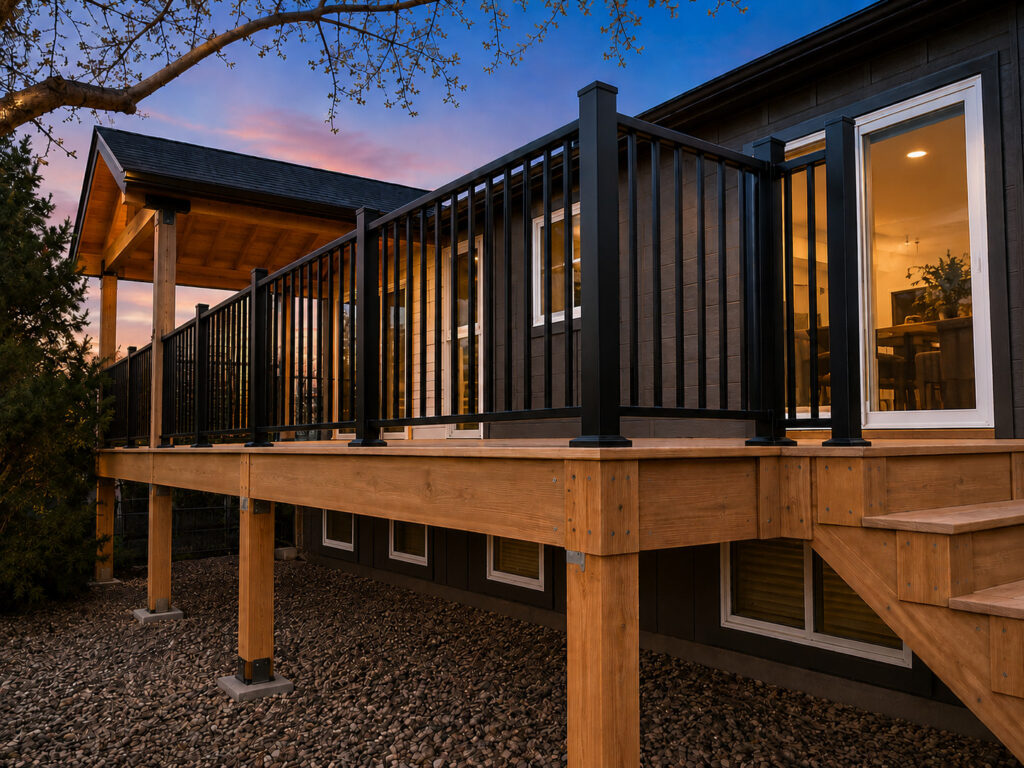
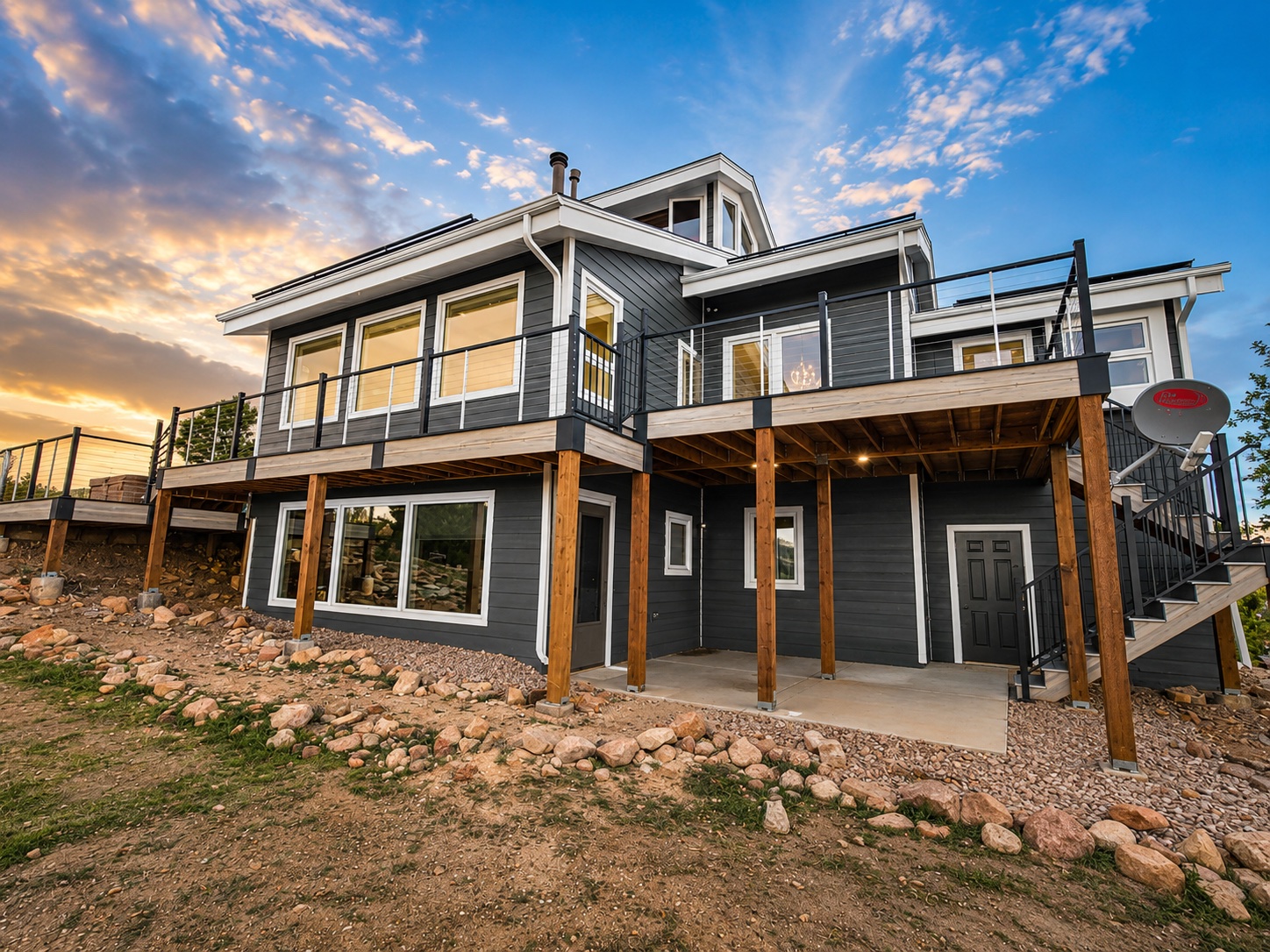
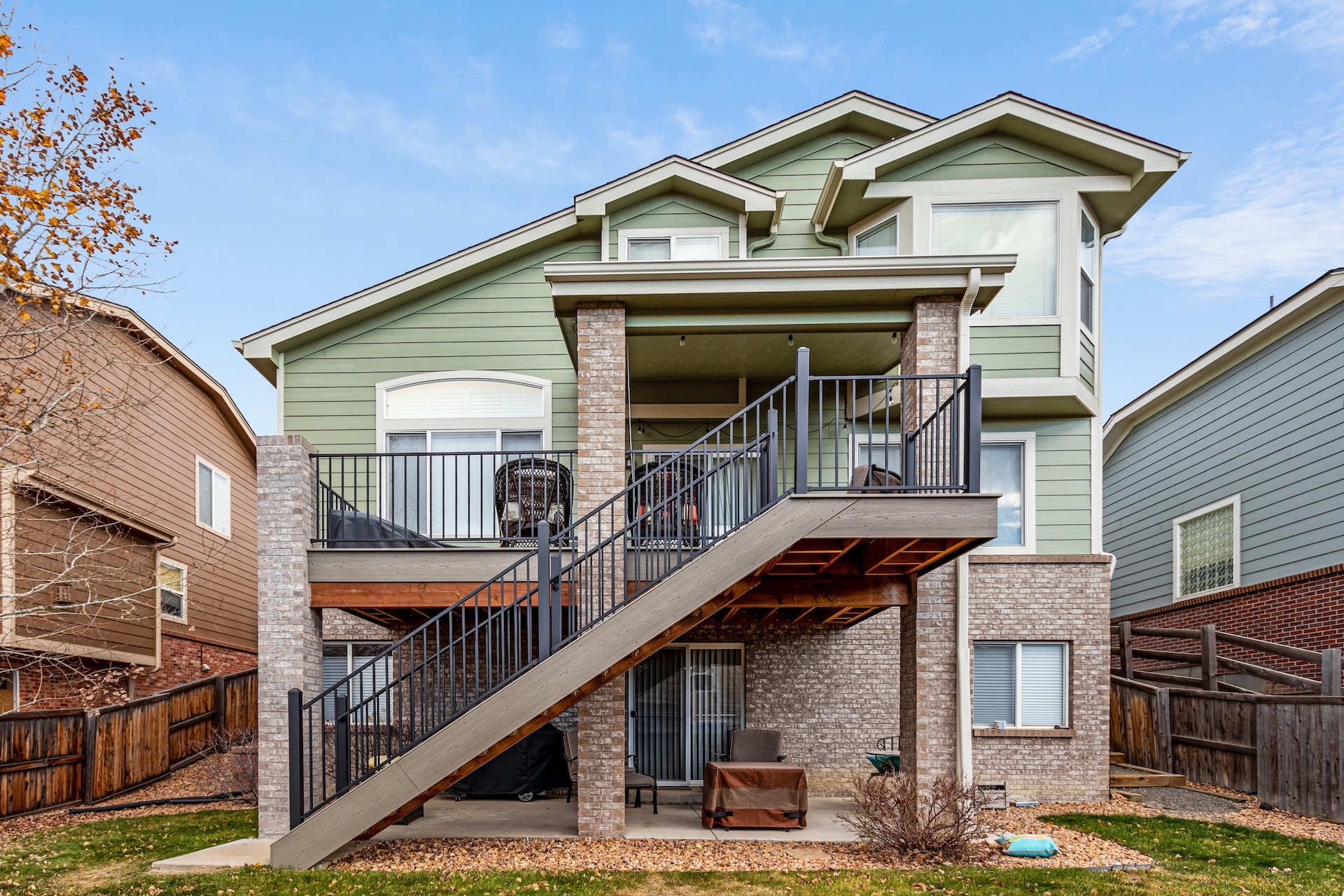
Replacing the forty-year-old deck that came with the house — composite and PVC decking, patio covers and louvered pergolas designed in from the start, with the HOA submittal prepared.
Who is the best deck builder in Centennial, CO?
Northern Lights Exteriors installs composite and PVC decks only — Trex, TimberTech and Deckorators — under a Class C general contractor license, working Colorado since 2001.
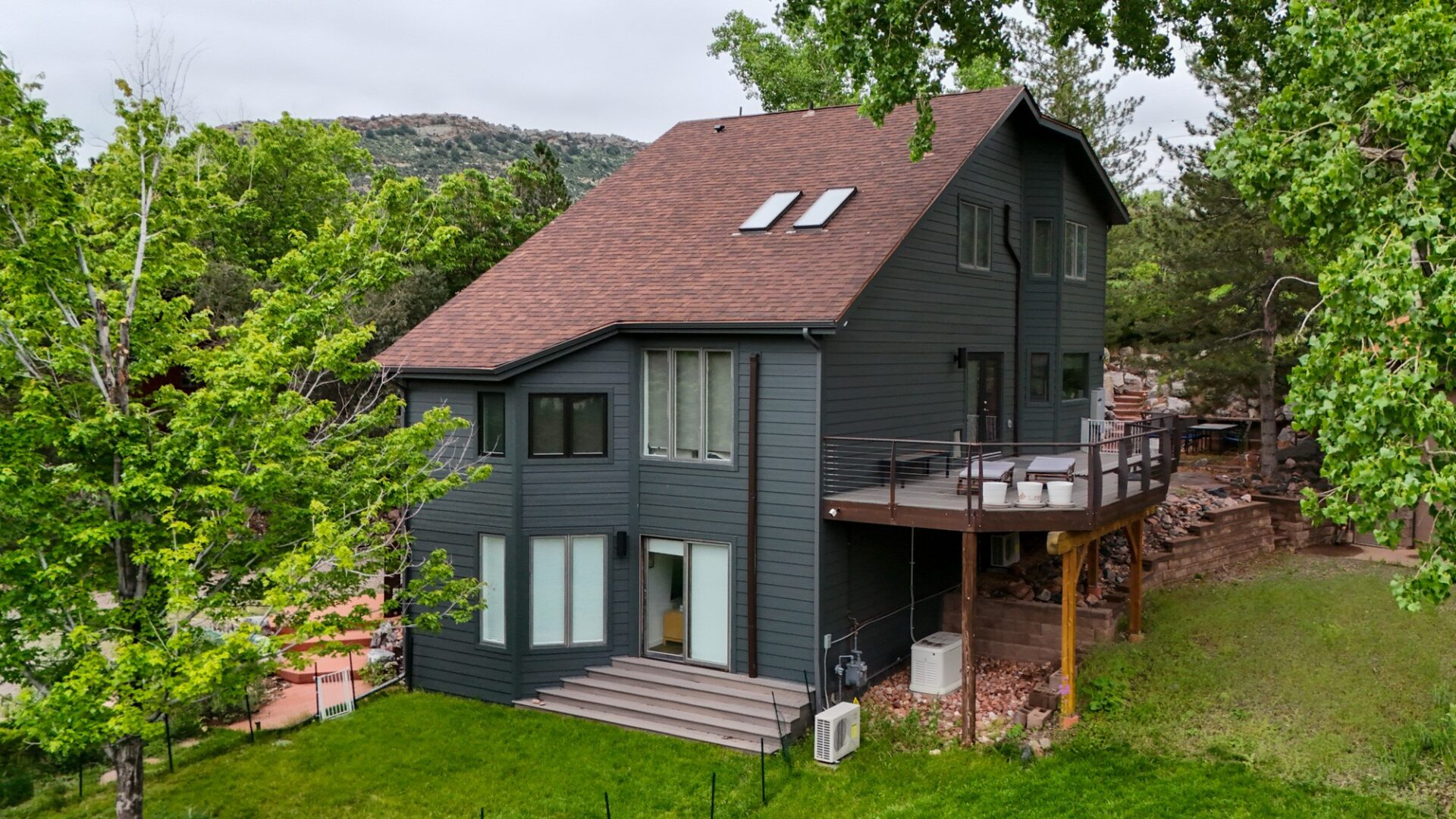
Centennial’s decks came with the houses and are now forty years old. The boards are the visible problem; the ledger where the deck meets the wall is the real one, because on decks of that era it was often lagged straight to the sheathing with no flashing.
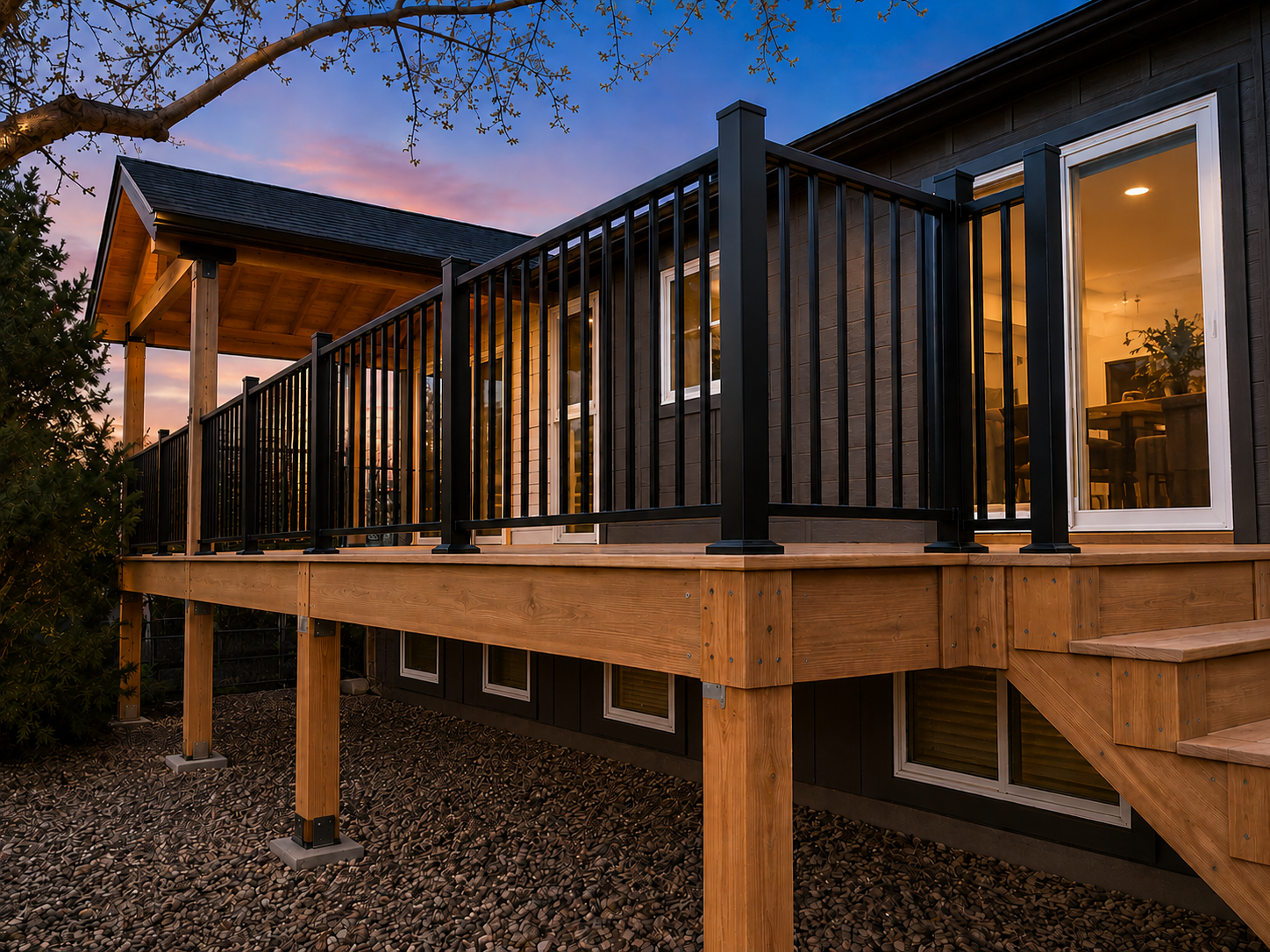
We also build patio covers and louvered pergolas — on a Front Range back yard, covering the space changes how much of the season it is usable more than making it bigger does. Designed in from the start rather than retrofitted. Rated 4.9 out of 5 from 552 verified reviews.
Your Price, Decided With You — Not a Surprise Quoted Price Later
The worst part of most deck projects is the gap. You spend an hour describing what you want, someone measures, everyone leaves — and days later a number lands that you either swallow or argue with. If it comes in high, you start over. We took the gap out.
① Watch the price move while you decide
On the first visit we walk your foundation, structure, decking and finish options together on software we built ourselves. Change the framing, change the boards, change the railing — the price updates in front of you, in real time. You are not waiting days to find out what your decisions cost.
② Build to your number, in the same sitting
Tell us what you want to spend and we work toward it while we are standing on the site with you, instead of mailing a proposal that misses by twenty percent and starting again. Every option is priced as you consider it, so the budget conversation happens with you rather than to you.
③ Find out what you can actually live without
When every change is priced the moment you make it, the trade-offs get obvious fast. Most people end up cutting one thing they were sure they wanted, and protecting one thing they had not realized mattered to them. That only happens when you can see it.
④ This is our own technology
Not a catalog and not an off-the-shelf calculator. We built it because deck pricing genuinely is complicated — footings, framing, spans, rail systems and finishes all move the number differently — and we would rather show you why than ask you to trust a lump sum. You leave the first appointment with the scope of work in hand.
⑤ And no, this is not a high-pressure close
Worth saying plainly, because real-time pricing on a first appointment is exactly what high-pressure home-improvement sales looks like — so the suspicion is fair. We are not doing that. Nobody is going to sit in your kitchen for ninety minutes waiting for a signature, and there is no discount that expires when we walk out the door. This is education: what the options are, what each one costs, and which ones are genuinely worth it on your build. You end up with a project moving at a price you understood from the start — and you decide on your own time.
The Deck That Came With the House Is Forty Years Old
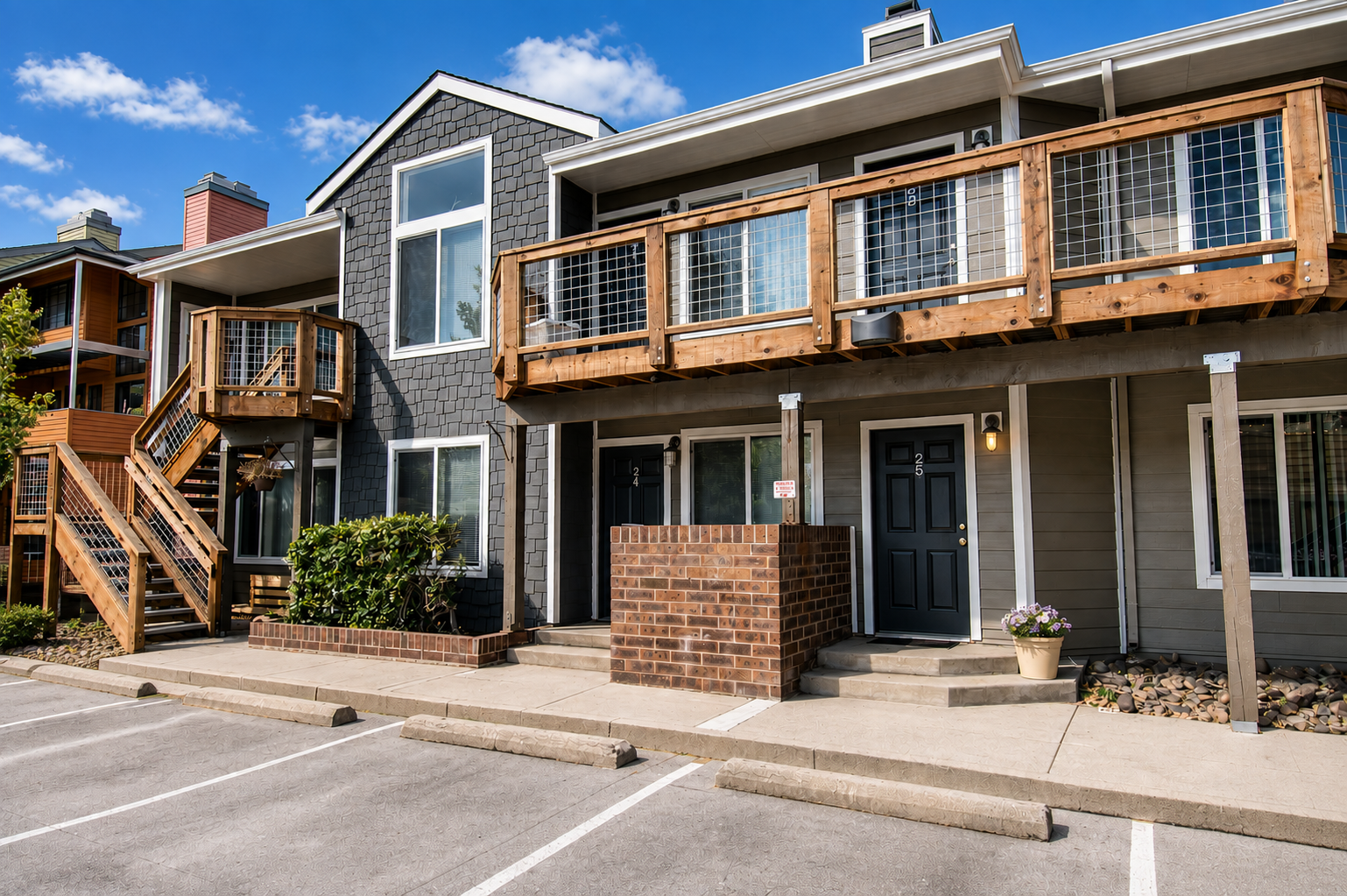
Centennial subdivisions were built with decks, and those decks were built the way decks were built then: pressure-treated pine or cedar, on a frame lagged to the rim joist, with a ledger detail that predates most of what we now know about keeping water out of a wall.
Four decades on, the failures are consistent enough to list. If you recognize two or more of these, the deck is not a repair candidate:
Boards that cup, split and splinter
The visible symptom and the least important one. A board can be replaced. What it tells you is how long the structure has been taking water.
Fasteners working loose
Wood moves seasonally, and forty seasons of that backs screws and nails out of the framing. Loose boards underfoot are a structural message, not a maintenance one.
A ledger you cannot see
Where the deck meets the house is the most common water-intrusion detail in residential construction, and on a deck this age it was often lagged straight to the sheathing with no flashing at all. It is also the connection that fails catastrophically rather than gradually.
Rail heights that no longer comply
Guard height and baluster spacing have both changed. A deck built to 1980s standards is not automatically unsafe, but it will come up in an inspection when you sell.
The honest recommendation on a deck of this vintage is usually replacement rather than repair, and we would rather say that at the estimate than sell you a resurfacing that leaves the forty-year-old structure underneath.
What We Build, and What We Do Not
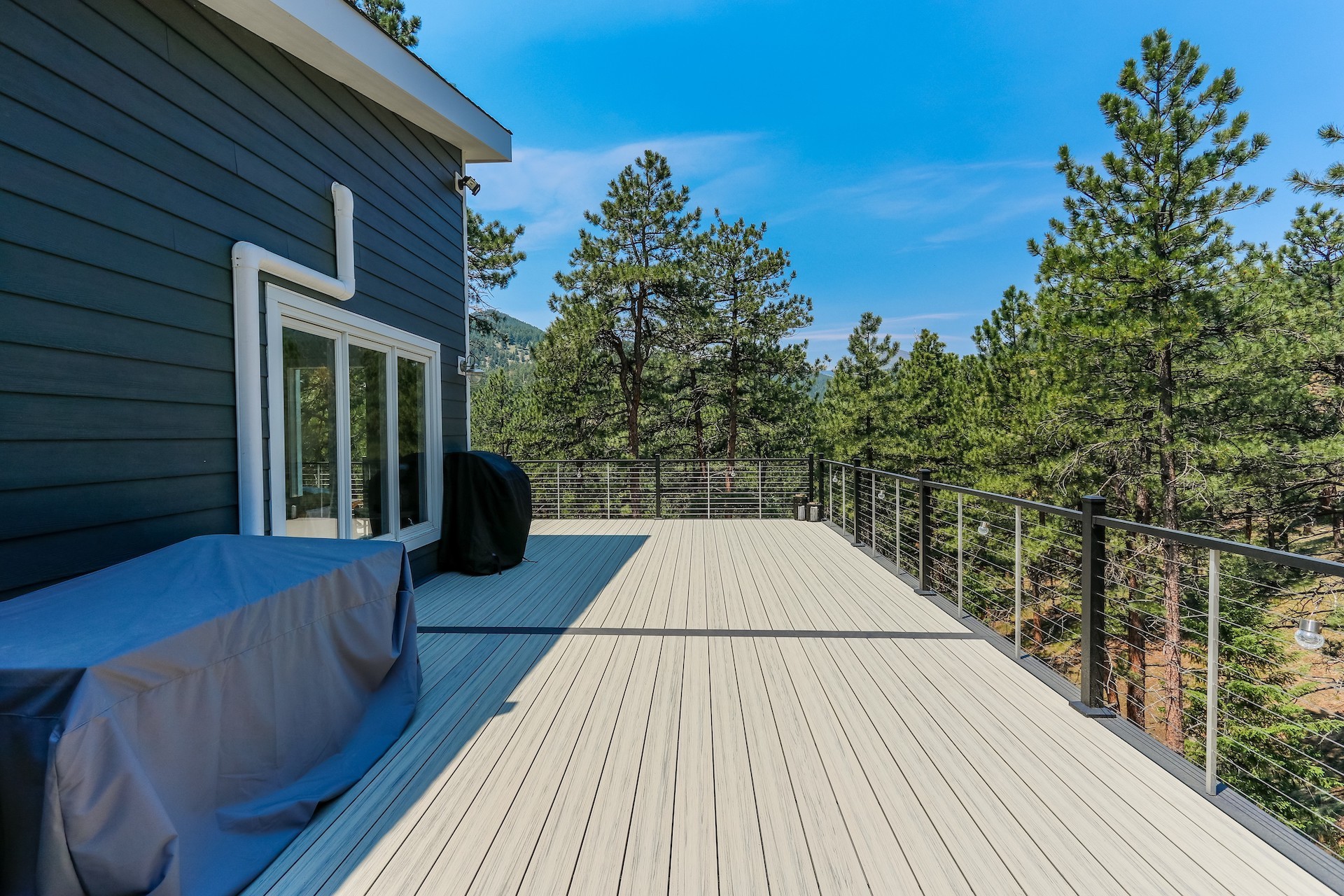
Homeowners comparing composite deck builders in Centennial should start with scope, because ours is narrower than most. We install composite and PVC decking only — Trex, TimberTech and Deckorators — and we do full installations rather than repairs. That has been our scope for years, and it means we are the wrong contractor for some jobs. We do not build wood decks. Not cedar, not redwood, not pressure-treated pine. If that is what you want, better to know now.
The trade against the wood deck it replaces, honestly:
| Composite / PVC | The wood it replaces | |
|---|---|---|
| Maintenance | Wash it. That is the list. | Sand, stain or seal on a cycle that shortens as the boards age — and the cycle is what people quietly stop doing around year four. |
| How it ages | Fades slightly in the first year then holds. Capped boards resist the staining that snow melt and shade cause. | Splinters, cups, checks and grays. Fasteners back out as the boards move. |
| Hail and UV | Holds up to both. Color is through-body or capped rather than a surface coating that the sun can strip. | High-altitude UV is hard on any finish, and the finish is the only thing protecting the board. |
| Up-front cost | Higher, and there is no honest way around that. | Cheaper to build, then paid back with interest in stain, labor and eventual replacement. |
Related: composite decking, Trex, and our deck and outdoor living work.
Patio Covers and Pergolas — the Thing People Actually Search For
Worth its own section, because covered outdoor space is asked about here as often as decking is, and because it is the part most often added badly as an afterthought.
A Front Range back yard has a specific problem: the sun is intense at this elevation and the afternoon storms are sudden. A deck with no cover gets used in a narrow band of hours. Cover it and the same square footage becomes usable most of the day, most of the season — which is a bigger change to how a house lives than making the deck larger.
- A solid patio cover in Centennial, CO gives full shade and rain protection, and they can be detailed to look original to the house rather than bolted on.
- Louvered pergolas adjust — open for light, closed for sun or a shower. The right answer where the space is used at different times of day.
- Designed in, not added later. A cover changes the post layout, the footings and the ledger. Deciding at the design stage costs far less than retrofitting one onto a finished deck.
- HOA applies here too. A cover is a structure and a visible change, so it needs a submittal. We prepare it.
More: patio covers, louvered pergolas and covered porches.
The System Behind the Work
A deck replacement is the project most likely to produce a surprise once the old structure comes off — a ledger hiding rot in the rim joist, footings that were never deep enough, a setback nobody checked. Those are the moments where communication holds or falls apart.
Two things make that possible, and they are the reason to choose us over a cheaper quote.
First, experience and scope. We have been working on Colorado’s Front Range since 2001, and we hold a Class C general contractor license (Colorado license #C120350) rather than a single-trade license. That is not a technicality: it means roofing, siding, windows, decks and outdoor living can run under one contract, with one project manager accountable for the flashings where those trades meet — which is precisely where multi-contractor projects leak, literally and figuratively. James Hardie has recognized us as an Elite Preferred contractor continuously since 2011, and as a President’s Club member — their highest contractor distinction nationwide. Our rating is 4.9 out of 5 from 552 verified reviews.
Second, a proprietary on-demand client portal we built ourselves. Most of what people hate about a remodel is not the construction. It is not knowing — who to call, whether the permit went in, when material arrives, what has been paid, whether it passed inspection. We built a system to remove exactly that, and as far as we know no other exterior contractor in this market offers it:
Every conversation in one place
Messages, decisions and change requests are logged against your project rather than scattered across texts, voicemails and three different crew members’ phones.
Contracts and scope, always retrievable
Your signed contract and itemized scope live in the portal, so you can easily get a refresh on what was agreed — on your own, any time.
Permit status you can see
Where the permit is in the process, and when inspections are scheduled — without having to phone anyone to find out.
Delivery and install schedules
When material lands and when each trade starts, so you can plan around the work instead of waiting for a truck to appear.
Before, during and final photography
Documented condition before we start, progress images through production, and final photography — including the parts of the building you will never see again once it is closed up.
Payments tracked per trade
What is paid and what is outstanding, broken out by trade rather than as one running balance you have to reconcile yourself.
Inspection records
Each inspection and its result, recorded against the project and available when you sell the house and someone asks.
Access is an individual, custom URL issued to you — and you get it when we start talking, at the lead and project meeting, not after you sign something. That is deliberate: you can see how we run a project before you commit to one. It then stays available after the work is finished, which matters more than it sounds, because the documentation, images and inspection records are exactly what a buyer’s agent, an appraiser or an insurer asks for years later.
Get a Deck Estimate in Centennial
We look at the existing structure, tell you honestly whether it is a repair or a replacement, and design the cover in at the start if you want one rather than bolting it on later. The HOA submittal is prepared as part of the job.
Request Your Free Estimate → 📞 (303) 776-5263
Prefer email? Reach us at office@nlexteriors.com. Ask about financing options when we walk the property.
Centennial Decks — Frequently Asked Questions
Should I repair or replace my old deck?
On a deck built with the house in the 1970s, 80s or early 90s, usually replace. Cupped and splintering boards can be swapped, but they are a symptom — what matters is the structure underneath, and specifically the ledger where the deck meets the house. On decks of that era it was frequently lagged straight to the sheathing with no flashing, and that is the connection that fails suddenly rather than gradually. Resurfacing leaves all of that in place and costs a large fraction of a replacement.
Do you build wood decks in Centennial?
No. We install composite and PVC decking only — Trex, TimberTech and Deckorators — and full installations rather than repairs. That has been our scope for years across the whole Front Range. If you want cedar or redwood we are not the right contractor, and we would rather tell you now than at the estimate.
Is composite decking worth the extra cost?
Over the life of the deck, generally yes, and the reason is the maintenance cycle rather than the material. A wood deck needs sanding and staining on a schedule that shortens as it ages, and that is the thing homeowners quietly stop doing around year four — at which point the clock on replacement starts. Composite costs more up front and there is no honest way around that; what you buy is washing it instead of refinishing it.
Can you add a patio cover to my existing deck?
Sometimes, and the honest answer depends on the deck. A cover adds significant load and changes where the posts and footings need to be, so retrofitting one onto a deck that was not designed for it can mean rebuilding much of the structure anyway. If your deck is due for replacement, designing the cover in from the start is far cheaper than doing it in two stages. We will tell you which situation you are in.
Solid patio cover or a louvered pergola?
It depends on how you use the space. A solid cover gives full shade and keeps an afternoon storm off, and can be detailed to look original to the house. A louvered pergola adjusts — open for light, closed for sun or rain — which suits a space used at different times of day. On a Front Range back yard either one changes how much of the season the deck is usable, which is a bigger gain than more square footage.
Will I need HOA approval for a deck or cover?
Almost certainly for a cover, since it is a structure and a visible change, and often for a deck replacement too if the footprint, height or railing style changes. Centennial is largely covenant-controlled. We prepare the architectural submittal as part of the job and work backwards from your committee’s meeting calendar, because that calendar is usually the longest pole in the schedule.
Do I need a permit for a deck in Centennial?
Usually yes, and it comes from the City of Centennial. Guard height, baluster spacing and footing depth have all changed since these decks were originally built, so a replacement is brought to current code rather than rebuilt as it was. We pull the permit and schedule the inspections, and the results sit in your portal.