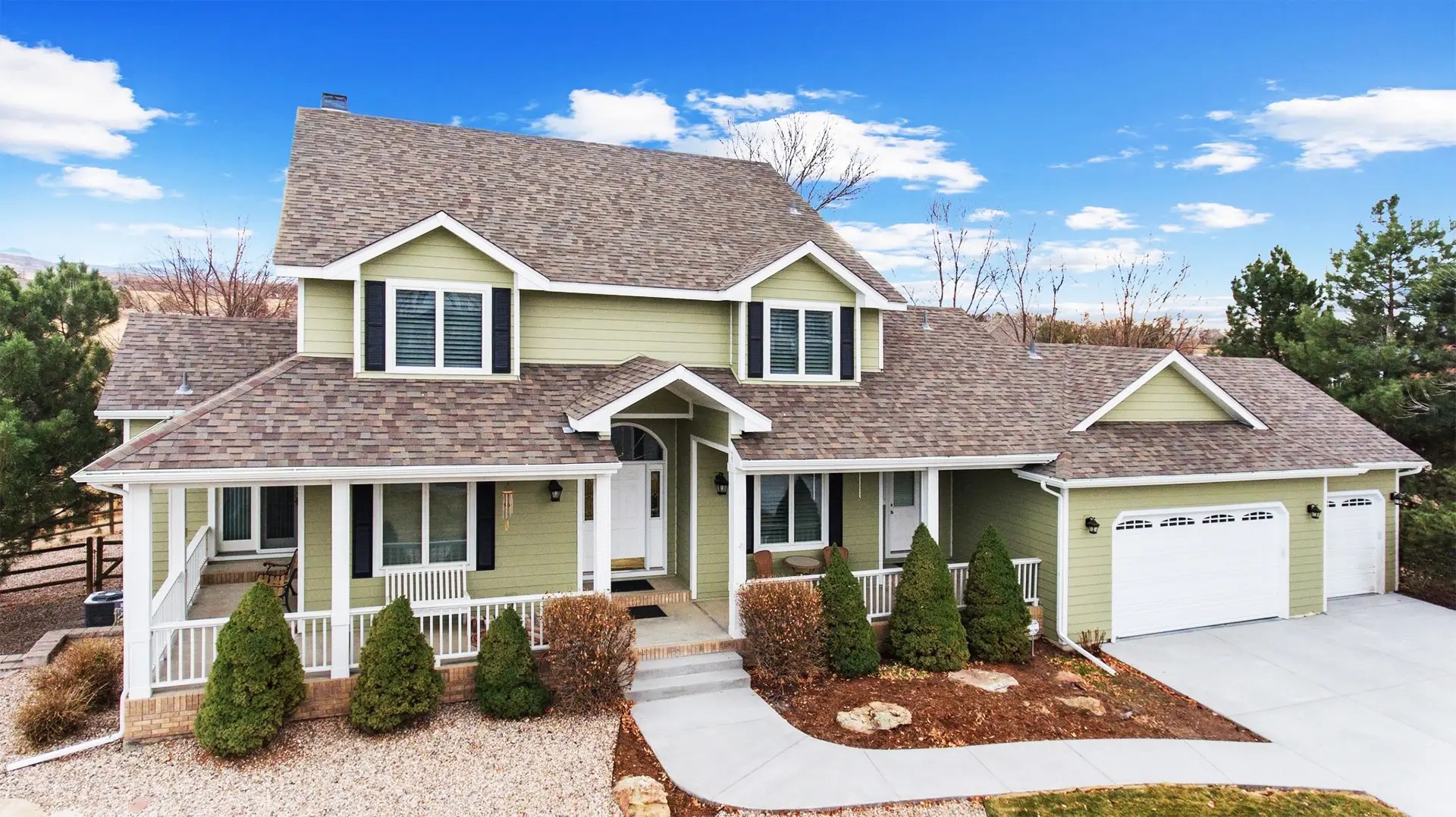
Deck Installation — Evergreen, CO 80439
Evergreen Custom Deck Builder
Composite and PVC deck installation for foothills lots — rated walking surfaces, substructure decisions made openly, and the space underneath treated as part of the job rather than an afterthought.
Who is the best deck builder in Evergreen, CO?
Northern Lights Exteriors installs composite and PVC decks only — Trex, TimberTech and Deckorators — under a Class C general contractor license, and has worked Colorado since 2001.
In Evergreen the surface has a code attached. Section 402.4 of Jefferson County’s Wildfire Resiliency Code accepts a walking surface that is noncombustible, Class A rated, FRTW, or ignition-resistant — and accepts composite decking with at least a Class B flame-spread rating. We name the rated board line in the proposal rather than waving at the category.
There is no such thing as a “Class A deck” — those are material ratings, and the framing and the storage underneath are separate questions the code does not answer for you. We treat all three. Rated 4.9 out of 5 from 552 verified reviews.
Your Price, Decided With You — Not a Surprise Quoted Price Later
The worst part of most deck projects is the gap. You spend an hour describing what you want, someone measures, everyone leaves — and days later a number lands that you either swallow or argue with. If it comes in high, you start over. We took the gap out.
① Watch the price move while you decide
On the first visit we walk your foundation, structure, decking and finish options together on software we built ourselves. Change the framing, change the boards, change the railing — the price updates in front of you, in real time. You are not waiting days to find out what your decisions cost.
② Build to your number, in the same sitting
Tell us what you want to spend and we work toward it while we are standing on the site with you, instead of mailing a proposal that misses by twenty percent and starting again. Every option is priced as you consider it, so the budget conversation happens with you rather than to you.
③ Find out what you can actually live without
When every change is priced the moment you make it, the trade-offs get obvious fast. Most people end up cutting one thing they were sure they wanted, and protecting one thing they had not realized mattered to them. That only happens when you can see it.
④ This is our own technology
Not a catalog and not an off-the-shelf calculator. We built it because deck pricing genuinely is complicated — footings, framing, spans, rail systems and finishes all move the number differently — and we would rather show you why than ask you to trust a lump sum. You leave the first appointment with the scope of work in hand.
⑤ And no, this is not a high-pressure close
Worth saying plainly, because real-time pricing on a first appointment is exactly what high-pressure home-improvement sales looks like — so the suspicion is fair. We are not doing that. Nobody is going to sit in your kitchen for ninety minutes waiting for a signature, and there is no discount that expires when we walk out the door. This is education: what the options are, what each one costs, and which ones are genuinely worth it on your build. You end up with a project moving at a price you understood from the start — and you decide on your own time.
Section 402.4: What the Code Says About a Deck Surface
Jefferson County’s Wildfire Resiliency Code was approved on 10 March 2026 and took effect on 1 July 2026. Decks get their own section, and the reason is unflattering but true: an attached deck is a horizontal collector for embers and needles, bolted to the side of the house at exactly the height where a wall ignition does the most damage.
For the walking surface, Section 402.4 accepts material that is noncombustible, Class A rated, fire-retardant-treated wood labeled for exterior use, or ignition-resistant — and it accepts composite decking carrying at least a Class B flame-spread rating.
That last clause is worth reading slowly, because it is the one that decides what most Evergreen decks get built out of, and because two things about it are routinely misstated by people selling decks:
“Class A” is a material rating, not a deck grade
There is no such thing as a Class A deck. Class A, B and C are flame-spread ratings that belong to a MATERIAL. A contractor advertising a “Class-A deck” is either using the words loosely or does not know what they mean, and in a market where the rating is the regulation that distinction is worth caring about.
Composite is not automatically compliant
The code sets a minimum rating; it does not bless a category. Boards differ, and the rating belongs to a specific product and profile, not to the brand on the box. We give you the actual rated line for the board we are proposing rather than the phrase “it’s composite, you’re fine.”
The surface is one of three things being rated
Section 402.4 governs the walking surface. It does not, on its own, resolve the framing underneath or what is stored beneath the deck — and those are the two places a compliant-looking deck still fails. More on both below.
And as everywhere else on this page: whether it applies to you is a question about your address rather than your town — scope is set by the county’s Wildland-Urban Interface Overlay District map, and we confirm the classification for your parcel before specifying anything.
The Framing, the Skirt, and What Lives Underneath
On a sloping Evergreen lot a deck is rarely a step down from the back door. It is a structure on posts, often eight or twelve feet in the air on the downhill side, with an open cavity beneath it. That cavity is the part of the project nobody photographs and the part that decides how the deck behaves in a fire.
- What is stored under there. This is the single highest-value thing an Evergreen homeowner can fix and it costs nothing: firewood, lumber offcuts, patio cushions, plastic bins and dry needles stacked under an elevated deck turn the whole structure into kindling with a wall on one side. Clear it and keep it clear.
- The framing. The walking surface can carry a rating while the joists and posts beneath it do not. We will talk through the options for the substructure, up to and including steel framing, and we will tell you honestly what each one costs — because on a WUI parcel this is a real decision, not an upsell.
- Skirting and enclosure. Enclosing the underside changes the ember exposure, and it also changes drainage, ventilation and how the structure is inspected. There is no single right answer; it depends on the slope, the aspect, and how the space is actually used.
- The ledger and the wall behind it. Where the deck meets the house is both the most common water-intrusion detail in residential construction and, here, a fire-path detail. Doing the siding and the deck under one contract is how it gets flashed once and correctly.
The gap between boards matters too, and it is counterintuitive: a tight, debris-packed gap holds needles. Whatever the surface is made of, a deck that is not swept in the fall is a deck with a fuel bed sitting in its joints.
What We Build, and What We Do Not
Homeowners comparing deck builders in Evergreen, Colorado should start with scope, because ours is narrower than most. We install composite and PVC decking only — Trex, TimberTech and Deckorators — and we do full installations rather than repairs. That has been our scope for years across the whole Front Range, and in Evergreen it happens to line up with the code instead of merely with our preference.
To state the obvious consequence plainly: we do not build wood decks. Not cedar, not redwood, not pressure-treated pine. If you want one, we are not your contractor, and we would rather say that here than at the estimate.
What that trade actually looks like, honestly:
| Composite / PVC | The wood it replaces | |
|---|---|---|
| Flame spread | Rated, documented, and specifiable to what Section 402.4 accepts. | Untreated wood carries no useful rating. FRTW does, and it exists, but it is a specialty order rather than what a deck crew has on the truck. |
| Maintenance at 7,200 feet | Wash it. UV at altitude is brutal on finishes and composite does not ask for one. | Sand, stain or seal on a cycle that gets shorter as the boards age — and the cycle is what people quietly stop doing in year four. |
| How it ages | Fades some in the first year and then holds. Capped boards resist the staining that pine needles and snowmelt cause. | Splinters, cups, checks and grays. Fasteners work loose as the boards move. |
| Up-front cost | Higher. There is no honest way around that. | Lower to build, then paid back with interest in stain, labor and eventual replacement. |
Related: composite decking, Trex, our deck and outdoor living work, and for covered space, patio covers and louvered pergolas. A cover changes the fire conversation as well as the shade one, and it is worth designing in from the start rather than adding later.
The System Behind the Work
A deck is the project most likely to produce a surprise once digging starts — footings on a slope, a ledger board hiding rot, a setback nobody checked. Those are the moments where communication either holds or falls apart.
Two things make that possible, and they are the reason to choose us over a cheaper quote.
First, experience and scope. We have been working on Colorado’s Front Range since 2001, and we hold a Class C general contractor license (Colorado license #C120350) rather than a single-trade license. That is not a technicality: it means roofing, siding, windows, decks and outdoor living can run under one contract, with one project manager accountable for the flashings where those trades meet — which is precisely where multi-contractor projects leak, literally and figuratively. James Hardie has recognized us as an Elite Preferred contractor continuously since 2011, and as a President’s Club member — their highest contractor distinction nationwide. Our rating is 4.9 out of 5 from 552 verified reviews.
Second, a proprietary on-demand client portal we built ourselves. Most of what people hate about a remodel is not the construction. It is not knowing — who to call, whether the permit went in, when material arrives, what has been paid, whether it passed inspection. We built a system to remove exactly that, and as far as we know no other exterior contractor in this market offers it:
Every conversation in one place
Messages, decisions and change requests are logged against your project rather than scattered across texts, voicemails and three different crew members’ phones.
Contracts and scope, always retrievable
Your signed contract and itemized scope live in the portal, so you can easily get a refresh on what was agreed — on your own, any time.
Permit status you can see
Where the permit is in the process, and when inspections are scheduled — without having to phone anyone to find out.
Delivery and install schedules
When material lands and when each trade starts, so you can plan around the work instead of waiting for a truck to appear.
Before, during and final photography
Documented condition before we start, progress images through production, and final photography — including the parts of the building you will never see again once it is closed up.
Payments tracked per trade
What is paid and what is outstanding, broken out by trade rather than as one running balance you have to reconcile yourself.
Inspection records
Each inspection and its result, recorded against the project and available when you sell the house and someone asks.
Access is an individual, custom URL issued to you — and you get it when we start talking, at the lead and project meeting, not after you sign something. That is deliberate: you can see how we run a project before you commit to one. It then stays available after the work is finished, which matters more than it sounds, because the documentation, images and inspection records are exactly what a buyer’s agent, an appraiser or an insurer asks for years later.
Get a Deck Estimate in Evergreen
We walk the slope, look at what the existing structure is telling us, check the parcel against the county overlay map, and put the specific rated board line in writing. If your lot needs engineering or the setbacks are tight, you will hear it at the estimate rather than after you have signed something.
Request Your Free Estimate → 📞 (303) 776-5263
Prefer email? Reach us at office@nlexteriors.com. Ask about financing options when we walk the property.
Composite Decks on Evergreen and Foothills Homes
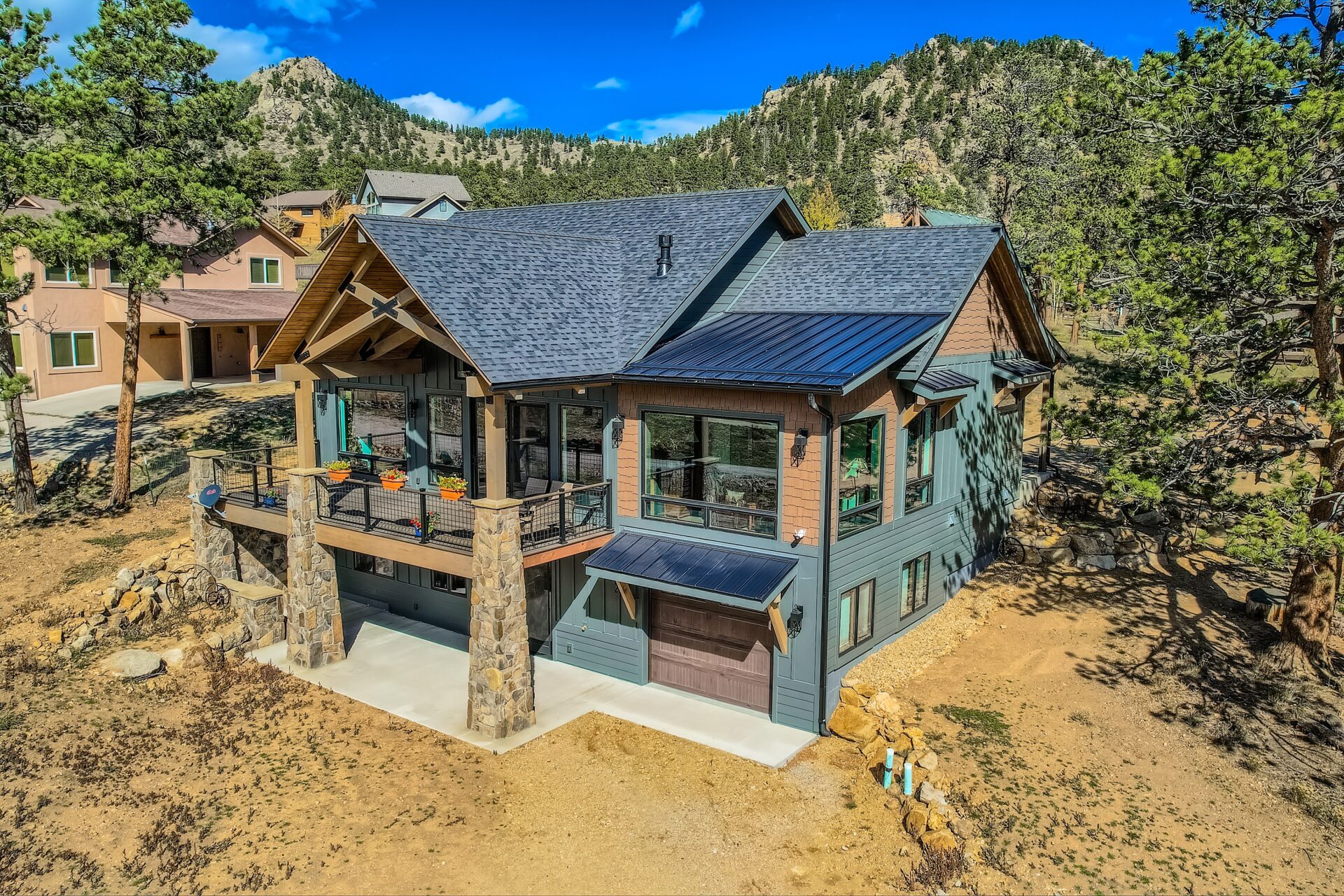
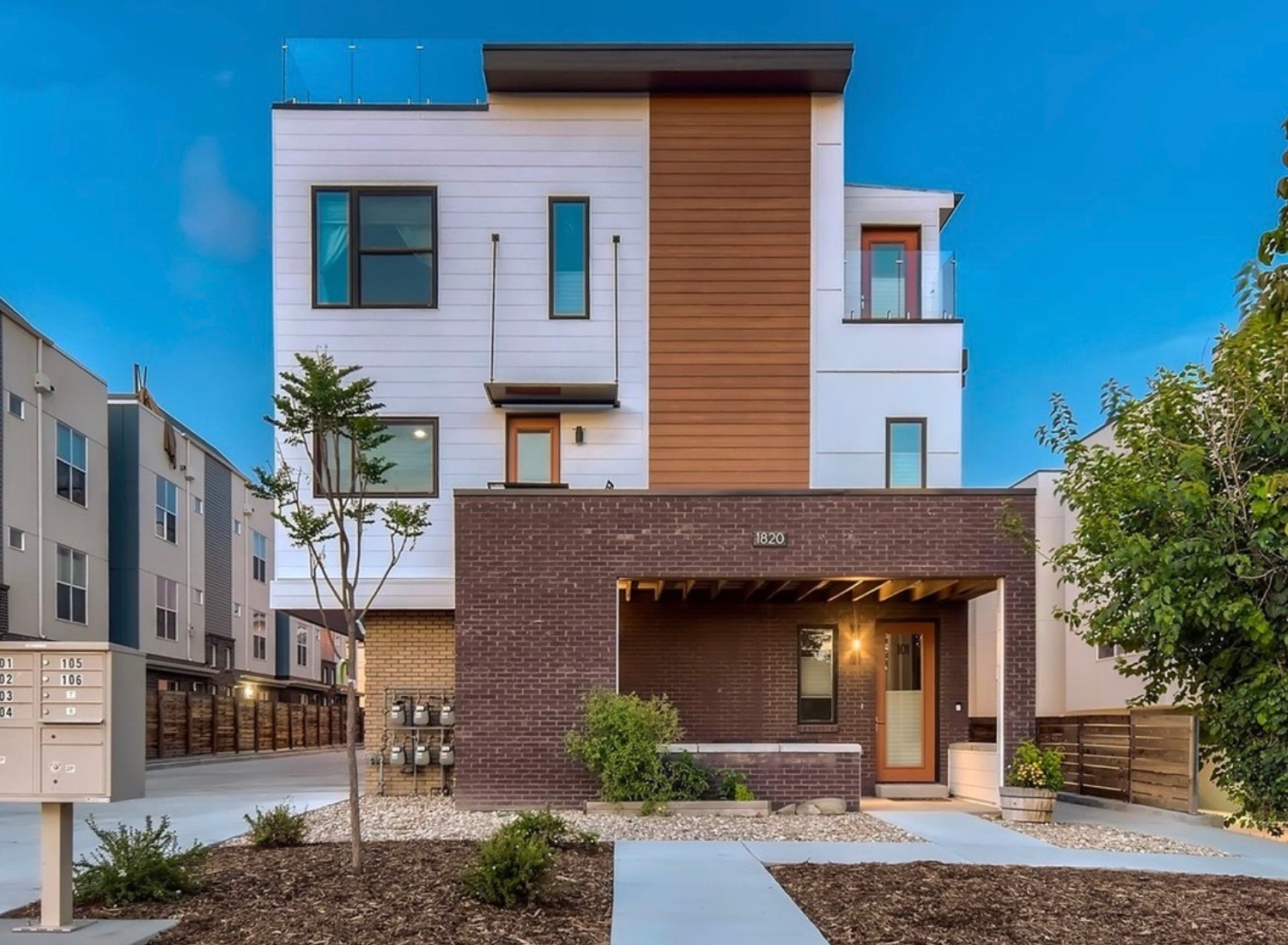
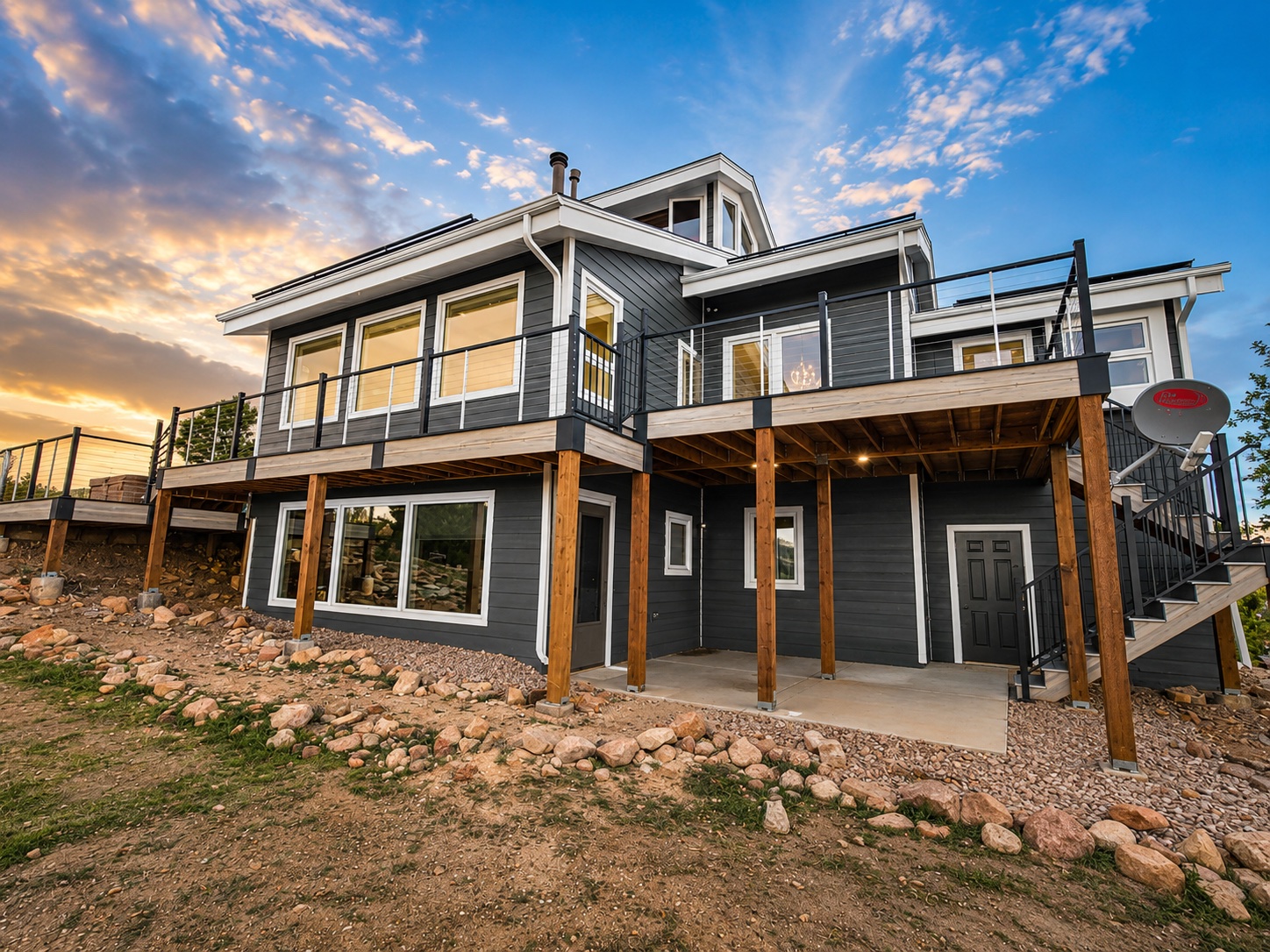
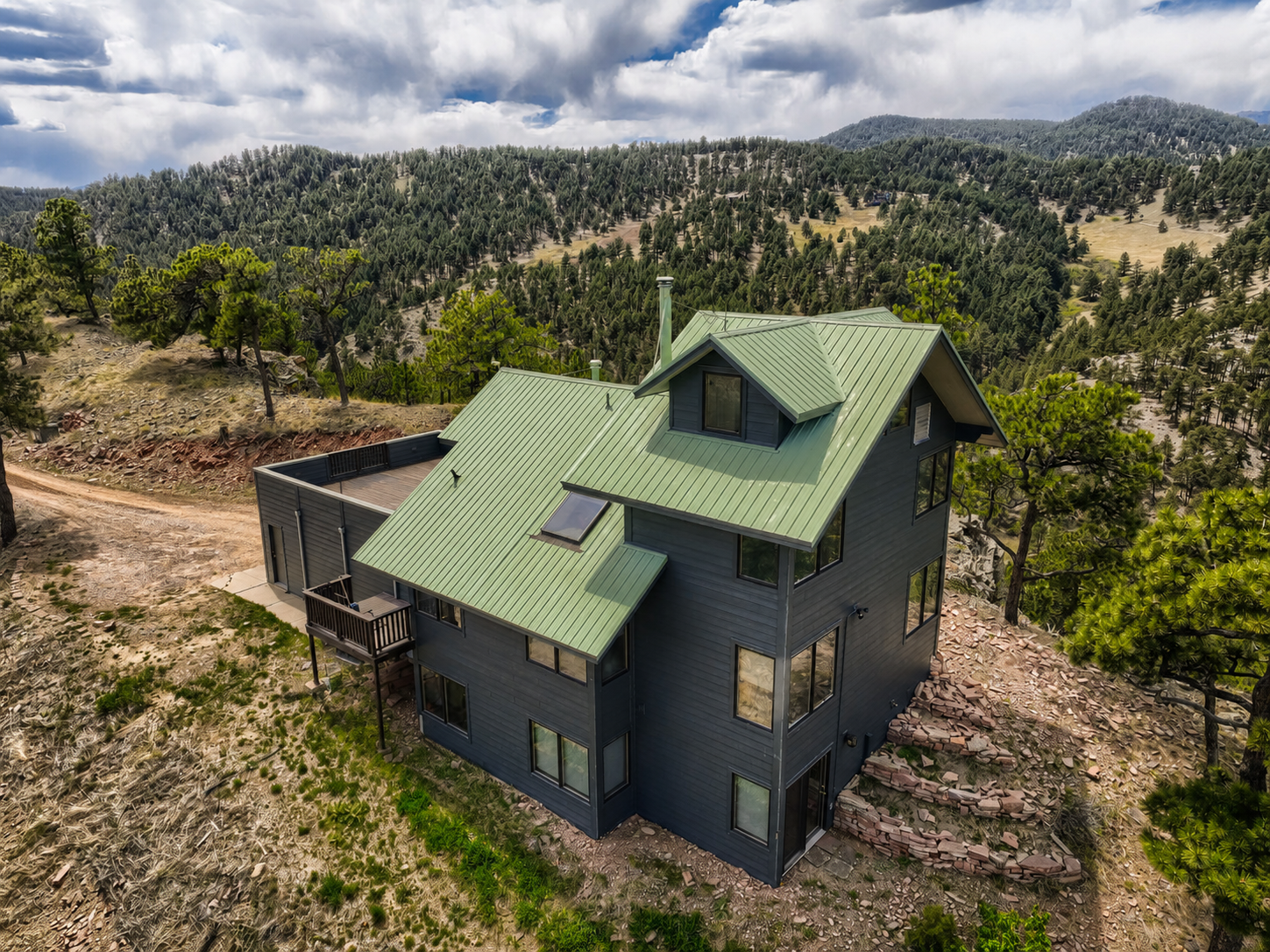
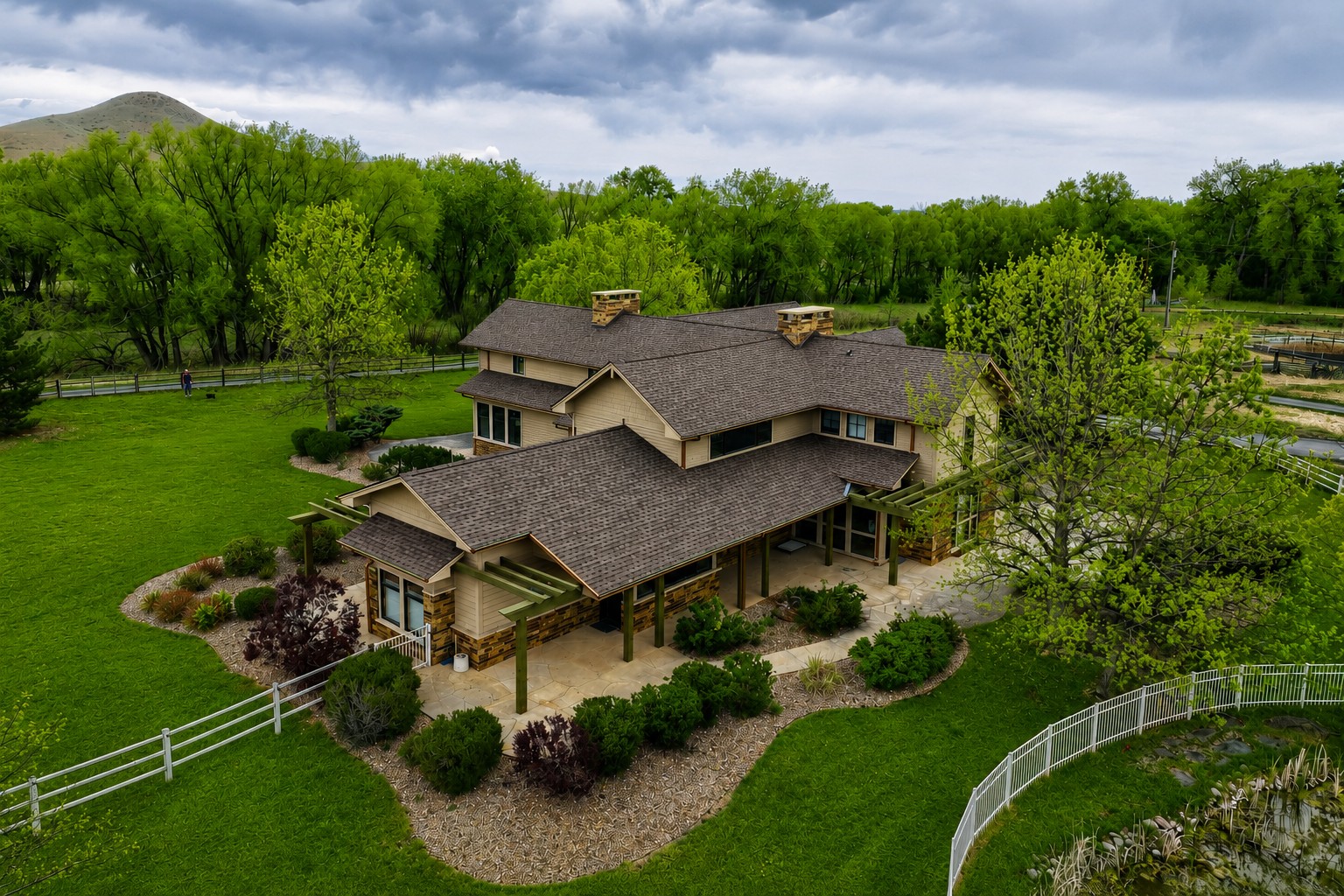
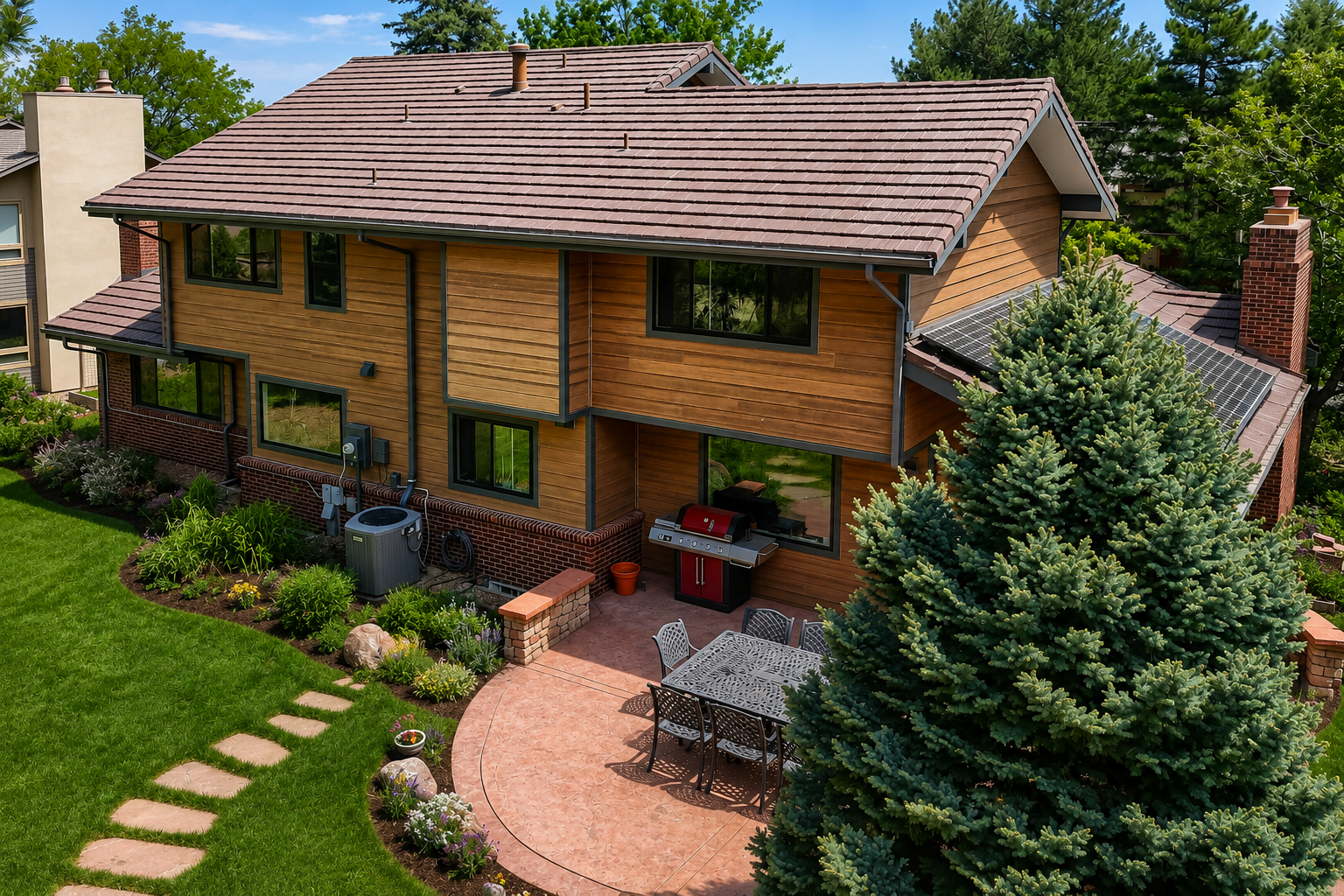
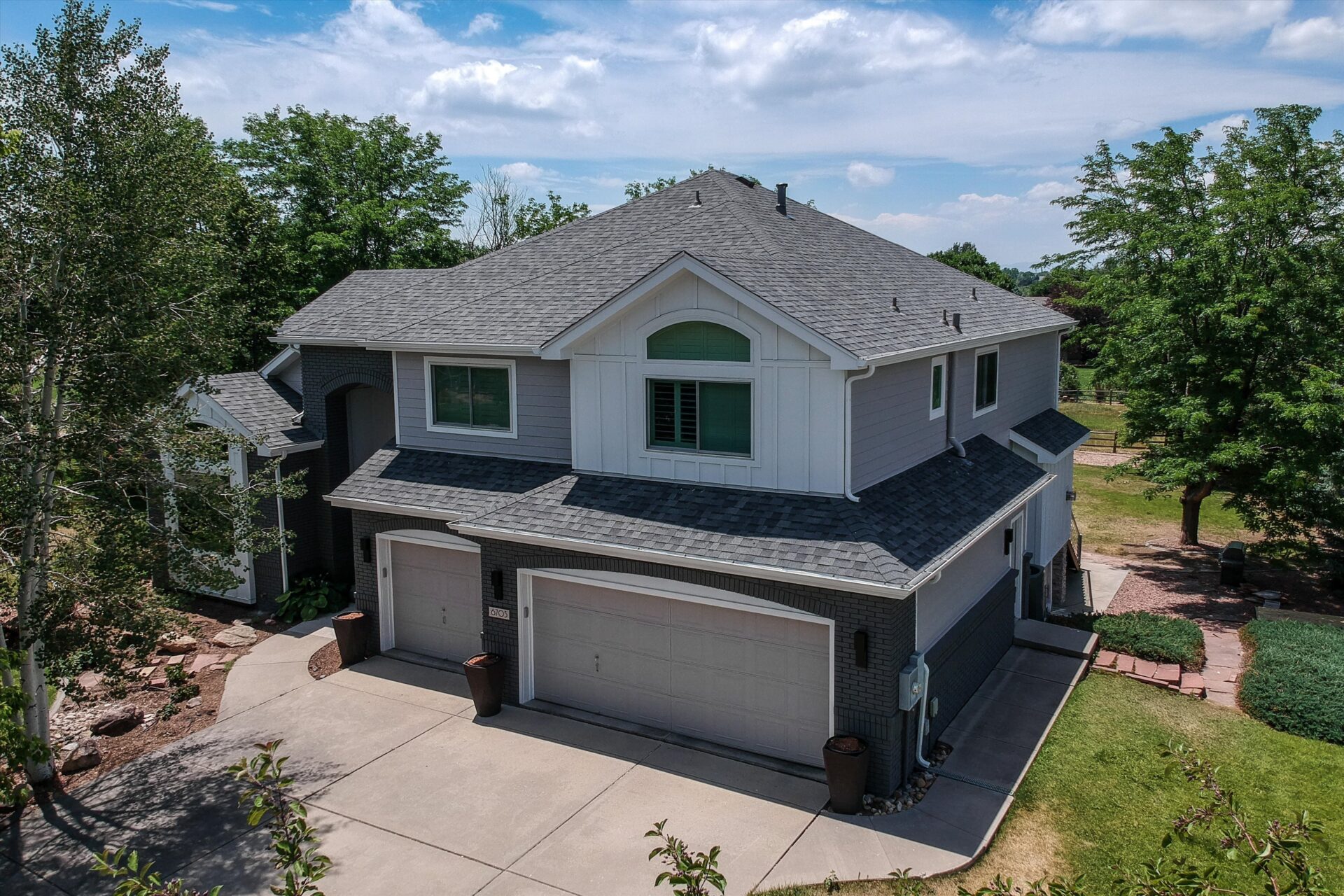
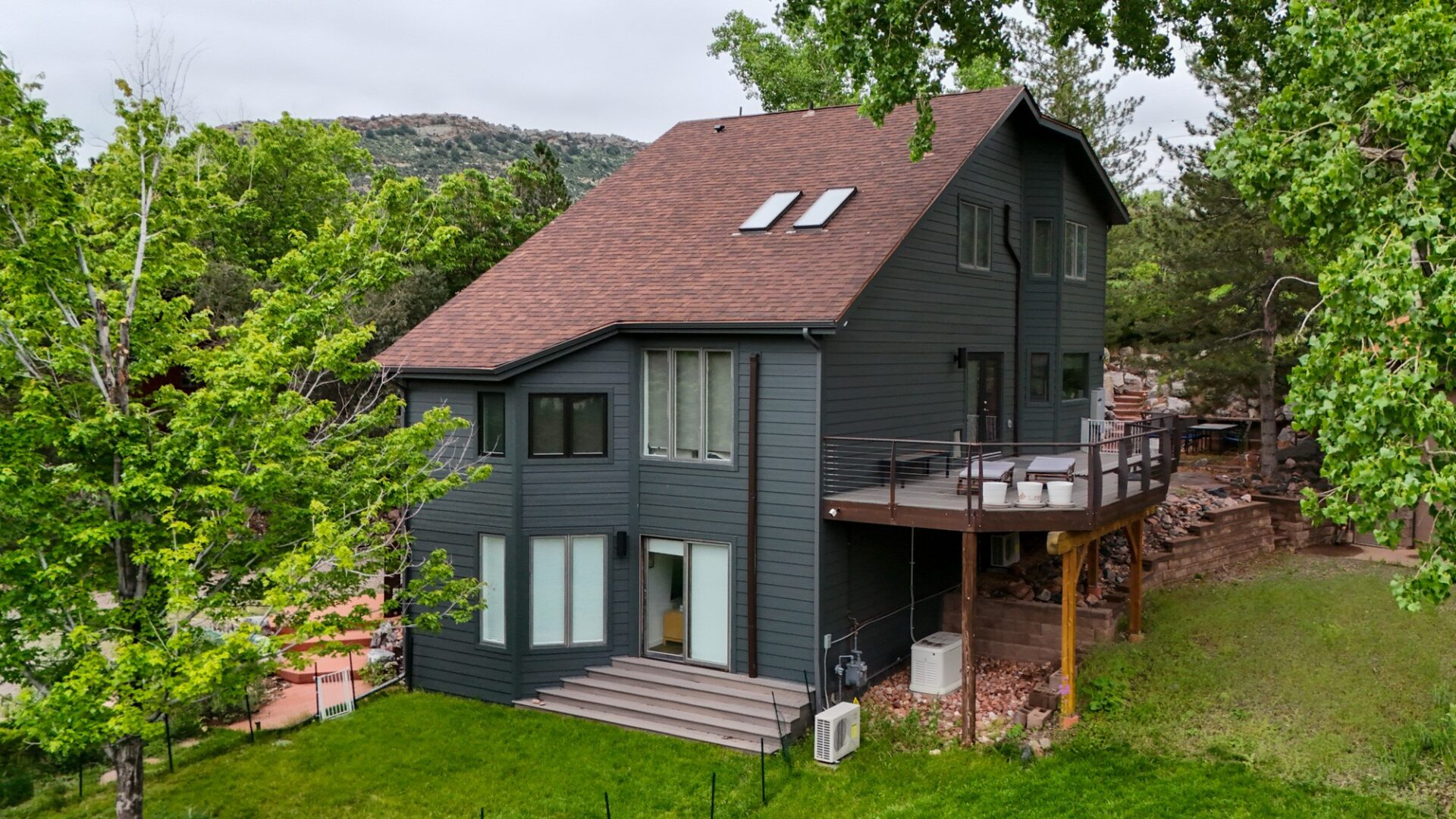
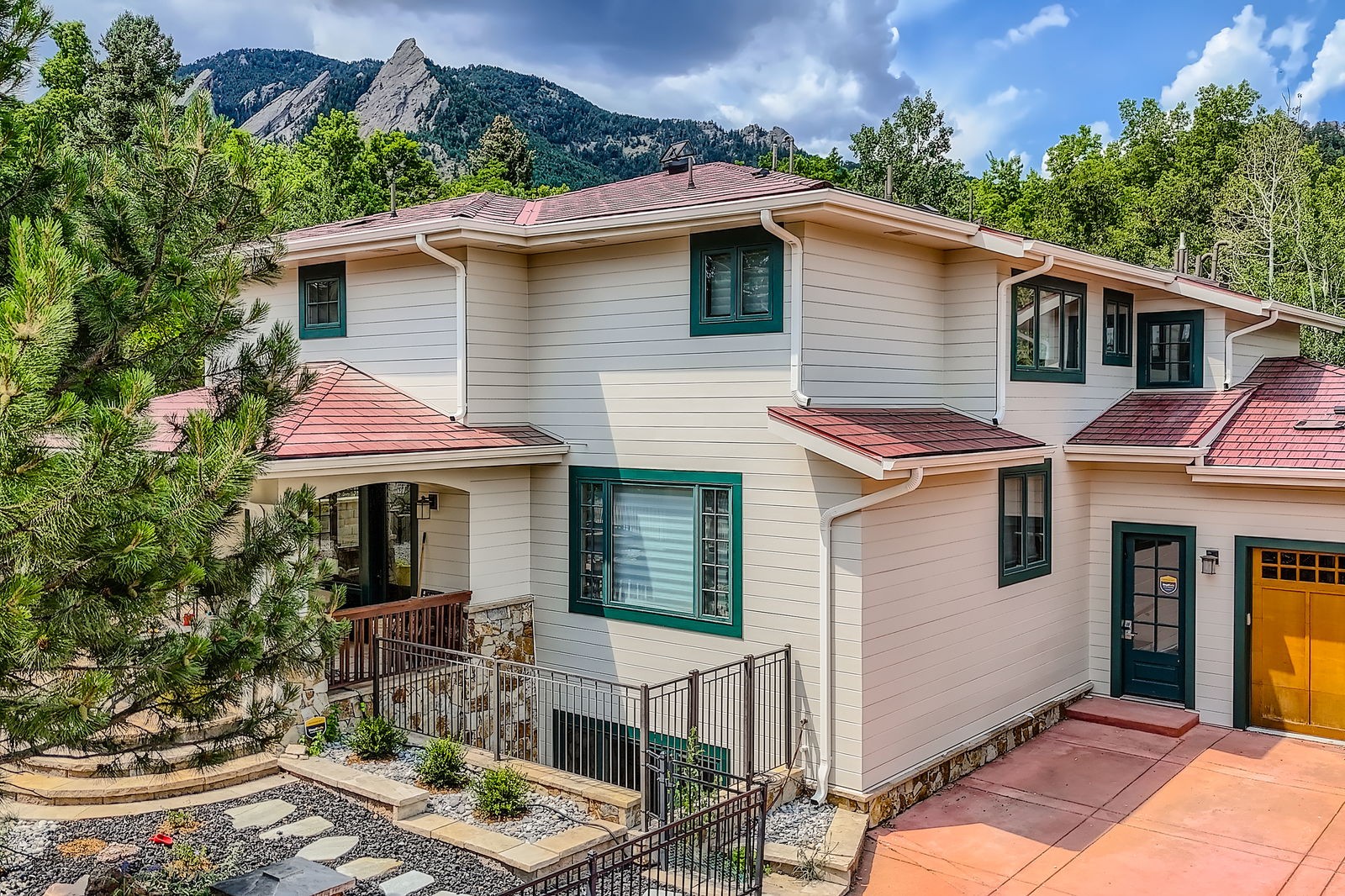
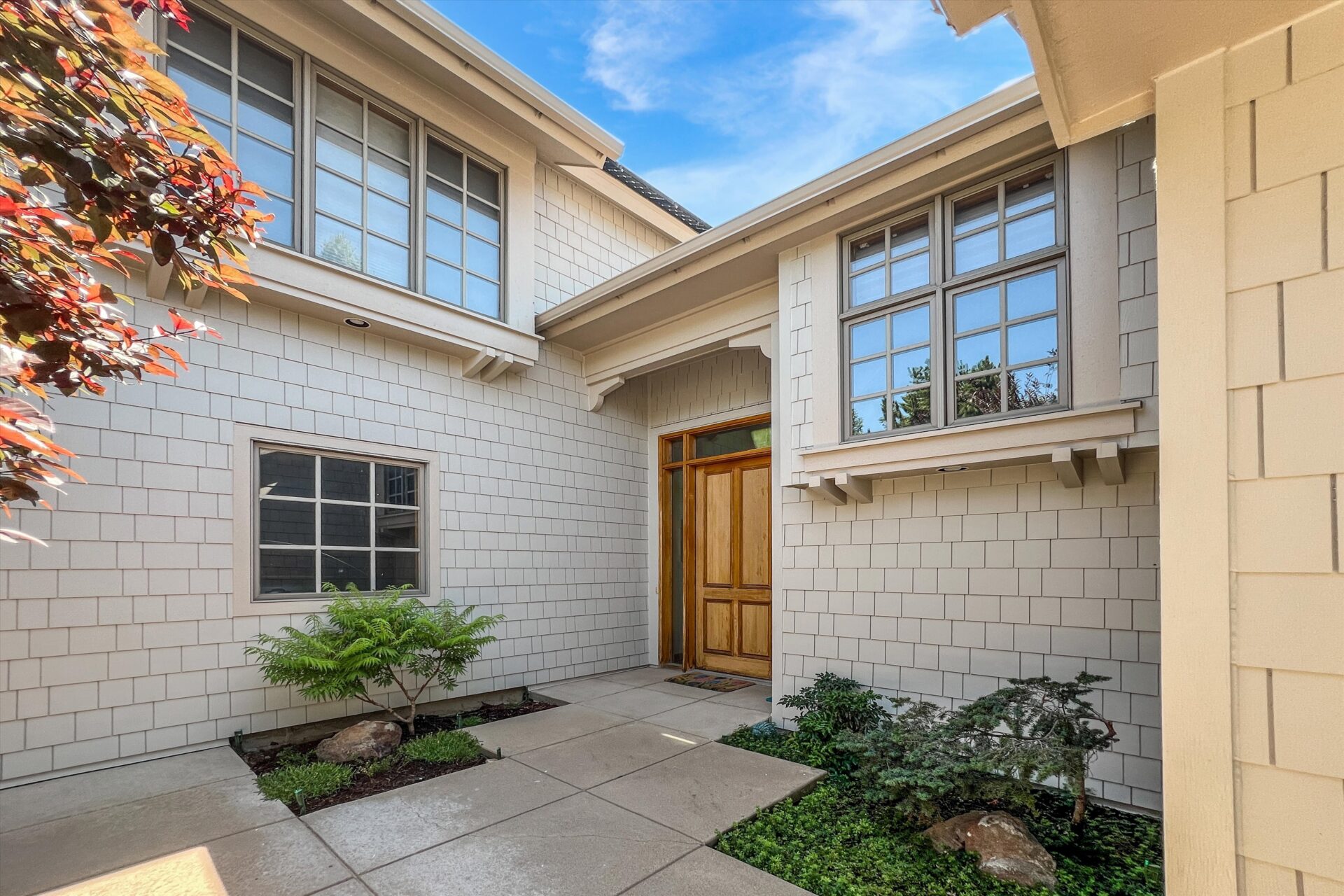
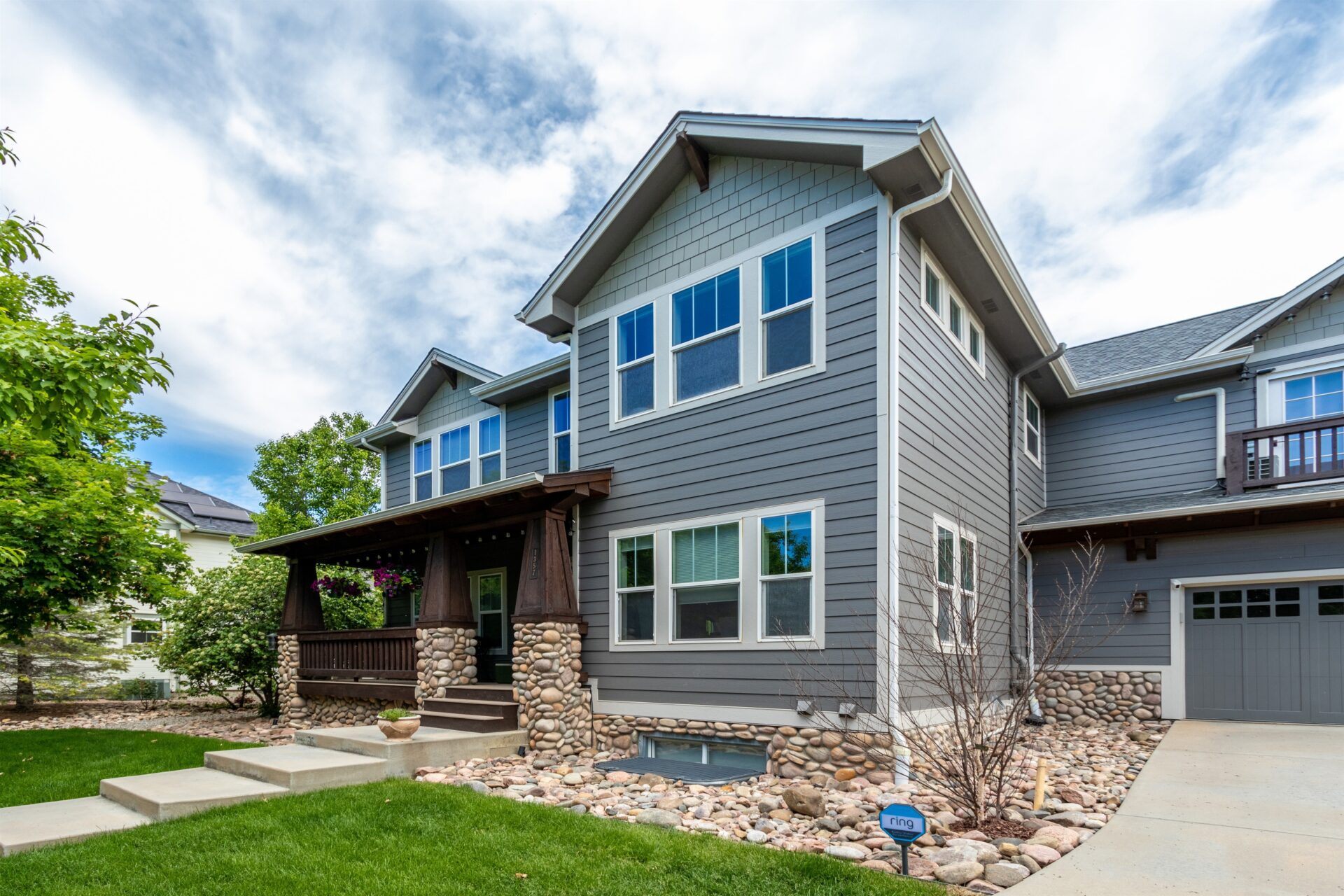
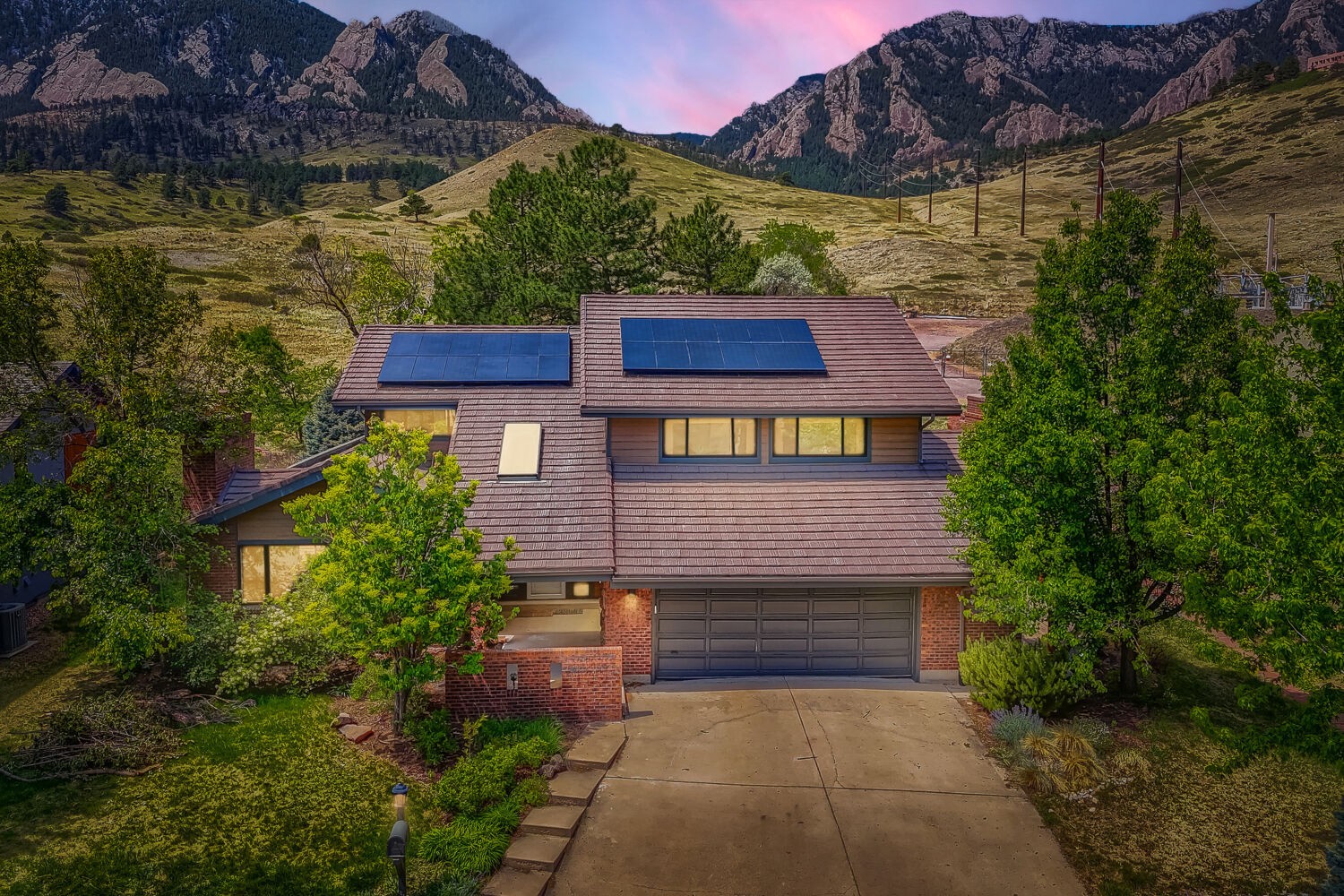
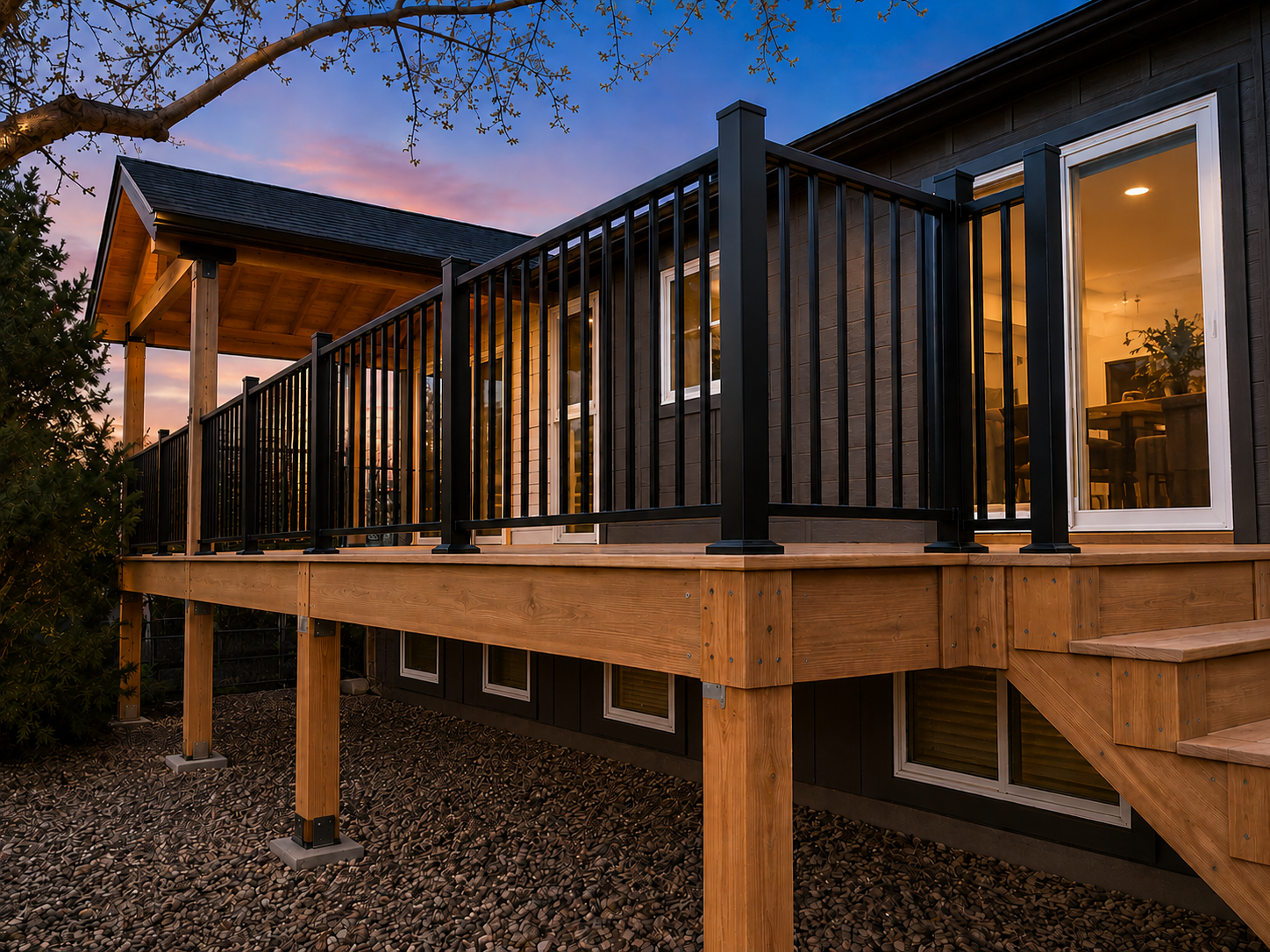
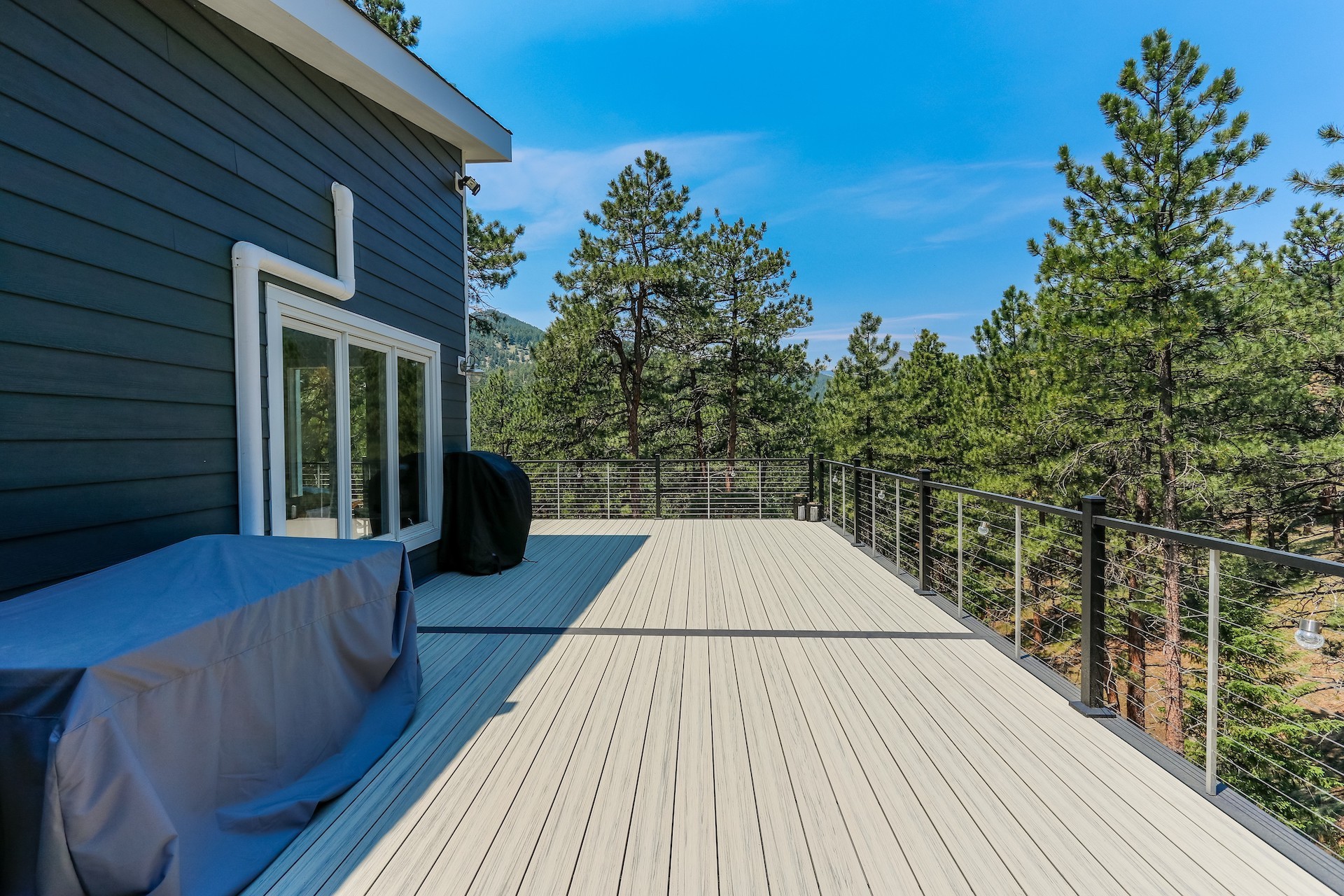
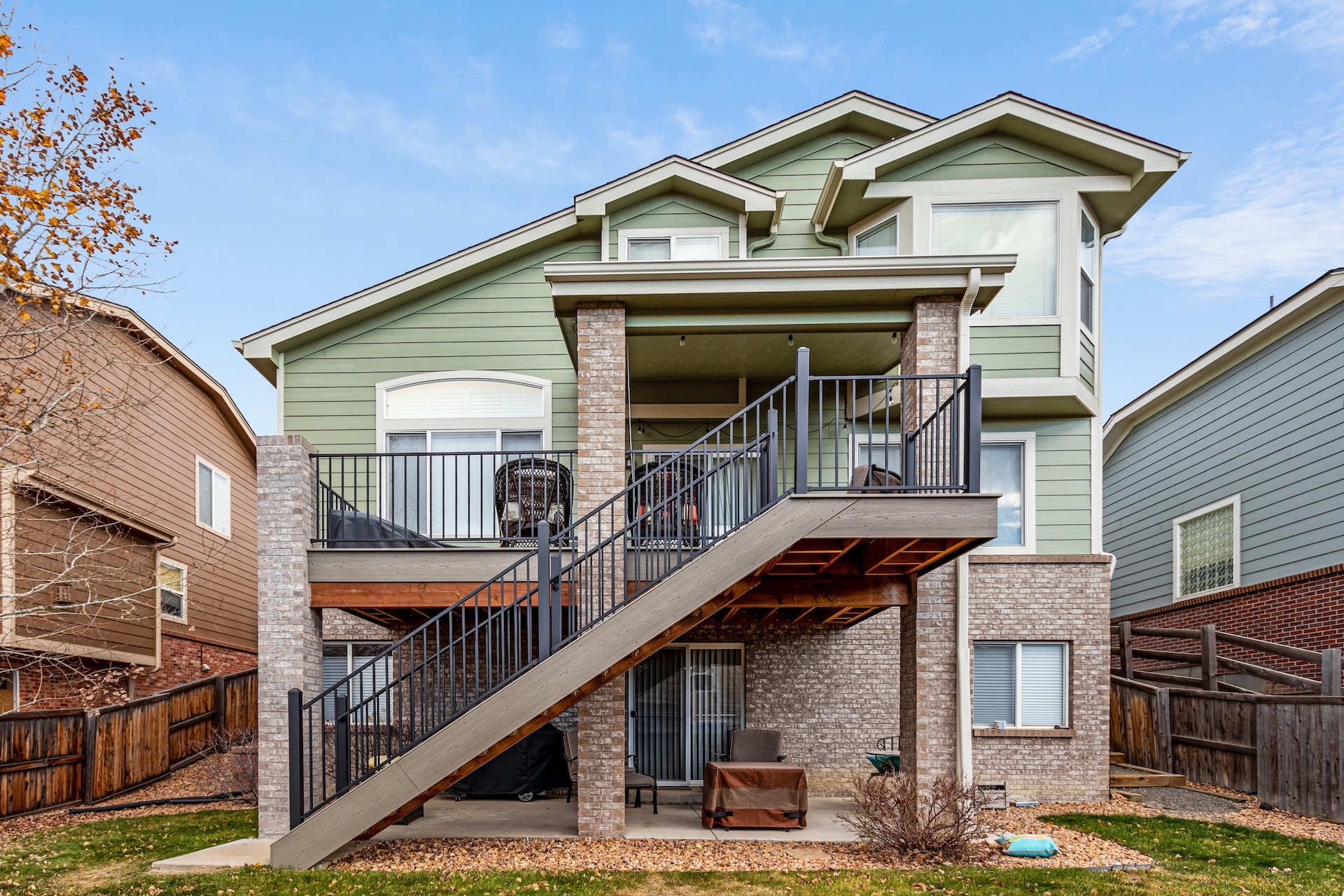
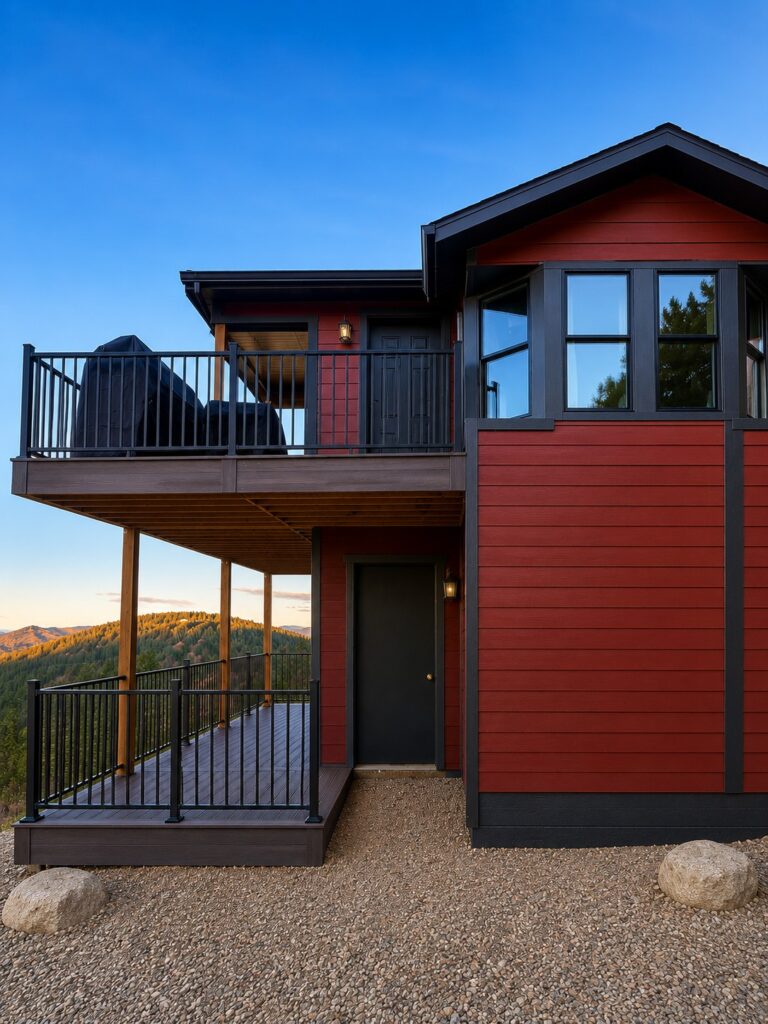
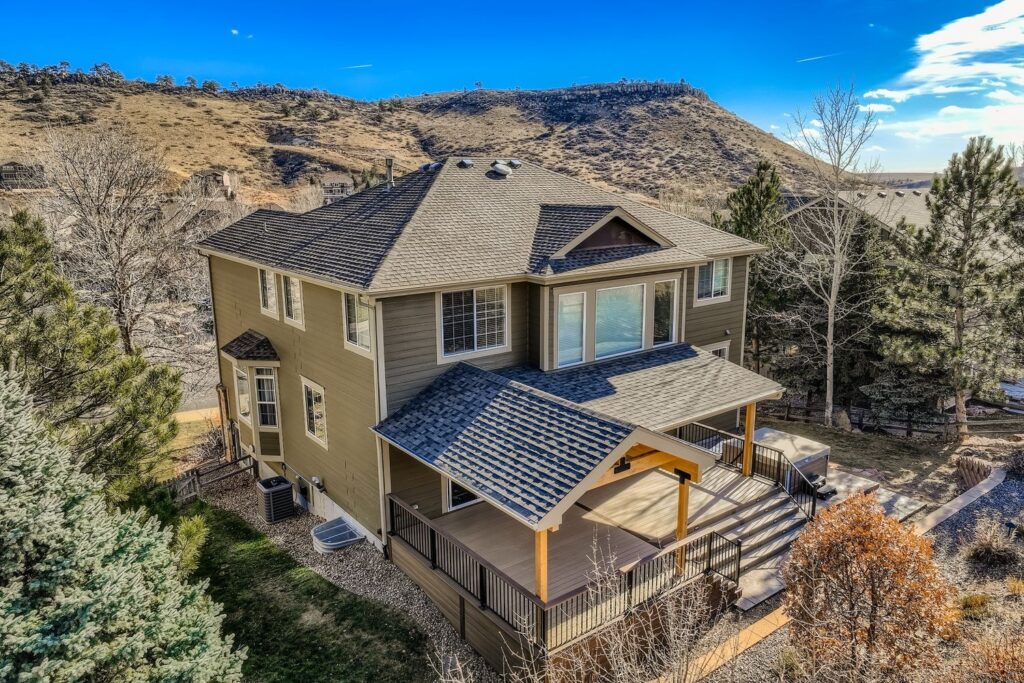
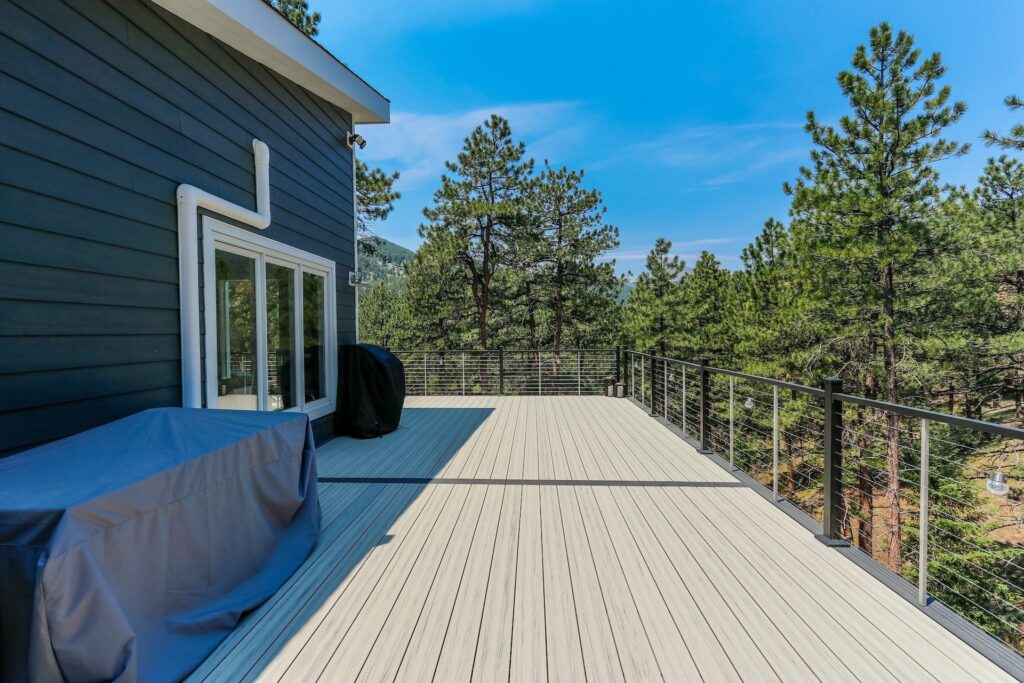
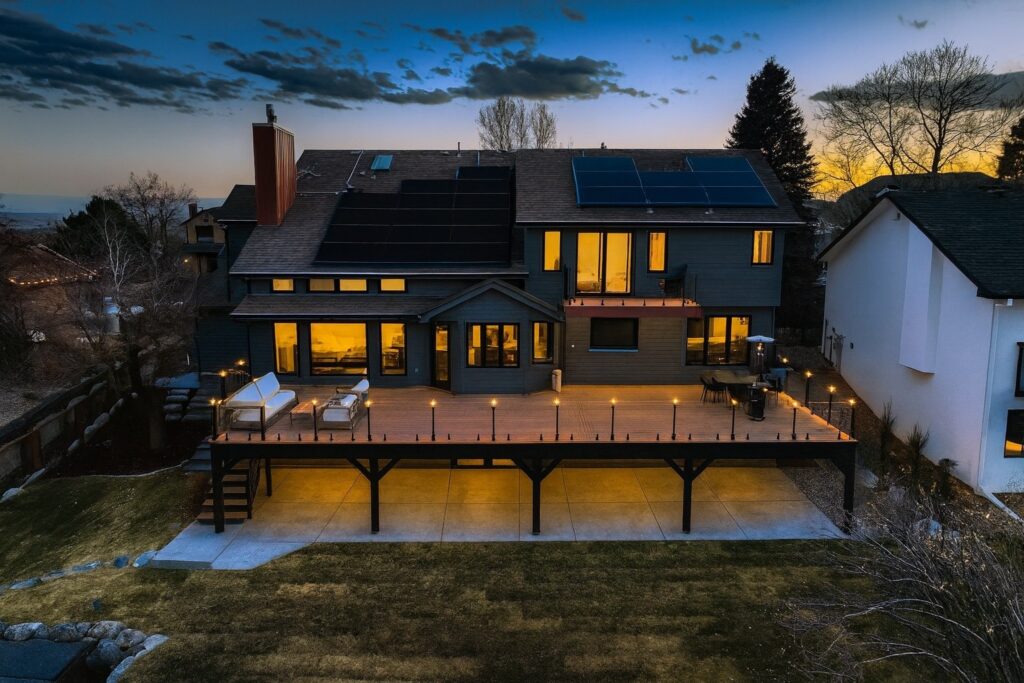
Our own deck work, each project captioned with the town it is actually in. The first is in Evergreen, on the kind of sloping lot where a deck is a structure on posts rather than a step down from the back door, and the second is in Lyons, at the mouth of the St. Vrain canyon. All the decking shown is composite — the material Section 402.4 accepts at a minimum Class B flame-spread rating, and the only kind we install. The third photograph is there for what is usually invisible: the steel frame holding the deck up, and the clear, empty space underneath it.
Evergreen Decks — Frequently Asked Questions
Is composite decking allowed under the Jefferson County wildfire code?
Yes, with a qualification worth understanding. Section 402.4 accepts a walking surface that is noncombustible, Class A rated, fire-retardant-treated wood labeled for exterior use, or ignition-resistant — and it accepts composite decking carrying at least a Class B flame-spread rating. The rating belongs to a specific board and profile rather than to the category, so we name the rated line in the proposal instead of telling you composite is fine. And whether the requirement applies at all depends on where your parcel sits on the overlay map.
What is a Class A deck?
There is no such thing, and it is worth knowing that before you read another bid. Class A, B and C are flame-spread ratings that belong to a MATERIAL, not grades that belong to a deck. A contractor advertising a “Class-A deck” is at best being loose with the words. What the code actually rates in Section 402.4 is the walking surface material — and the framing beneath it and the storage under it are separate questions it does not answer.
Do you build wood decks in Evergreen?
No. We install composite and PVC decking only — Trex, TimberTech and Deckorators — and that has been our scope across the Front Range for years, not a position we adopted for this market. In the foothills it happens to line up with the code as well. If you want cedar or redwood, we are not the right contractor and we would rather tell you now.
Does the deck framing have to be rated too?
Section 402.4 governs the walking surface, so a deck can have a compliant surface sitting on framing that is not. That gap is exactly where a good-looking deck still fails, which is why we talk through the substructure — up to and including steel framing — as its own decision with its own cost, rather than folding it into a headline number.
What is the most important thing I can do for my existing deck?
Clear out what is stored underneath it, and keep it clear. Firewood, offcuts, cushions, plastic bins and accumulated needles under an elevated deck turn the structure into kindling attached to a wall. It costs nothing, it takes an afternoon, and on a sloping Evergreen lot it is worth more than most of the things people pay for. Sweeping the board gaps in the fall is the second one.
Can you replace my deck and re-side the house at the same time?
Yes, and where the deck ledger meets the wall is the reason to. That joint is the most common water-intrusion detail in residential construction and a fire-path detail on a WUI parcel. Under one Class C general contract it gets opened, flashed and closed once, by one crew accountable for both sides of it.
Do I need a permit for a deck in Evergreen?
Almost certainly, and it comes from Jefferson County — Evergreen is unincorporated, so there is no town building department. Elevated decks on sloping lots also raise footing, guard and sometimes engineering questions that a flat plains lot does not. We file the permit and schedule the inspections.