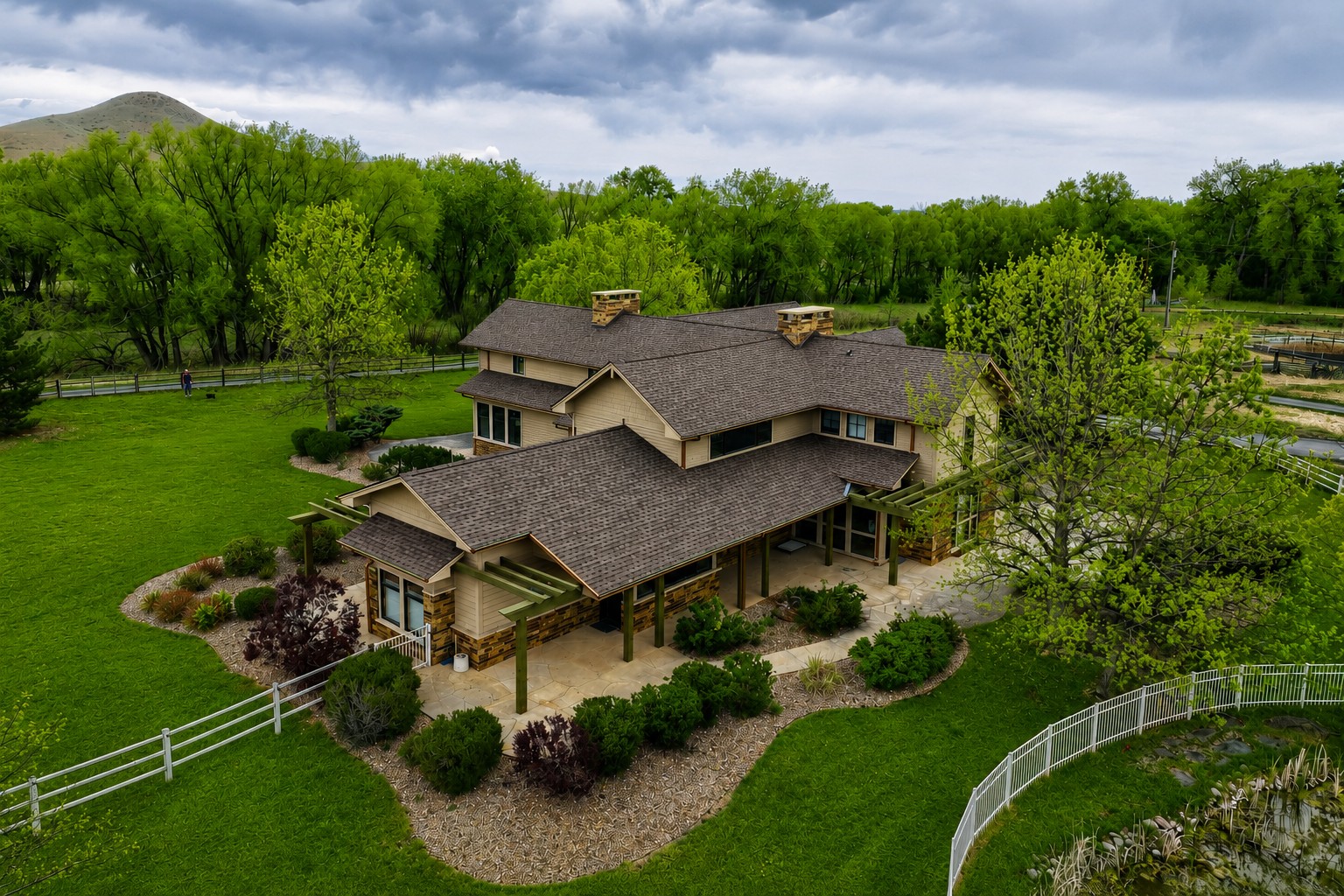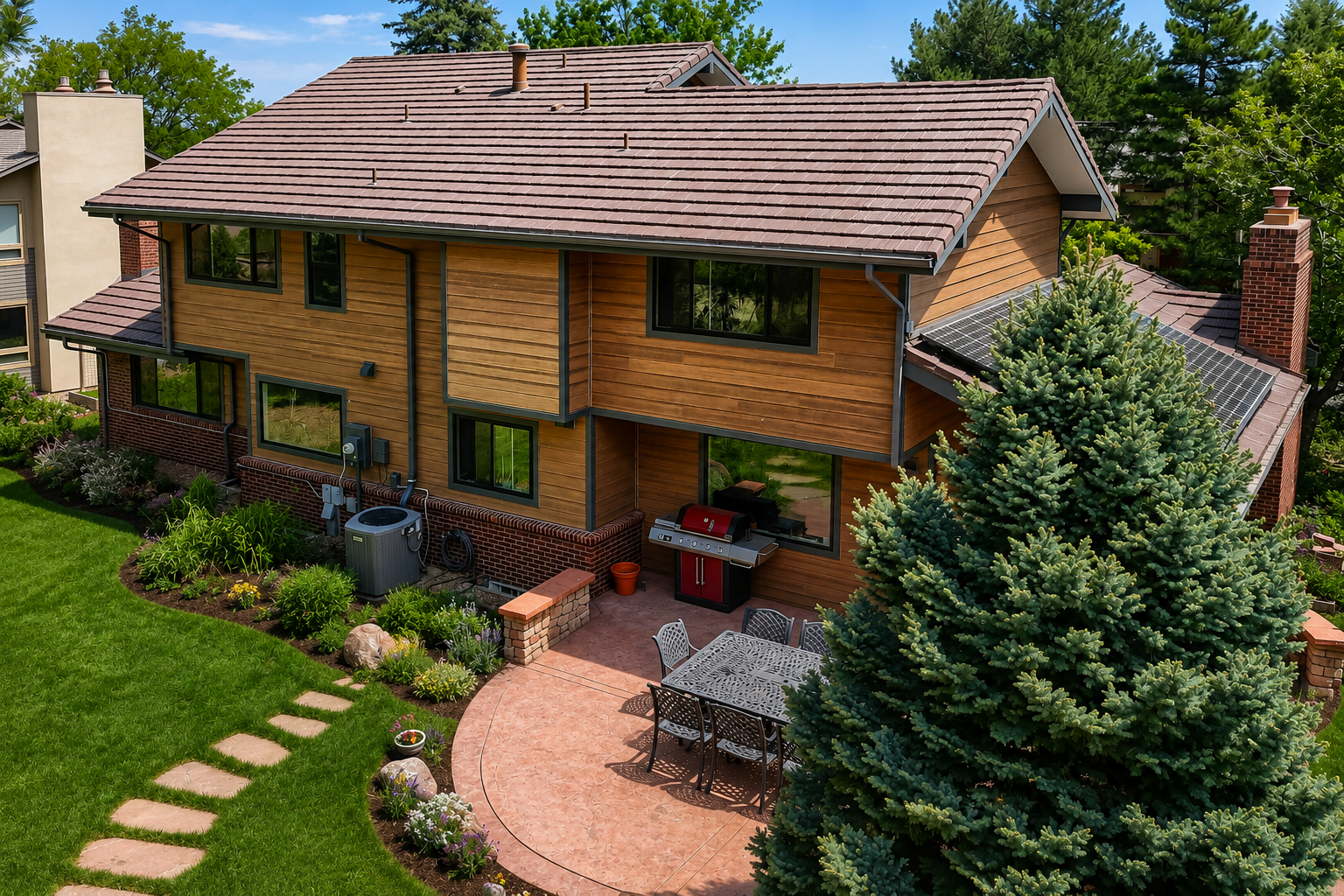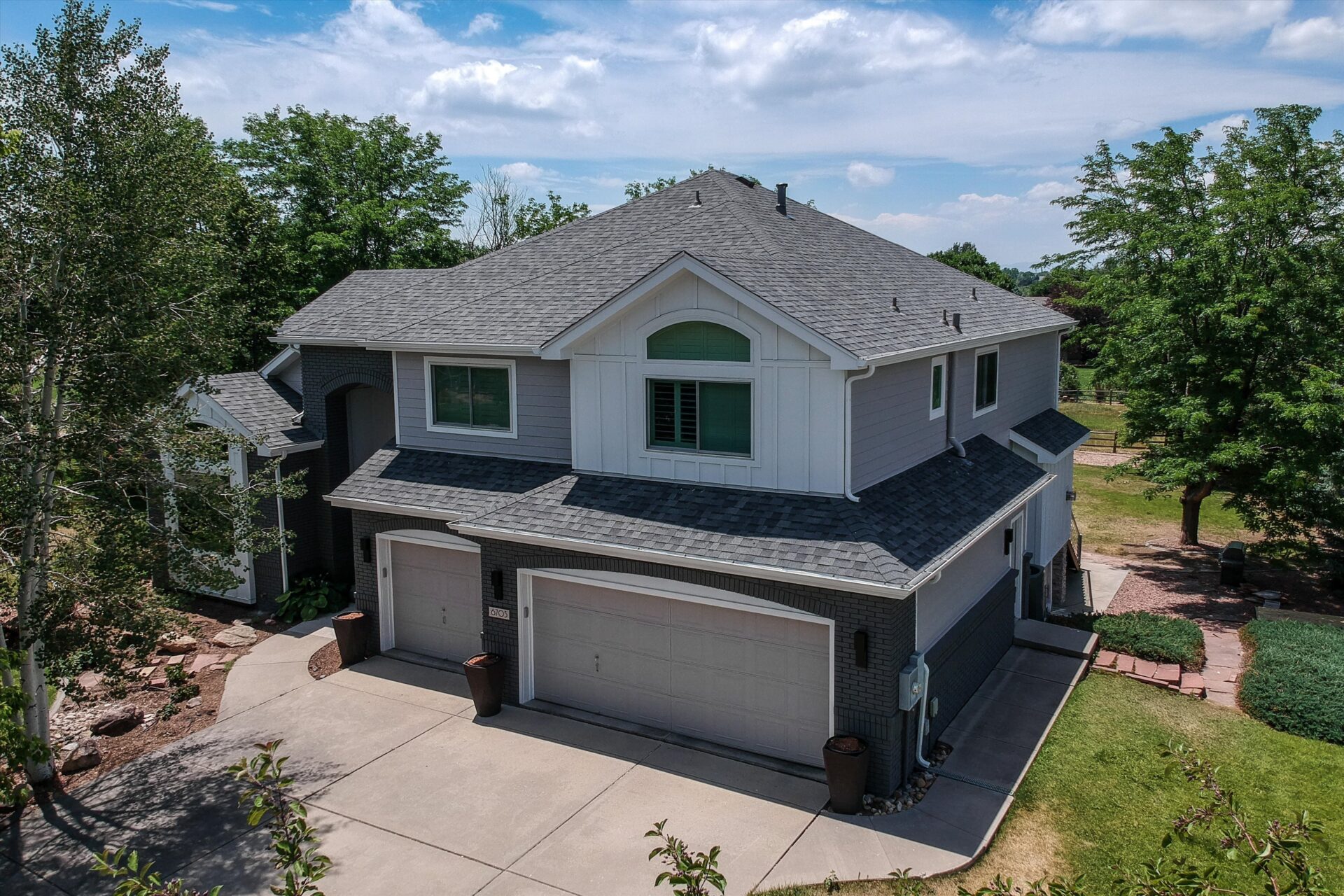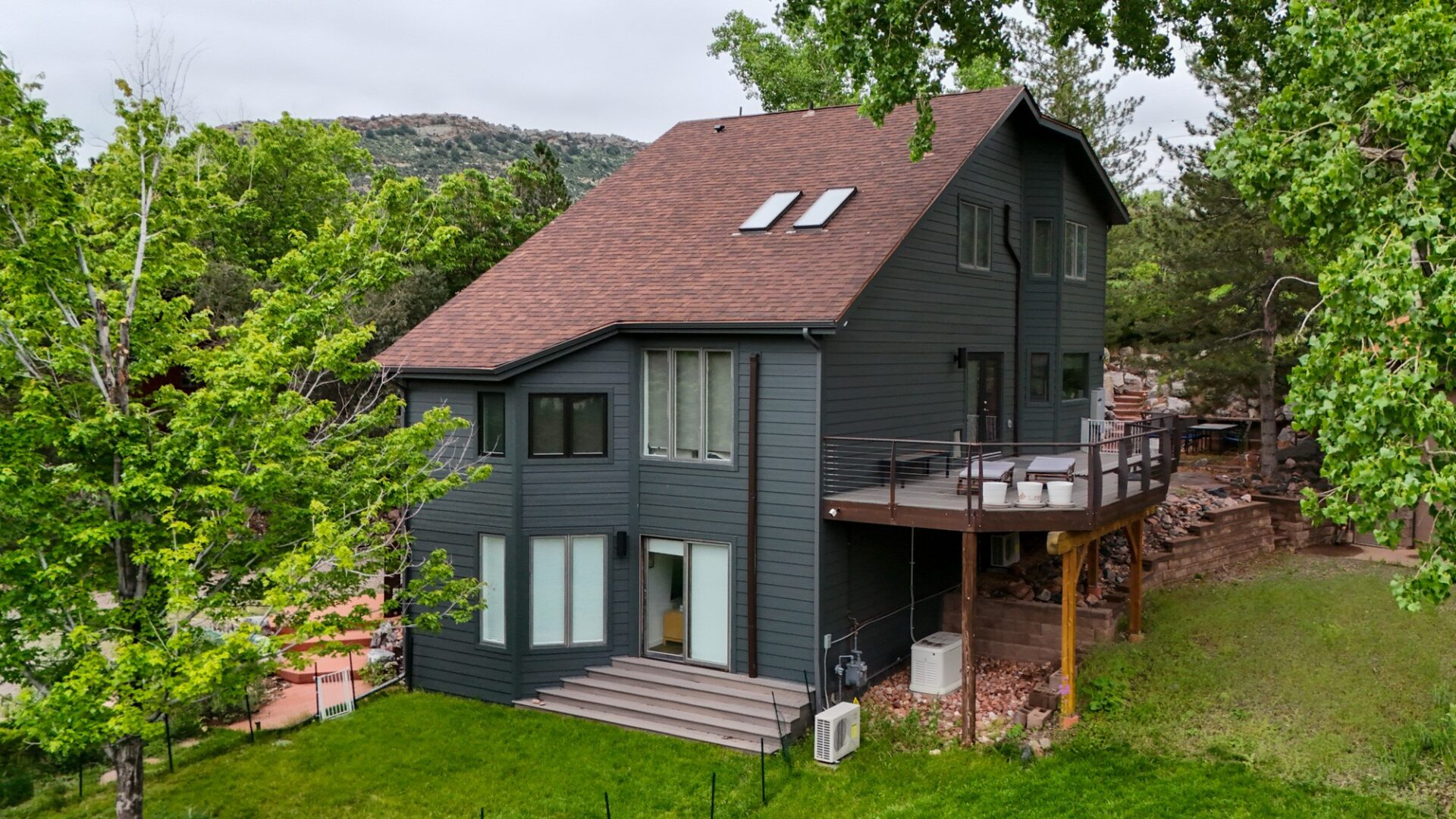
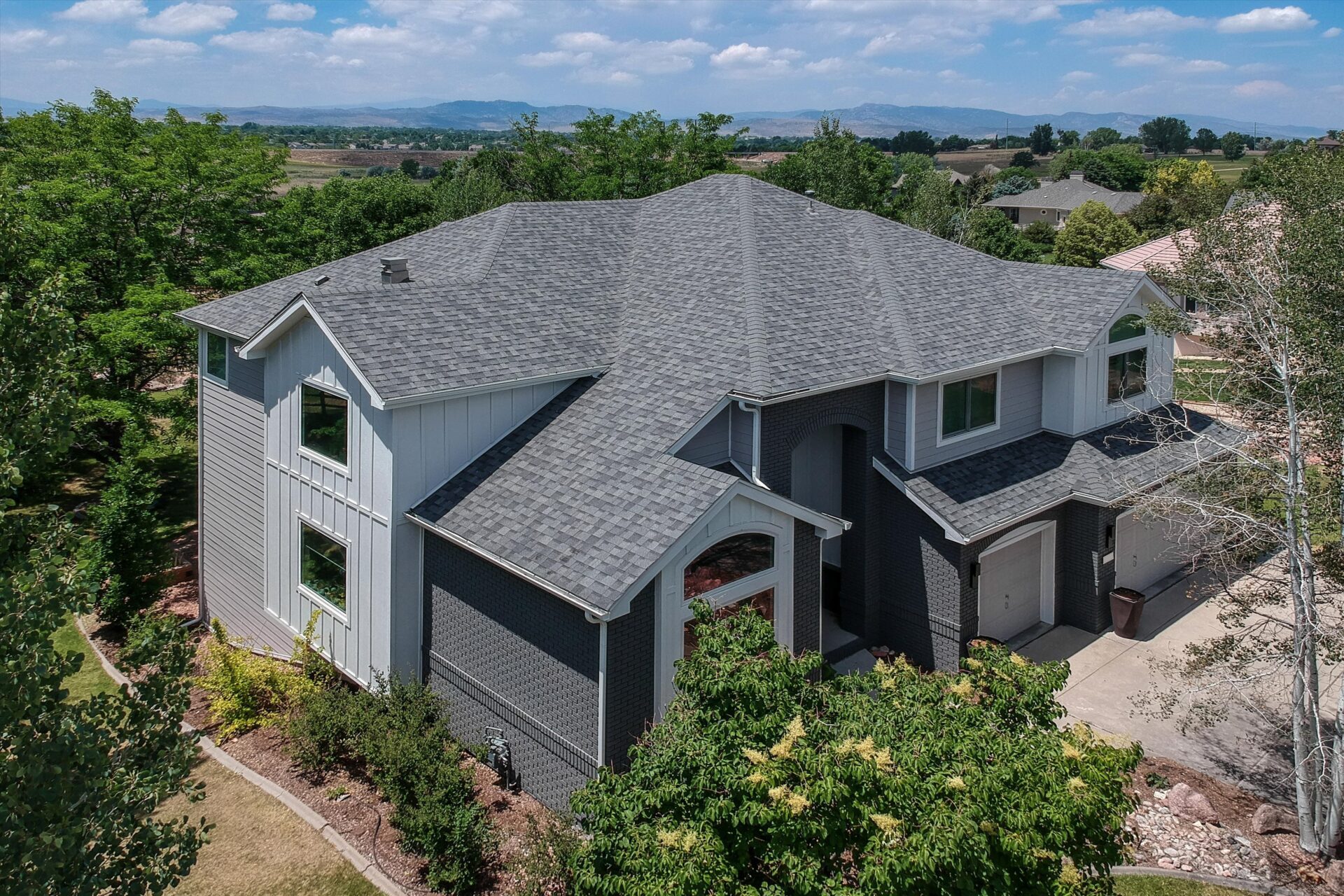
Roofing Contractors — Cherry Hills Village, CO
Roofers in Cherry Hills Village
Reroofs built to the Village’s own requirements — mandatory ice barrier, mandatory mid-roof inspection — plus hail documentation, insurance claim support and skylight replacement.
Who are the best roofers in Cherry Hills Village?
Northern Lights Exteriors has roofed Front Range homes since 2001 and holds a Class C general contractor license, so the roof, the siding it flashes into and the skylights through it run under one contract.
Cherry Hills Village has its own roofing requirements, and they catch out contractors from elsewhere in the metro: an ice barrier is required in place of standard underlayment because of the Village’s ice-damming history, and a pre/mid-roof inspection is mandatory on every reroof. We build to both.
Storm work is documented, not assumed — photographs of the real damage, adjuster meetings on the roof, and every record in your client portal. Rated 4.9 out of 5 from 552 verified reviews.
Cherry Hills Village Has Its Own Roofing Rules — Three That Change the Job
The Village issues its own roofing permits through its own Building Division, and it publishes roofing requirements that differ from the surrounding jurisdictions in ways that matter. If a roofer quoting your house does not know these, that tells you something.
- An ice barrier is required, in place of standard underlayment. The Village’s own roofing requirements say plainly that Cherry Hills Village has a history of ice damming and that an ice barrier must be installed in lieu of the regular underlayment. This is a local amendment, it costs real money, and it is the single most common thing missing from a cheap bid here. If two quotes are far apart, check this line first.
- A pre/mid-roof inspection is mandatory on every reroof. Not on some. The Village requires an inspection partway through the job, where the inspector looks at the underlayment, the ice barrier and the condition of the decking once it is exposed. Practically, that means the job has to be sequenced around an inspection slot, and it means rotten decking gets found and dealt with rather than covered over.
- One small, genuinely useful detail: Village inspectors do not carry ladders — the contractor has to provide roof access at inspection. It sounds trivial until it costs you a re-inspection and a week.
Two more rules worth knowing before you get quotes. Under one square of roofing is considered maintenance and does not need a permit — so a genuinely small repair is not a permit job, and anyone telling you otherwise is padding. And a full tear-off is required, rather than a layover, where the existing covering is water-soaked or deteriorated, where it is wood shake, slate, or clay, cement or asbestos-cement tile, or where two or more layers are already on the roof.
What is not true, despite what you will read elsewhere: the Village does not ban wood shakes. Its published guidance states that wood shakes and shingles are not prohibited in Cherry Hills Village, and it directs homeowners to their homeowners association for material restrictions, noting that the City does not enforce HOA rules. So on most Cherry Hills Village houses the binding constraint on roof material is your association, not the building code. Several contractor pages assert a Village-wide Class A requirement; we cannot find that in the City’s own documents and we are not going to repeat it.
What a Roof Replacement Actually Costs Here — and What Drives It
People search for a Cherry Hills Village roof replacement cost and get either silence or a national average that means nothing. We are not going to publish a per-square number we would have to walk back once we have seen your roof, because on these houses the spread between the simplest and the most complex roof of the same footprint is enormous. What we can do is tell you exactly what moves the number, so you can read two quotes and understand why they differ.
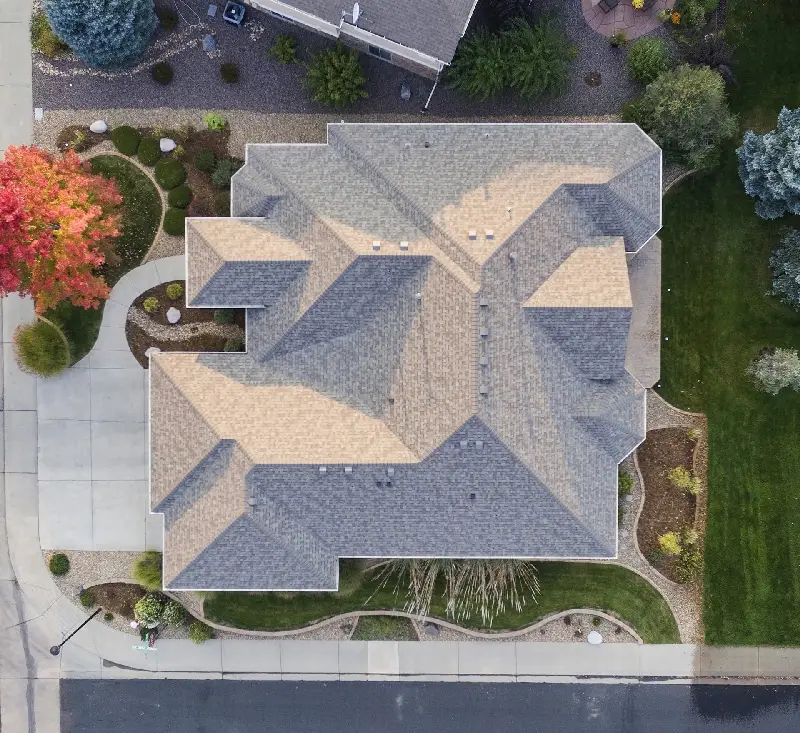
- Complexity, far more than area. Hips, valleys, dormers, chimney crickets, multiple planes and changes of pitch all add labor and flashing. A large simple roof can cost less than a smaller intricate one.
- Pitch and access. Steep roofs need staging and slow everything down. On large lots, where a dumpster and a material load can actually be placed — without driving over an irrigation system or a protected root zone — is a real line item.
- The mandatory ice barrier. Required here, priced by area, and a common omission in a low bid.
- Decking condition, which nobody knows until tear-off. This is why the mid-roof inspection exists. An honest quote carries a stated per-sheet rate for decking replacement rather than pretending the number is zero.
- Material class. Architectural asphalt, impact-rated Class 4 asphalt, or metal, standing seam or tile. Class 4 costs more up front and can affect your insurance premium — ask your carrier, because the answer varies by carrier.
- Everything the roof touches. Gutters, drip edge, pipe boots, vents, chimney flashing and skylights. Replacing a roof and reusing a twenty-year-old skylight is a decision you get to make once, on a ladder, with the roof open.
We price these elevation by elevation and line by line, so you can see where the money is and remove things you do not want. A single lump sum is not a quote, it is a bet.
Skylights, Sun Tunnels and the Flashing Kit Nobody Talks About
Skylights matter more on Cherry Hills Village houses than on most, because these are large floor plans with deep interior spaces that daylight cannot reach from the walls. They are also the most common single source of a leak we get called out to.
Almost every skylight leak we open up is one of three things, and none of them is the glass:
- The wrong flashing, or reused flashing. Every skylight has a manufacturer flashing kit matched to the roof covering. Reusing the old kit on a new roof, or field-forming flashing out of coil stock, is the classic false economy.
- An old curb under a new roof. If the curb is rotten or out of square, a perfect flashing job on top of it still leaks.
- Ice damming above the unit. Given that the Village mandates an ice barrier precisely because of its ice-damming history, a skylight sitting below a long run of roof deserves particular attention at the head.
Our position is simple: if we are replacing the roof, replace the skylights at the same time and use the matched flashing kit. The incremental cost while the roof is open is a fraction of doing it later, and it removes the single likeliest future callback. Where a skylight is genuinely recent and sound we will say so and flash to it. We also install sun tunnels, which are often the better answer for a hallway or a bathroom where a full skylight is neither wanted nor practical.
Hail, Wind and Insurance Claims
The south and south-west Denver metro is hail country. The 8 May 2017 metro hailstorm remains Colorado’s costliest insured catastrophe at roughly $2.3 billion in insured losses, and it fell hardest on this side of the city. That is public record, not a sales pitch — and the practical lesson from it is that the houses that came through best were the ones with documentation.
How we work a storm-damaged roof:
- We inspect and document before anyone talks about a claim. Photographs of the actual damage, including the parts not visible from the ground — soft metals, vents, ridge, the north slope nobody looks at.
- We tell you if you do not have a claim. Age and granule loss are not hail damage. A contractor who finds a claim on every roof is not inspecting, they are selling.
- We meet the adjuster on the roof and work from the same scope, which is how supplements get approved rather than argued about.
- Everything lands in your portal — the inspection photographs, the scope, the correspondence and the inspection results. Insurers and, later, buyers ask for exactly this.
If your roof is being replaced anyway, this is the moment to consider impact-rated Class 4 shingles or a metal roof. Whether either reduces your premium is a question for your carrier — we are not going to promise you a discount we do not control.
The System Behind the Work
A reroof here involves a mandatory mid-roof inspection, decking that nobody can assess until the old covering is off, and often an insurance carrier with an opinion. That is three parties and a moving scope — precisely the situation where a homeowner ends up chasing people for answers.
Two things make that possible, and they are the reason to choose us over a cheaper quote.
First, experience and scope. We have been working on Colorado’s Front Range since 2001, and we hold a Class C general contractor license (Colorado license #C120350) rather than a single-trade license. That is not a technicality: it means roofing, siding, windows, decks and outdoor living can run under one contract, with one project manager accountable for the flashings where those trades meet — which is precisely where multi-contractor projects leak, literally and figuratively. James Hardie has recognized us as an Elite Preferred contractor continuously since 2011, and as a President’s Club member — their highest contractor distinction nationwide. Our rating is 4.9 out of 5 from 552 verified reviews. Alongside that license we hold manufacturer certifications from James Hardie (Elite Preferred since 2011), GAF (Master Elite), Pella, TimberTech and Deckorators, and we have been named a Qualified Remodeler Top 500 contractor three years running — all of it listed, with the issuing body for each, on our awards and credentials page.
Second, a proprietary on-demand client portal we built ourselves. Most of what people hate about a remodel is not the construction. It is not knowing — who to call, whether the permit went in, when material arrives, what has been paid, whether it passed inspection. We built a system to remove exactly that, and as far as we know no other exterior contractor in this market offers it:
Every conversation in one place
Messages, decisions and change requests are logged against your project rather than scattered across texts, voicemails and three different crew members’ phones.
Contracts and scope, always retrievable
Your signed contract and itemized scope live in the portal, so “what did we actually agree to?” is a thing you look up rather than a thing you argue about.
Permit status you can see
Where the permit is in the process, and when inspections are scheduled — without having to phone anyone to find out.
Delivery and install schedules
When material lands and when each trade starts, so you can plan around the work instead of waiting for a truck to appear.
Before, during and final photography
Documented condition before we start, progress images through production, and final photography — including the parts of the building you will never see again once it is closed up.
Payments tracked per trade
What is paid and what is outstanding, broken out by trade rather than as one running balance you have to reconcile yourself.
Inspection records
Each inspection and its result, recorded against the project and available when you sell the house and someone asks.
Access is an individual, custom URL issued to you — and you get it when we start talking, at the lead and project meeting, not after you sign something. That is deliberate: you can see how we run a project before you commit to one. It then stays available after the work is finished, which matters more than it sounds, because the documentation, images and inspection records are exactly what a buyer’s agent, an appraiser or an insurer asks for years later.
Where We Work in Cherry Hills Village, Colorado
Cherry Hills Village sits in Arapahoe County in Denver’s south metro — bordered by Englewood and Denver to the north and west, Greenwood Village to the east, and Littleton and Centennial to the south. We cover the whole Village for roofing and storm damage.
- Old Cherry Hills
- Cherry Hills Park
- Cherry Hills Farm
- Buell Mansion
- Devonshire
- Glenmoor
- Charlou Park
- Cherryridge
- Cherry Hills North
- Blackmer Hills
- The Reserve
Three separate places in this metro carry a similar name, and almost everyone mixes them up. Cherry Hills Village is its own incorporated municipality in Arapahoe County. Cherry Creek Village is a neighborhood inside the separate city of Greenwood Village. Cherry Creek is a neighborhood of the City of Denver. We work in all three. The reason to know which one you are in is entirely practical: each is a different permit authority, so it changes who reviews your project and how long that takes.
We also work across the rest of the south metro — Greenwood Village, Englewood, Littleton, Centennial, Glendale and the City of Denver.
Nearby Cities We Also Serve
If you are just outside Cherry Hills Village or weighing up more than one property, we also install replacement windows in:
Get a Cherry Hills Village Roof Inspection
We will get on the roof, photograph what is actually there, and tell you honestly whether you are looking at a repair, a claim or a replacement. If it is none of those yet, we will tell you that too.
Request Your Free Estimate → 📞 (303) 776-5263
Prefer email? Reach us at office@nlexteriors.com. Ask about financing options when we walk the property.
Cherry Hills Village Roofing — Frequently Asked Questions
Do I need a permit to replace my roof in Cherry Hills Village?
Yes. Reroofing requires a permit from the Village’s own Building Division — Cherry Hills Village issues its own permits rather than going through Arapahoe County. There is one useful exception: the Village treats less than one square of roofing as general maintenance, which does not require a permit. Anything over a square does. We pull the permit and we meet the inspections.
What is the pre/mid-roof inspection Cherry Hills Village requires?
The Village requires an inspection partway through every reroofing project, not just some. The inspector checks the underlayment, the required ice barrier and the condition of the roof decking while it is still exposed. It is a genuinely good rule for homeowners, because it is the moment bad decking gets caught instead of covered up. Practically it means the job is sequenced around an inspection slot, and it means your contractor has to provide the ladder — Village inspectors do not carry them.
Why does my Cherry Hills Village roof need an ice barrier?
Because the Village requires one. Its published roofing requirements state that Cherry Hills Village has a history of ice damming and that an ice barrier must be installed in lieu of the regular underlayment. This is a local amendment, so a roofer used to working elsewhere in the metro may not have it in their bid. If you are comparing quotes and one is markedly cheaper, check this line item first — it is the most common omission.
Are wood shake roofs banned in Cherry Hills Village?
No, and this is widely misreported. The Village’s own roofing guidance states that wood shakes and shingles are not prohibited in Cherry Hills Village, and directs homeowners to their homeowners association for material restrictions, noting the City does not enforce HOA requirements. So your HOA, not the building code, is usually what decides your roof material here. Separately, the code does require a full tear-off rather than a layover where the existing covering is wood shake, slate, or clay, cement or asbestos-cement tile, or where two or more layers already exist.
How much does a roof replacement cost in Cherry Hills Village?
We will not publish a per-square figure, because on these houses the spread between a simple and a complex roof of the same footprint is very large and a headline number would mislead you. What drives it: roof complexity (hips, valleys, dormers, crickets) far more than area; pitch and site access on a large lot; the mandatory ice barrier; decking replacement, which nobody can price before tear-off; material class, including whether you choose impact-rated Class 4; and the components the roof touches — gutters, flashing, vents and skylights. We quote line by line so you can see and adjust each of those.
Should I replace my skylights when I replace the roof?
Almost always yes. Nearly every skylight leak we open up comes from reused or field-formed flashing, a rotten or out-of-square curb, or ice damming above the unit — not from the glass. Replacing the unit with its matched manufacturer flashing kit while the roof is already open costs a fraction of doing it later and removes the likeliest future callback. If a skylight is genuinely recent and sound, we will tell you it can stay.
Will you tell me if I do not have a hail claim?
Yes, and we would rather. Granule loss and age are not hail damage, and a contractor who finds a claim on every roof is selling rather than inspecting. We photograph what is actually there, including the slopes and soft metals you cannot see from the ground, and we will tell you plainly if the honest answer is that your roof has some years left.
Do you do flat and low-slope roofing as well?
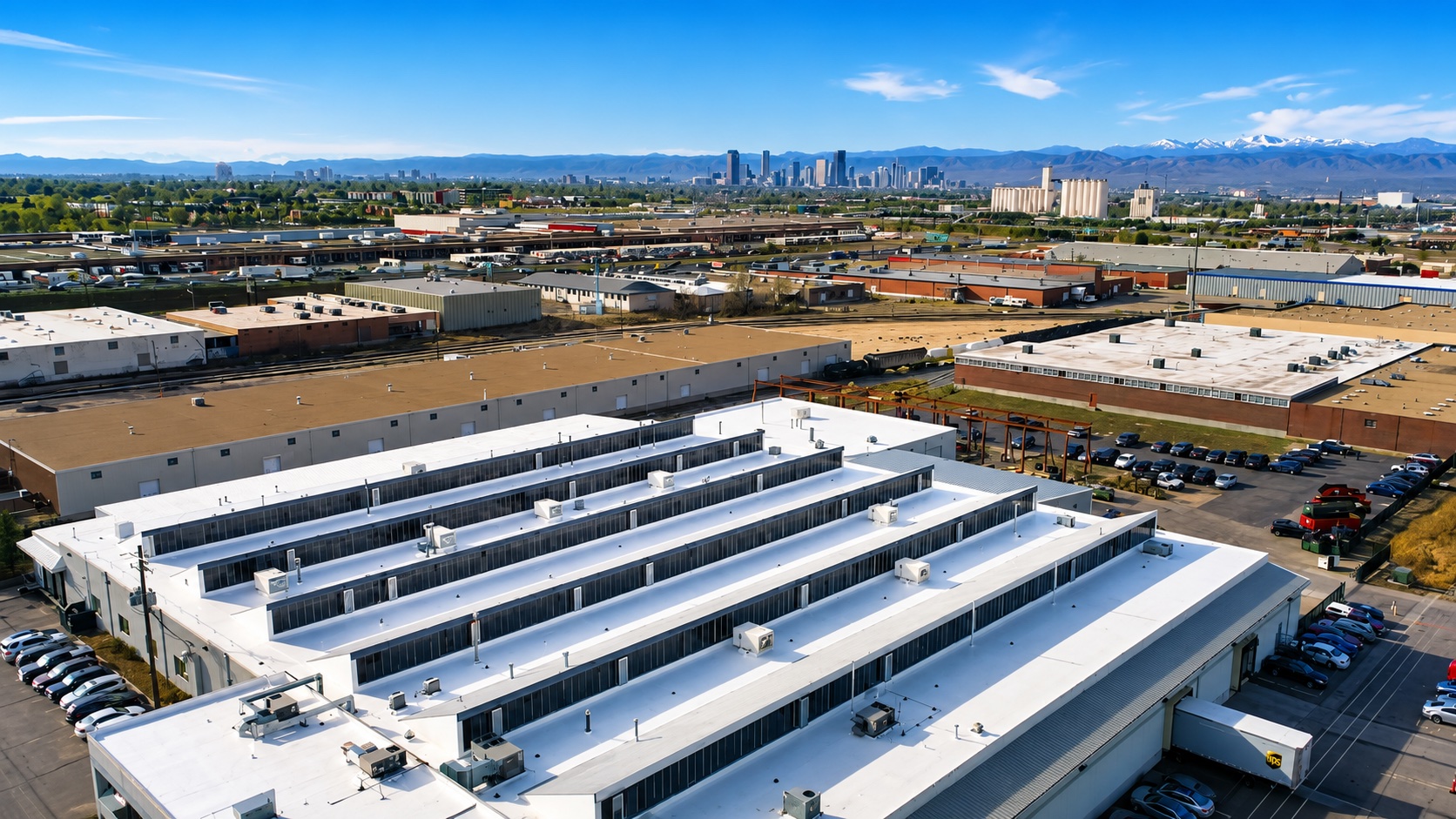
Yes. Plenty of Cherry Hills Village houses have flat or low-slope sections — over a porch, a garage, a modern addition or a connecting link — and those need a membrane system rather than shingles. We install TPO and EPDM, and the detail that matters is the transition where the low-slope section meets the pitched roof or a parapet, which is where these assemblies almost always fail.