Greenwood Village · Roofing
Roofing Contractors in Greenwood Village, CO
Roof replacement, hail damage and insurance claim support for the complex custom rooflines of Arapahoe County — with the ventilation and algae detail a mature canopy demands.
Who are the roofing contractors in Greenwood Village, CO?
Northern Lights Exteriors replaces and repairs roofs throughout Greenwood Village, Cherry Creek Village and the south metro — asphalt, designer and synthetic profiles, standing-seam metal accents and low-slope membrane, with free inspections and full insurance claim support.
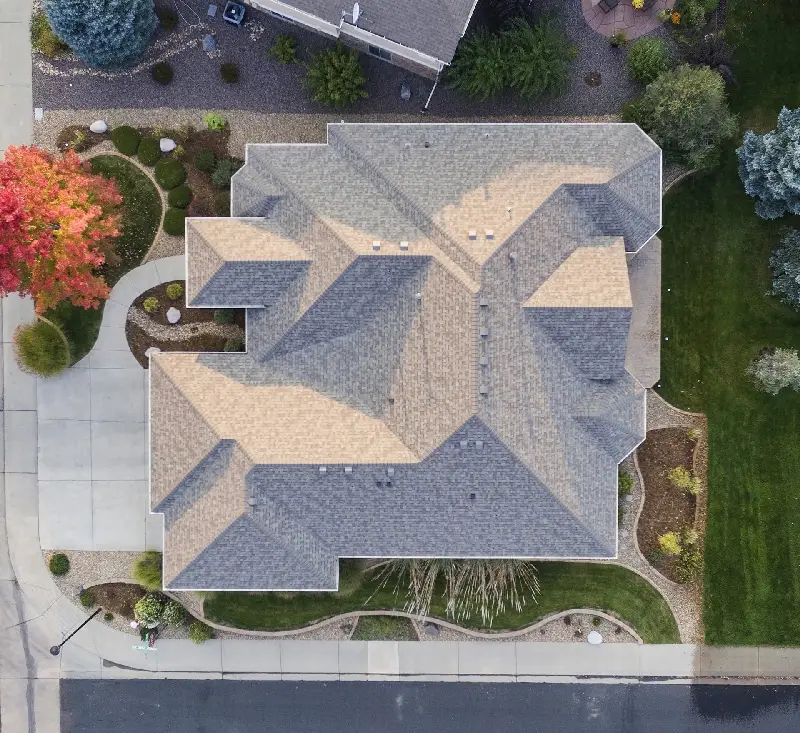
Two things shape roofing here. Hail — the 2017 Denver metro storm remains Colorado’s costliest insured catastrophe at around $2.3 billion and hit the south metro hardest — and complexity: these custom roofs often run eight or more planes with dormers, long valleys, chimney crickets and low-slope sections, which is what really drives the price.
Hail Is the Main Event — and the South Metro Gets the Worst of It
Colorado’s costliest insured catastrophe on record is a hailstorm: on 8 May 2017 a storm crossed the Denver metro and caused roughly $2.3 billion in insured damage, falling hardest on the south and south-west metro. That is public record, and it is the single best explanation of why roofing here is a different business than it is in most of the country.
What hail damage actually looks like on your roof, and why it is easy to miss:
- Bruising, not holes. Impact fractures the shingle mat under the surface and knocks granules loose. From the ground the roof looks fine. The damage shows up as accelerated granule loss and, a few seasons later, as leaks.
- Soft metals tell the story first. Gutters, downspouts, vents, flashing and the tops of air-conditioning fins dent before shingles show anything. That is where both we and the adjuster look first.
- It is directional. One or two slopes usually take the hit. A roof can be genuinely destroyed on the west elevation and untouched on the east, which is exactly the sort of thing that gets missed in a quick inspection.
Under Greenwood Village’s canopy there is a complication worth naming: limb impact and falling debris produce marks that can resemble hail, and an adjuster who concludes the damage is mechanical rather than storm-related can deny a claim on that basis. Documenting the difference properly — pattern, distribution, directionality — is part of what a good inspection produces.
How We Work an Insurance Claim (and What We Will Not Do)
Most roof replacements in this city run through a claim. The process, plainly:
- We inspect and document first. Photographs of each slope, the soft metals, and any interior evidence, plus a measured report. If there is no claimable damage we will tell you that, and you should be suspicious of anyone who never says it.
- You file the claim. It is your policy and your call, and it stays that way. We do not file on your behalf.
- We meet the adjuster on the roof. This is the step that matters most. Being there means the damage we documented is the damage that gets scoped, rather than arguing about it in writing afterwards.
- We reconcile the scope and supplement where it is short. Insurer estimating software routinely omits items that code or the actual assembly requires — ice-and-water at eaves and valleys, drip edge, ventilation, steep or multi-story access. We document those with the relevant code reference and submit them as a supplement.
- We build it, and the paperwork closes out. Final invoice, warranty documentation and the certificate of completion the insurer needs.
What we will not do: we will not offer to absorb, waive, rebate or “work around” your deductible. In Colorado that is not a favor, it is illegal under state law — and a contractor willing to commit insurance fraud to win your job is telling you exactly how they will behave when something goes wrong on your roof. If a competitor offers it, that is the moment to stop the conversation.
Complex Roofs: Why Greenwood Village Prices Differently
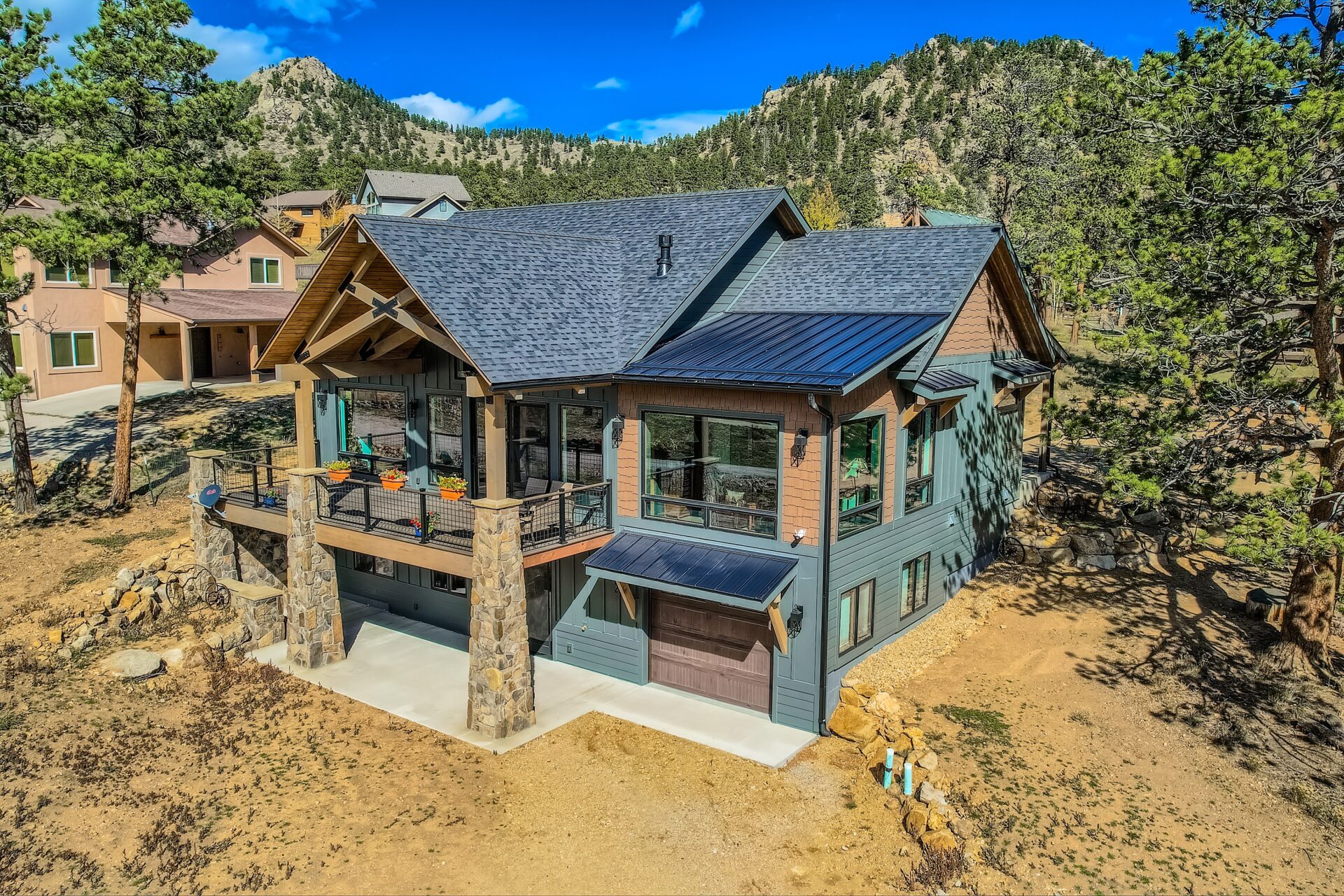
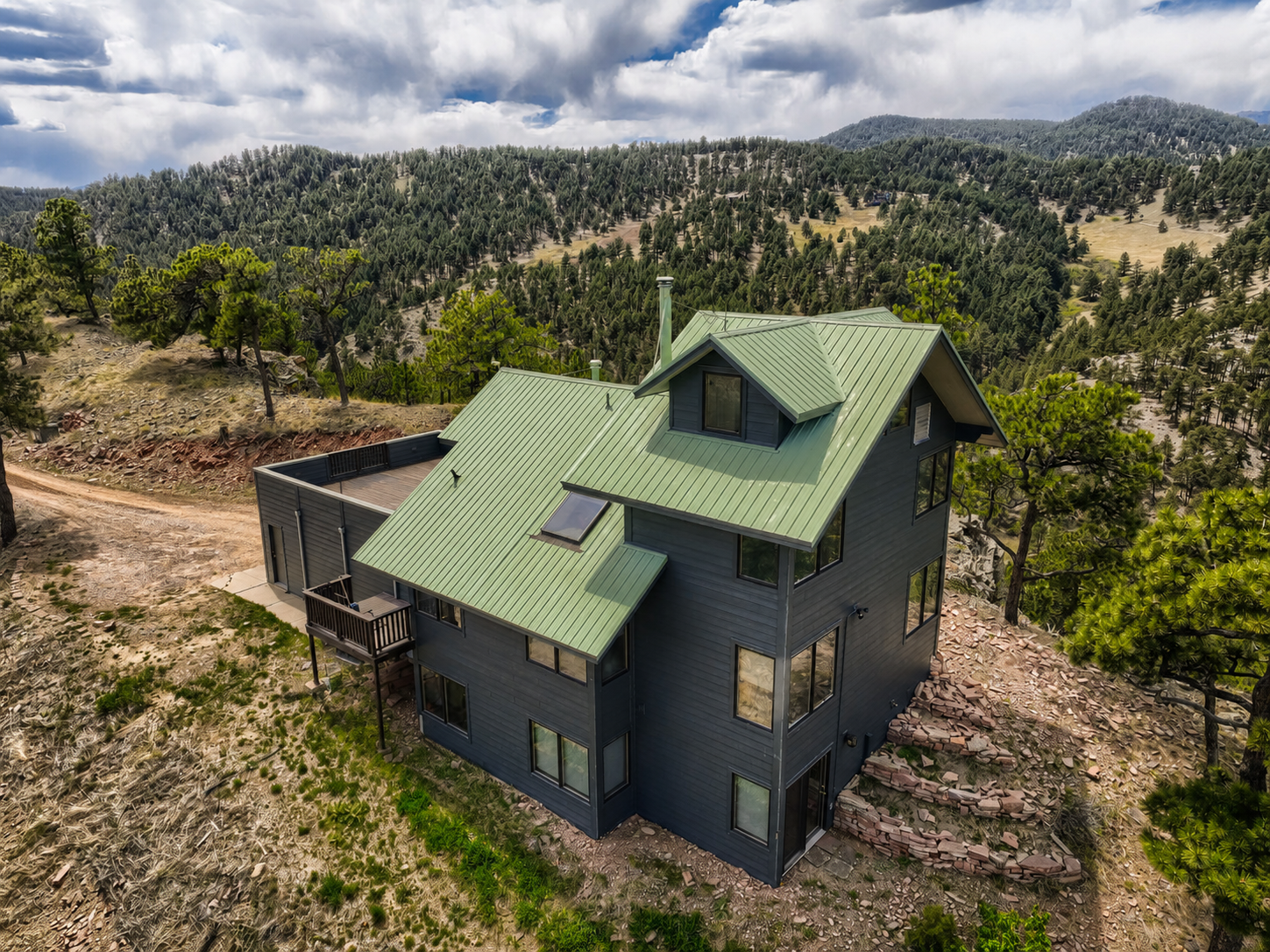
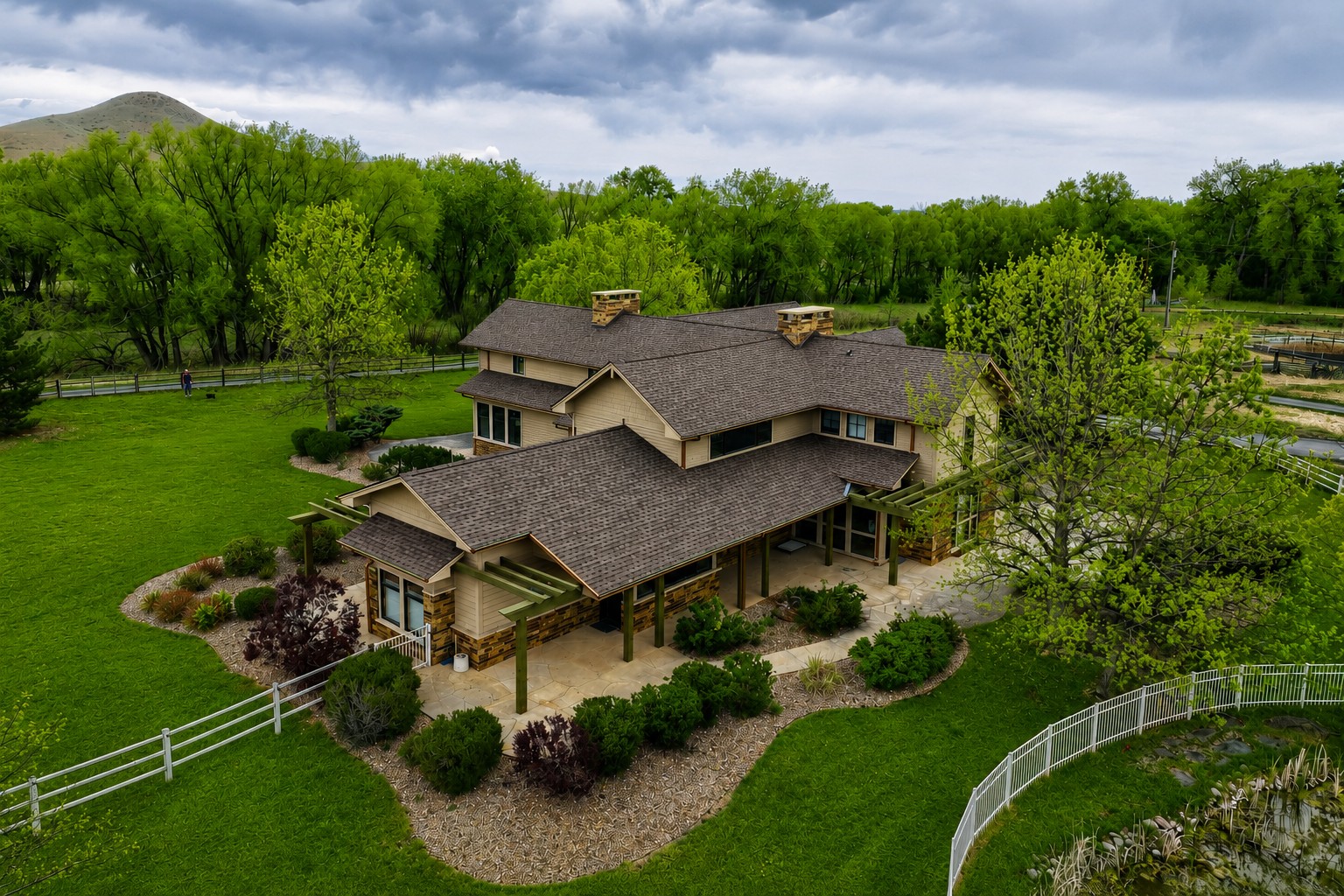
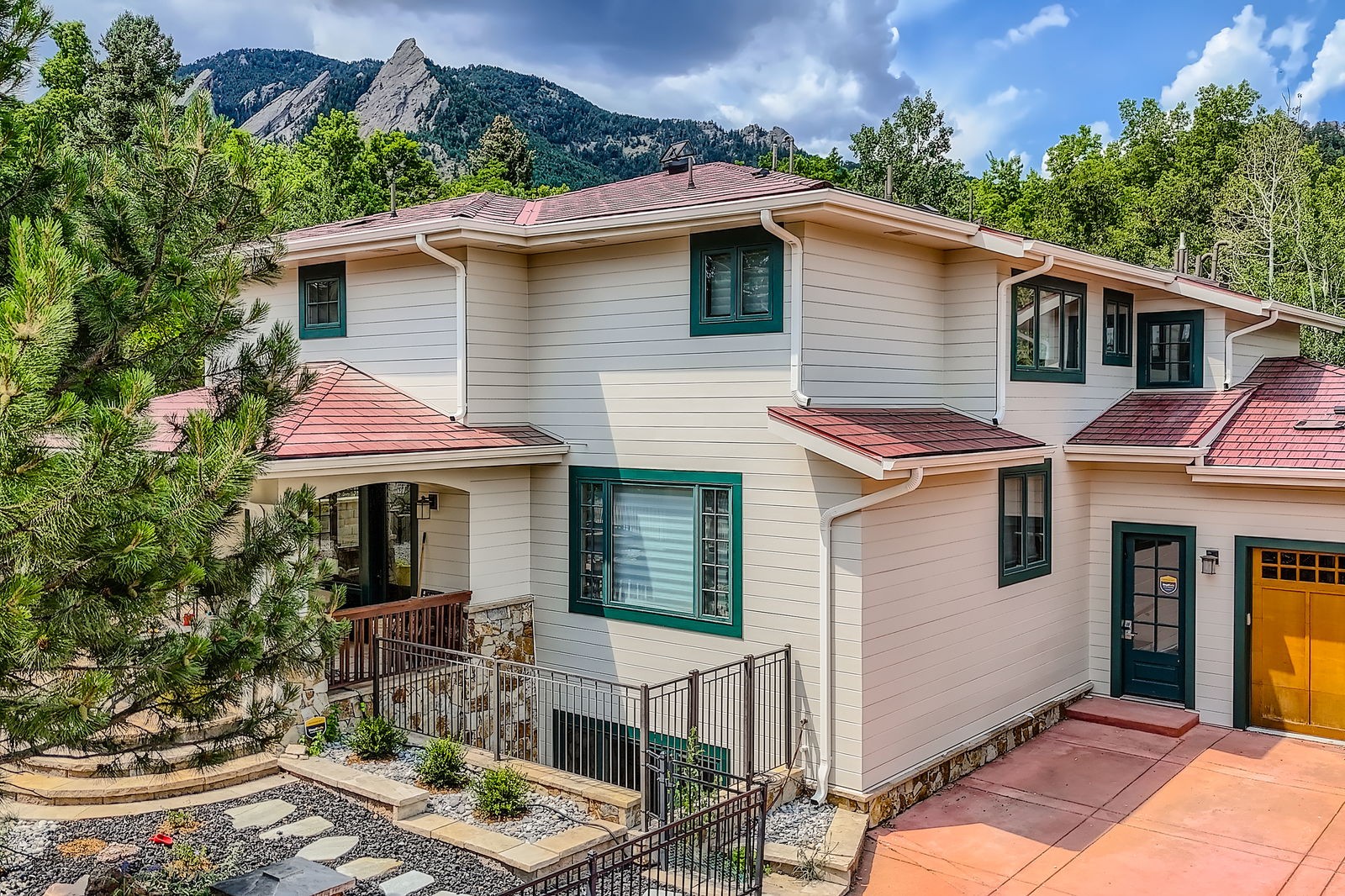
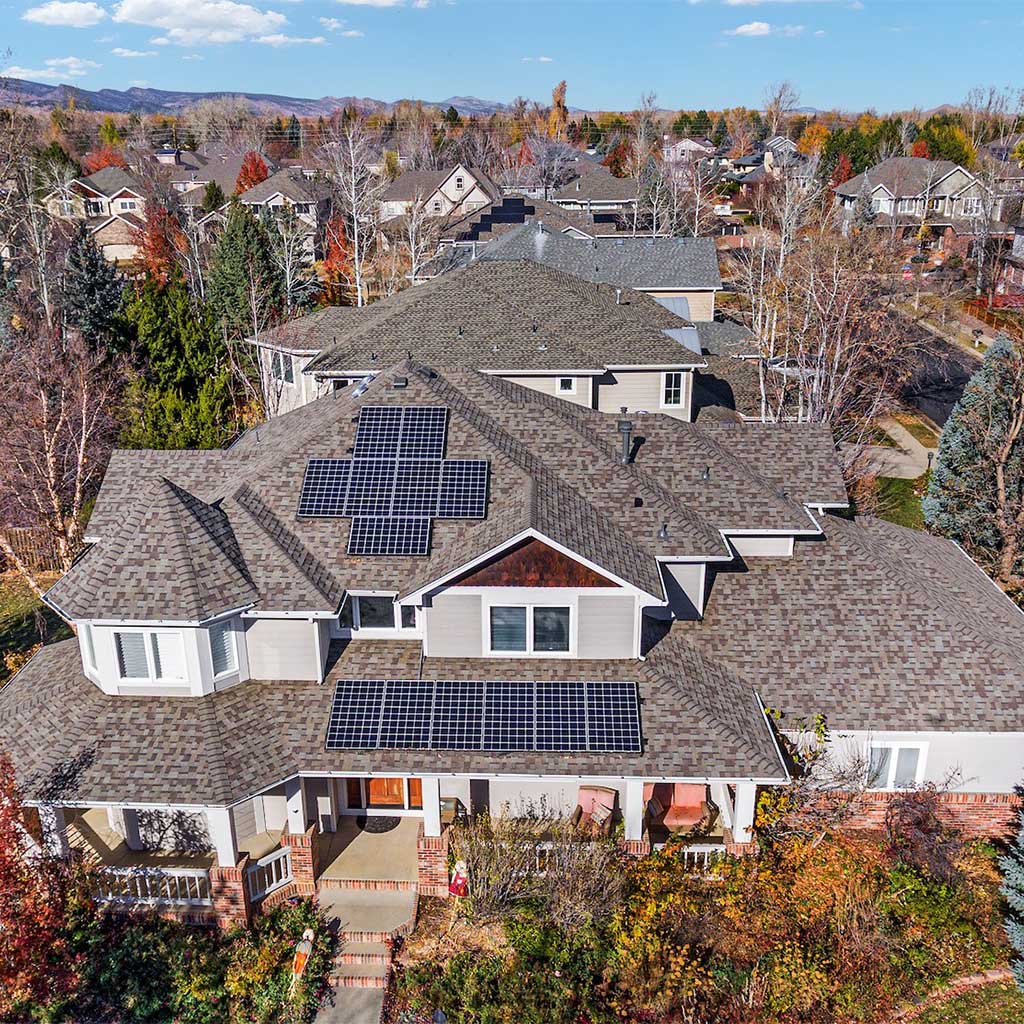
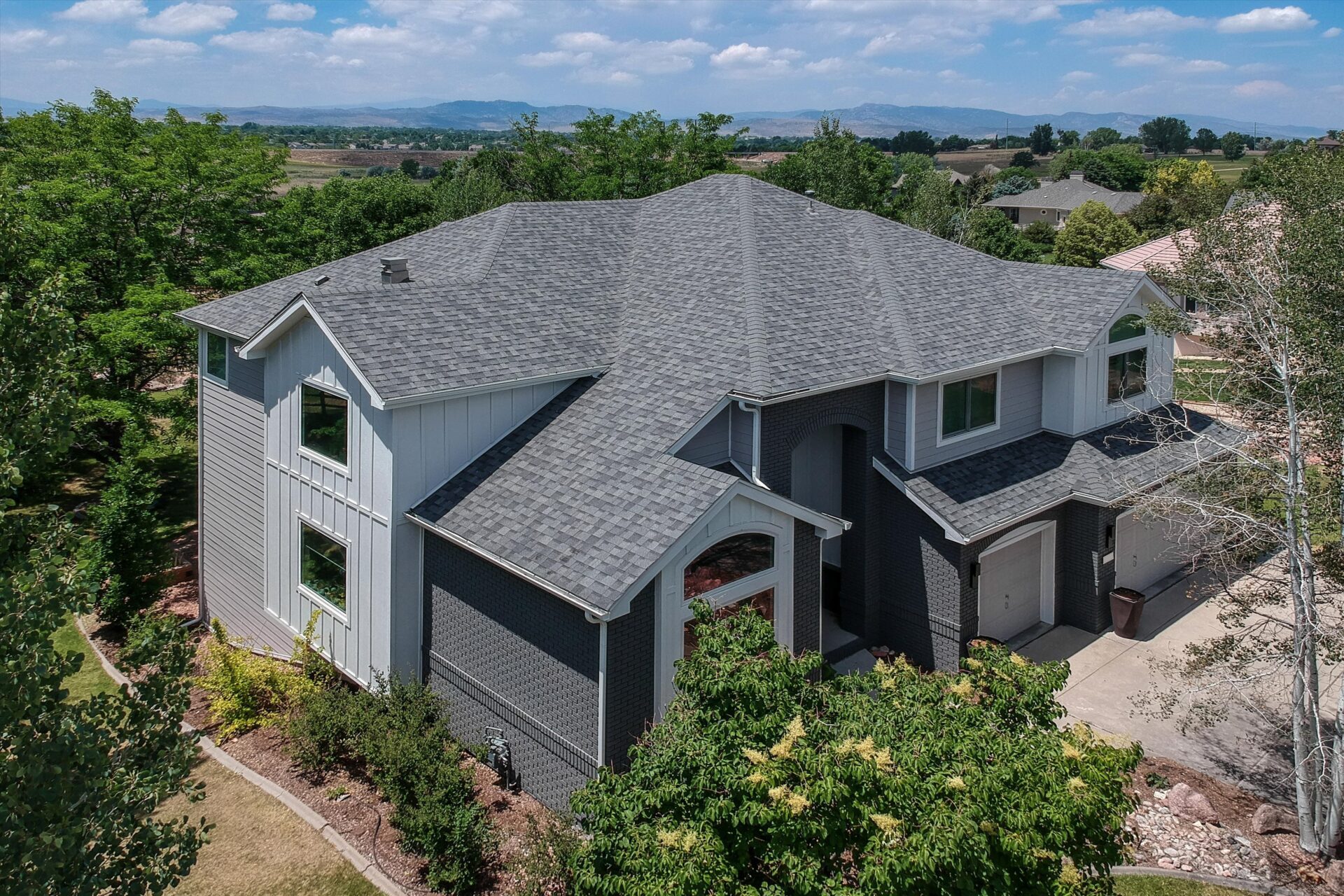
A production home has a simple gable or hip with two or three planes. Greenwood Village’s custom homes routinely have eight or more — intersecting gables, dormers, turrets, clipped corners, a low-slope section over an addition, and long valleys. Complexity, not area, is what moves the price on these roofs, for concrete reasons:
- Valleys and transitions are where roofs leak. Every intersection needs a correctly built valley, and every place a roof meets a wall needs step and kick-out flashing. More planes means more of these details and more labor per square.
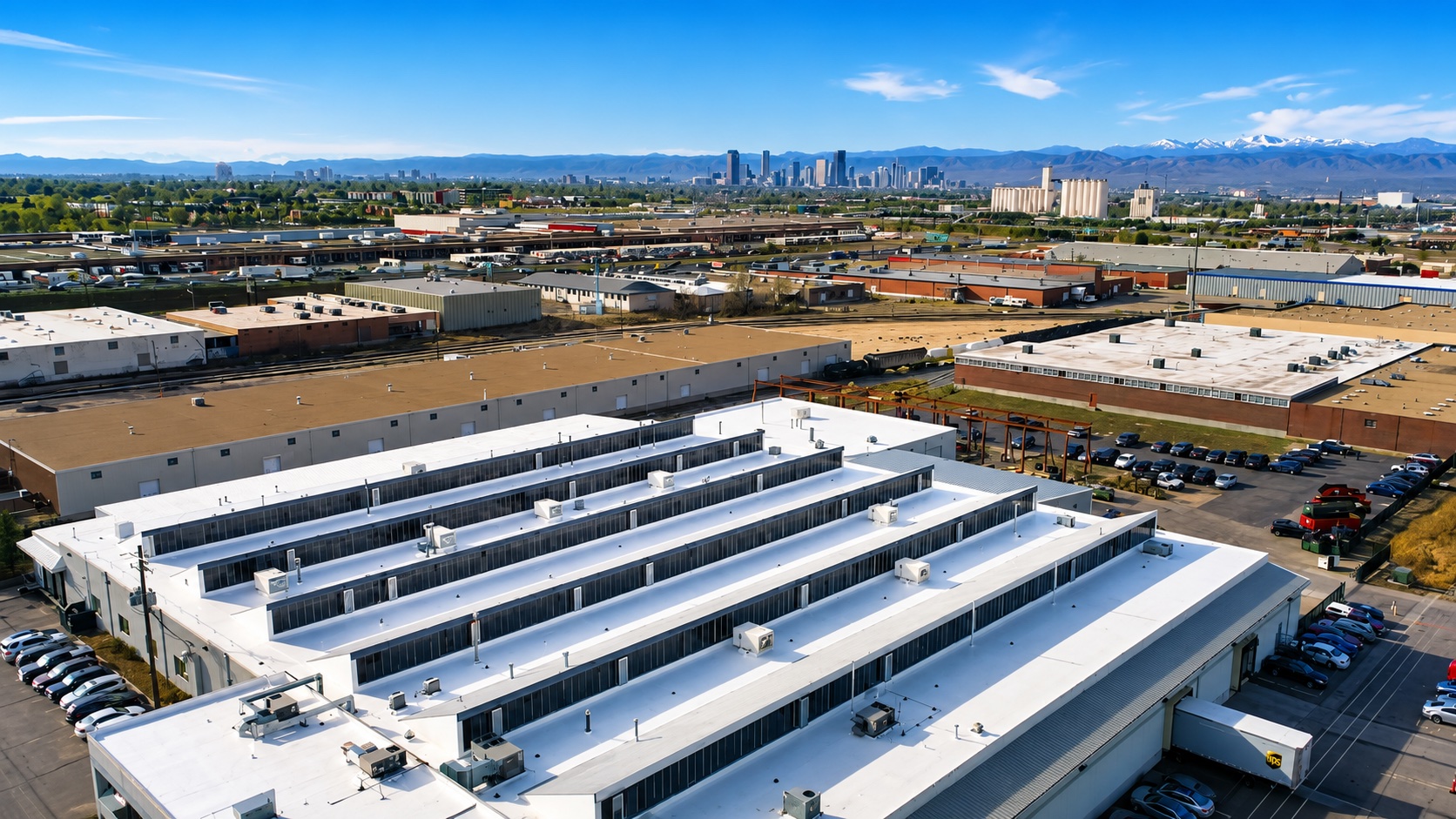
- Low-slope sections need a different system entirely. Shingles have a minimum slope; below it, you need a membrane. Many homes here have a flat or near-flat section over a porch, addition or bay, and the tie-in between the membrane and the shingle field is a specific detail that gets botched often.
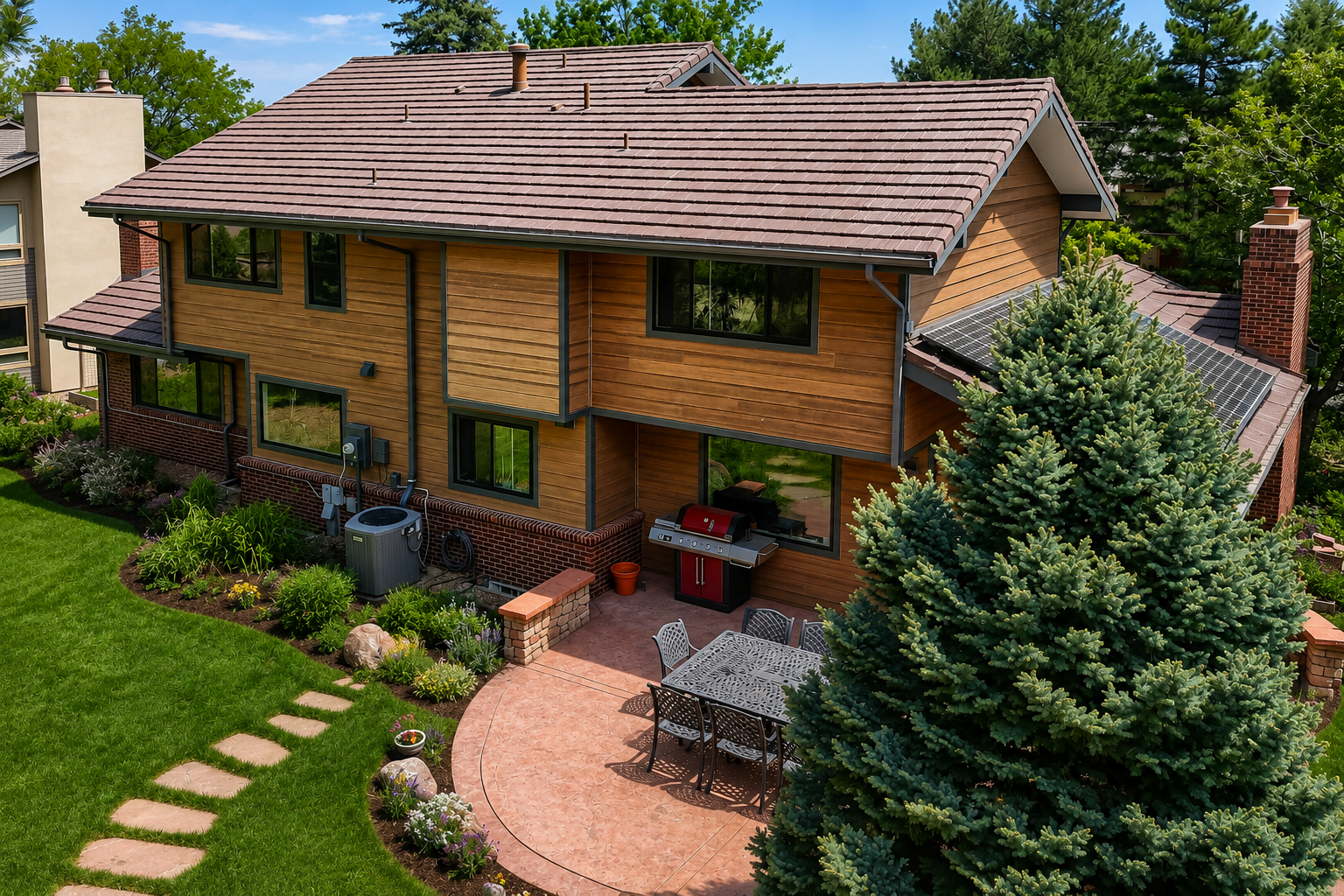
- Chimneys and skylights. Masonry chimneys need proper counter-flashing cut into the mortar joint rather than surface-sealed, and wide chimneys need a cricket behind them so water and debris do not pond. Skylights should be replaced with the roof, not reflashed and left — the seals age at roughly the same rate as the shingles.
- Access. Steep pitches, multiple stories and mature landscaping that stops a truck getting close all add real time.
Shingles, Impact Ratings and Metal Accents
Given the hail exposure, the material conversation here is mostly about impact resistance and about what suits a complex, highly visible roof.
| Option | What it gives you | Worth knowing |
|---|---|---|
| Architectural asphalt shingle | The default: good looks, wide color range, sensible cost | Specify an algae-resistant version here — north slopes under canopy will streak otherwise |
| Class 4 impact-resistant shingle | The highest impact rating in the standard test, and most Colorado insurers offer a premium discount for it | The discount can offset a meaningful share of the upgrade over time; ask your insurer for their specific credit before deciding |
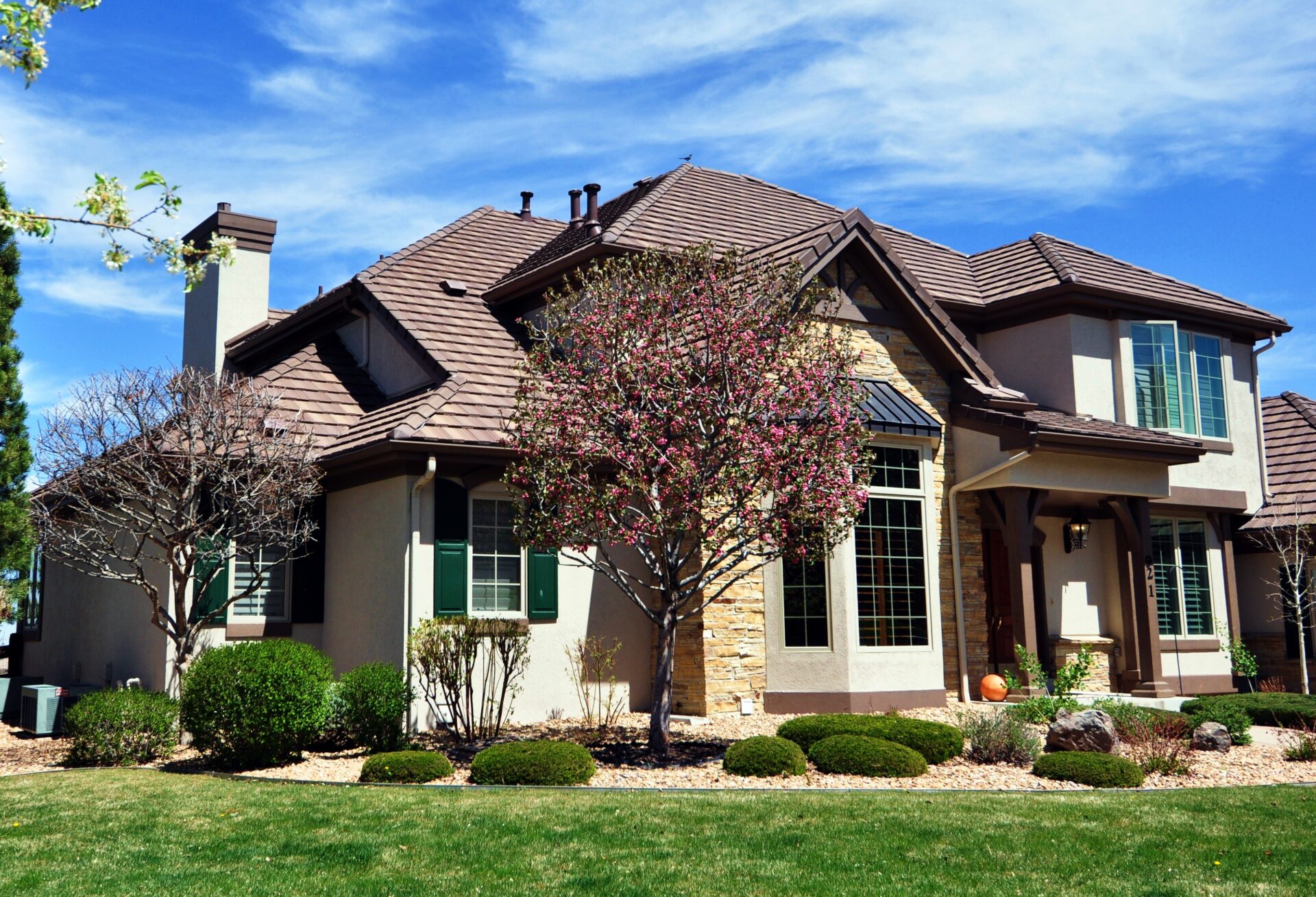
| Designer / luxury profile | Heavier, dimensional shingles that read as slate or shake from the street | Suits complex custom rooflines where the roof is a large part of the elevation |
| Synthetic slate or shake | The look of slate or cedar shake at a fraction of the weight | A common choice where the original design called for shake but the maintenance is unwelcome |
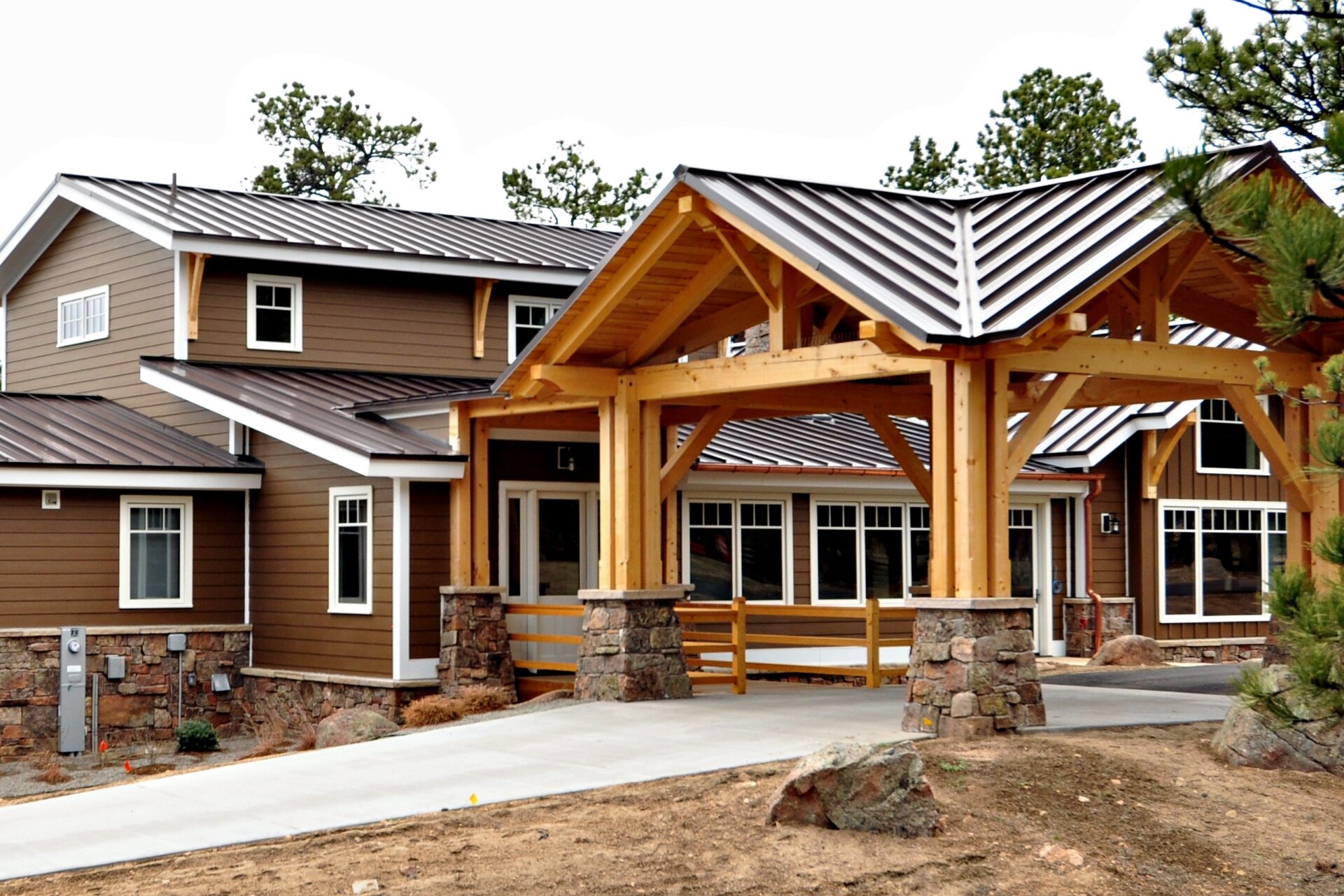
| Standing-seam metal | Very long service life, excellent shedding, strong architectural statement | Frequently used here on accent roofs — bays, porches, dormers — rather than the whole house |
| Low-slope membrane | The correct system for flat and near-flat sections | Not optional: shingles below their minimum slope will leak regardless of installation quality |
Cost varies far more with roof complexity than with material choice, so the honest sequence is to scope the roof first and then choose the product. Our Colorado roof replacement cost guide covers the general factors; the number that matters is the one we write after measuring yours.
Ventilation, Algae and Debris Under a Mature Canopy
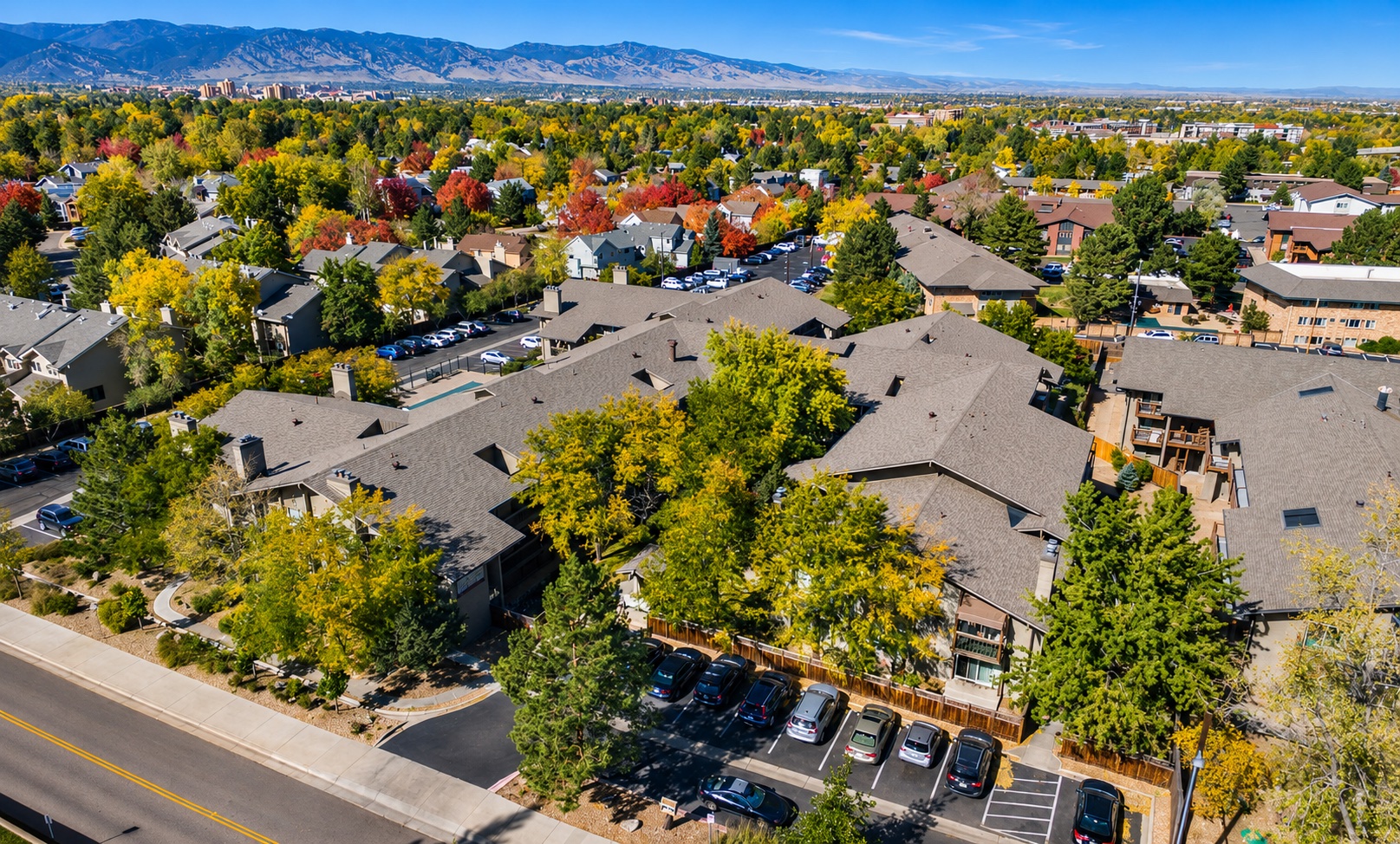
Greenwood Village carries an unusually heavy mature tree canopy for the Denver metro. Large lots that were planted out in the 1960s and 1970s now have forty- and fifty-foot deciduous trees close to the house, and roofs feel that more than any other part of the building.
- Algae streaking. Those dark vertical stains on north-facing slopes are a organism, not dirt, and they thrive in shade and retained moisture. They will return on a new roof unless the shingle carries algae resistance — a specification item that costs little and is regularly left off quotes in this city.
- Debris in valleys and behind chimneys. Leaf and seed litter holds water exactly where you least want standing water. Crickets behind wide chimneys and clean, properly built valleys matter more here than on an open lot.
- Gutters carry more than they were sized for. Larger profiles and genuinely effective guards earn their keep under heavy canopy, and overflowing gutters are a leading cause of fascia rot and of water finding its way behind siding.
- Ventilation. Balanced intake at the soffit and exhaust at the ridge is what keeps the deck dry and the shingles at their rated life. On these homes the usual problem is intake: soffit vents blocked by insulation or painted shut. Adding ridge vent without fixing intake achieves very little, and we check both.
Overhanging limbs are worth trimming back before a new roof goes on. We will point out which ones are actually in contact; we do not do tree work ourselves.
The System Behind the Work
A roof replacement running through an insurance claim generates a paper trail — scope documents, supplements, adjuster correspondence, inspection results — and losing control of that paperwork is how homeowners end up underpaid on their own claim.
Two things make that possible, and they are the reason to choose us over a cheaper quote.
First, experience and scope. We have been working on Colorado’s Front Range since 2001, and we hold a Class C general contractor license (Colorado license #C120350) rather than a single-trade license. That is not a technicality: it means roofing, siding, windows, decks and outdoor living can run under one contract, with one project manager accountable for the flashings where those trades meet — which is precisely where multi-contractor projects leak, literally and figuratively. James Hardie recognizes us as an Elite Preferred contractor and a President’s Club winner, their highest contractor distinction. Our rating is 4.9 out of 5 from 552 verified reviews. Alongside that license we hold manufacturer certifications from James Hardie (Elite Preferred since 2011), GAF (Master Elite), Pella, TimberTech and Deckorators, and we have been named a Qualified Remodeler Top 500 contractor three years running — all of it listed, with the issuing body for each, on our awards and credentials page.
Second, a proprietary on-demand client portal we built ourselves. Most of what people hate about a remodel is not the construction. It is not knowing — who to call, whether the permit went in, when material arrives, what has been paid, whether it passed inspection. We built a system to remove exactly that, and as far as we know no other exterior contractor in this market offers it:
Every conversation in one place
Messages, decisions and change requests are logged against your project rather than scattered across texts, voicemails and three different crew members’ phones.
Contracts and scope, always retrievable
Your signed contract and itemized scope live in the portal, so you can easily get a refresh on what was agreed — on your own, any time.
Permit status you can see
Where the permit is in the process, and when inspections are scheduled — without having to phone anyone to find out.
Delivery and install schedules
When material lands and when each trade starts, so you can plan around the work instead of waiting for a truck to appear.
Before, during and final photography
Documented condition before we start, progress images through production, and final photography — including the parts of the building you will never see again once it is closed up.
Payments tracked per trade
What is paid and what is outstanding, broken out by trade rather than as one running balance you have to reconcile yourself.
Inspection records
Each inspection and its result, recorded against the project and available when you sell the house and someone asks.
Access is an individual, custom URL issued to you — and you get it when we start talking, at the lead and project meeting, not after you sign something. That is deliberate: you can see how we run a project before you commit to one. It then stays available after the work is finished, which matters more than it sounds, because the documentation, images and inspection records are exactly what a buyer’s agent, an appraiser or an insurer asks for years later. If you have high expectations of how a project should be run, this is the part of our offer worth judging us on.
Where We Work in Greenwood Village, Colorado
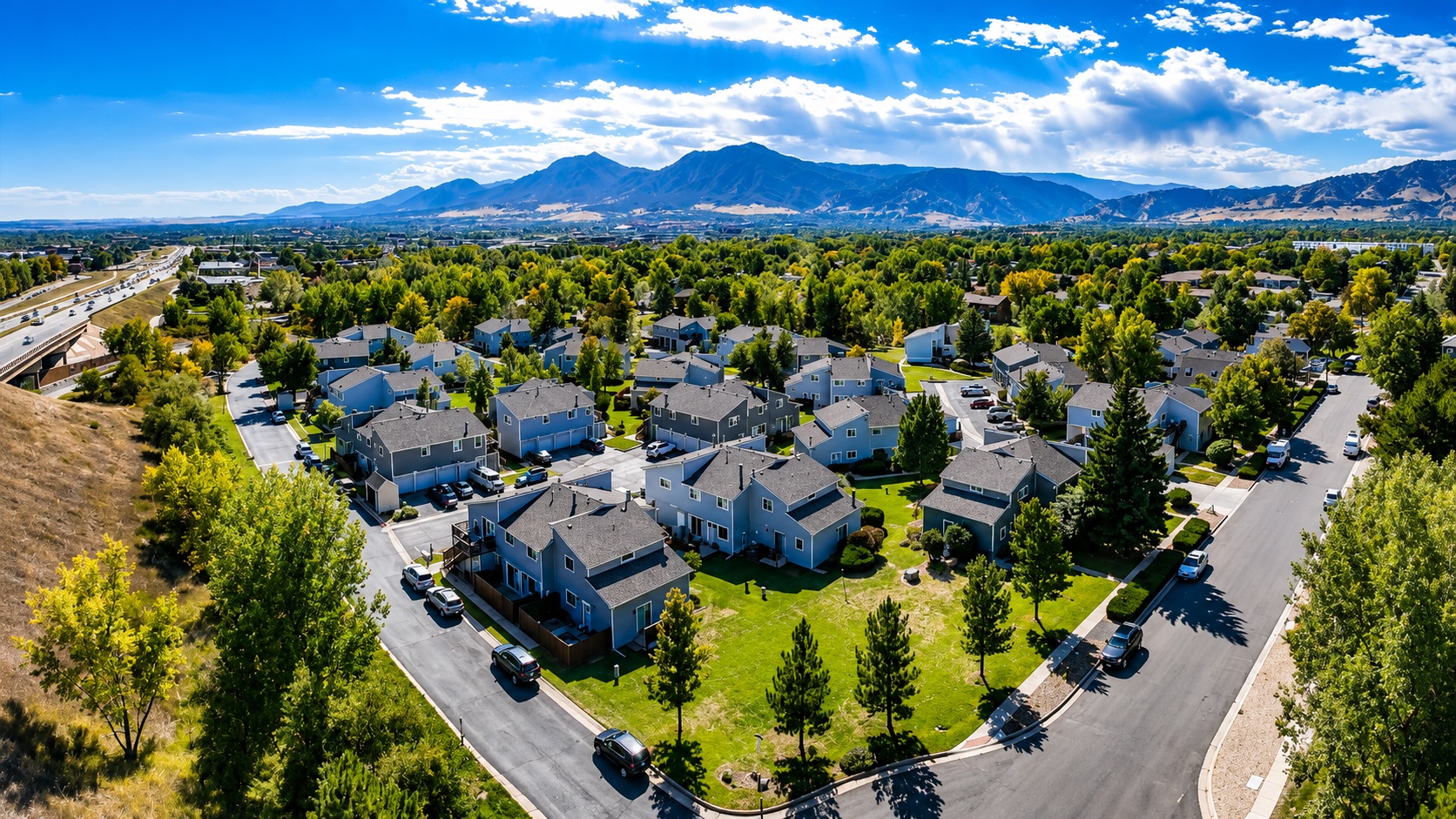
Greenwood Village sits in Arapahoe County in Denver’s south metro, between Cherry Hills Village to the north-west, Englewood to the west, Centennial to the south and Cherry Creek State Park to the east, with I-25 and Arapahoe Road running through it. We cover the whole city for roofing, roof replacement and hail damage repair — the large-lot custom homes west of I‑25, the newer pockets east of Yosemite, and the Denver Tech Center offices in between.
- Cherry Creek Village
- Greenwood Hills
- Sundance Hills
- Orchard Hills
- The Preserve
- Belleview Village
- Denver Tech Center
We also work across the rest of the south metro — Cherry Hills Village, Centennial, Englewood, Littleton, Glendale and the City of Denver.
One thing worth clearing up, because it confuses almost everybody: three separate places here carry a similar name. Cherry Creek Village is a neighborhood inside Greenwood Village. Cherry Hills Village is its own incorporated town next door. And Cherry Creek is a neighborhood of the City of Denver. We serve all three. The reason to know which one you are in is purely practical — each has its own permit authority, so it changes who issues your permit and how long review takes.
We also work next door in Denver and across the south metro in Centennial, Englewood, Littleton, Glendale and Cherry Hills Village. We also handle storm damage claims across the metro.
Nearby Cities We Also Serve
Crews run across the Denver metro rather than out of a single branch, so the towns either side of Greenwood Village are ordinary work for us, not a travel job:
Free Greenwood Village Roof Inspection
We will inspect every slope, photograph what we find, and tell you plainly whether you have claimable storm damage, a maintenance issue, or a roof with years left. If there is a claim, we meet your adjuster on the roof.
Request Your Free Estimate → 📞 (303) 776-5263
Prefer email? Reach us at office@nlexteriors.com. Ask about financing options when we walk the property.
Greenwood Village Roofing FAQs
How do I know if my Greenwood Village roof has hail damage?
Usually you cannot tell from the ground, because hail bruises the shingle mat rather than punching holes. The reliable tells are the soft metals: dents in gutters, downspouts, vents, flashing and air-conditioning fins. Damage is also directional, so one or two slopes may be destroyed while the rest is untouched. A proper inspection covers every slope and photographs each one.
Will you help with my insurance claim?
Yes. We inspect and document first, you file the claim because it is your policy, and then we meet your adjuster on the roof so the damage we documented is the damage that gets scoped. Where the insurer’s scope omits items the code or the assembly requires — ice-and-water, drip edge, ventilation, steep or multi-story access — we document and supplement them.
Can you waive or cover my insurance deductible?
No, and you should not work with anyone who offers to. Absorbing, rebating or working around a deductible on an insurance claim is illegal in Colorado. Beyond the legal exposure it creates for you, a contractor willing to commit insurance fraud to win a job has told you how they will behave when there is a problem on your roof.
Are impact-resistant shingles worth it in the south metro?
Often yes. Class 4 is the highest impact rating in the standard test, and most Colorado insurers offer a premium discount for a Class 4 roof — which can offset a meaningful share of the upgrade over time. Ask your insurer what credit they specifically give before you decide, because it varies by carrier.
Why is my roof quote higher than my neighbor’s for a similar-size house?
Almost always complexity rather than area. Custom homes here often have eight or more roof planes, plus dormers, long valleys, chimneys needing crickets and counter-flashing, skylights, and sometimes a low-slope section that needs a membrane instead of shingles. Every intersection is a detail that takes labor and is where roofs actually leak. Access, pitch and story height add to it.
What are the dark streaks on the north side of my roof?
Algae. It grows in shade and retained moisture, which is exactly what a mature tree canopy produces on a north-facing slope, and it is cosmetic rather than structural. It will come back on a new roof unless the shingle you choose is algae-resistant — an inexpensive specification that quotes in this city frequently leave off.
Do I need to replace my skylights with the roof?
Generally yes. Skylight seals age at roughly the same rate as the shingles around them, so re-flashing an old skylight into a new roof usually means opening the new roof again within a few years. Replacing them while the roof is off is far cheaper than doing it later.
Do you fix the flat section over my porch too?
Yes, and it needs a different system. Asphalt shingles have a minimum slope, and below it they will leak no matter how well they are installed, so low-slope sections get a membrane such as TPO. The detail that matters most is the tie-in between the membrane and the shingle field above it, which is a common source of leaks when it is done casually.