Greenwood Village · Commercial & HOA
Commercial Exterior Contractor in Greenwood Village, CO
Low-slope roofing, cladding and full-community exterior programs for Denver Tech Center offices, HOAs and multifamily properties — phased around occupancy, documented for your board.
Who does commercial exterior work in Greenwood Village, CO?
Northern Lights Exteriors is a licensed Class C general contractor working on commercial, HOA and multifamily exteriors across Greenwood Village — including a large share of the Denver Tech Center — and the wider south metro.
This building stock is mostly low-slope membrane rather than steep-slope shingle, and it is occupied while you work on it. So the scope always includes a phasing plan built around tenants and parking, agreed work hours, tenant notices, and a documented condition assessment your board or ownership can actually circulate and defend.
The Denver Tech Center Is a Different Building Stock
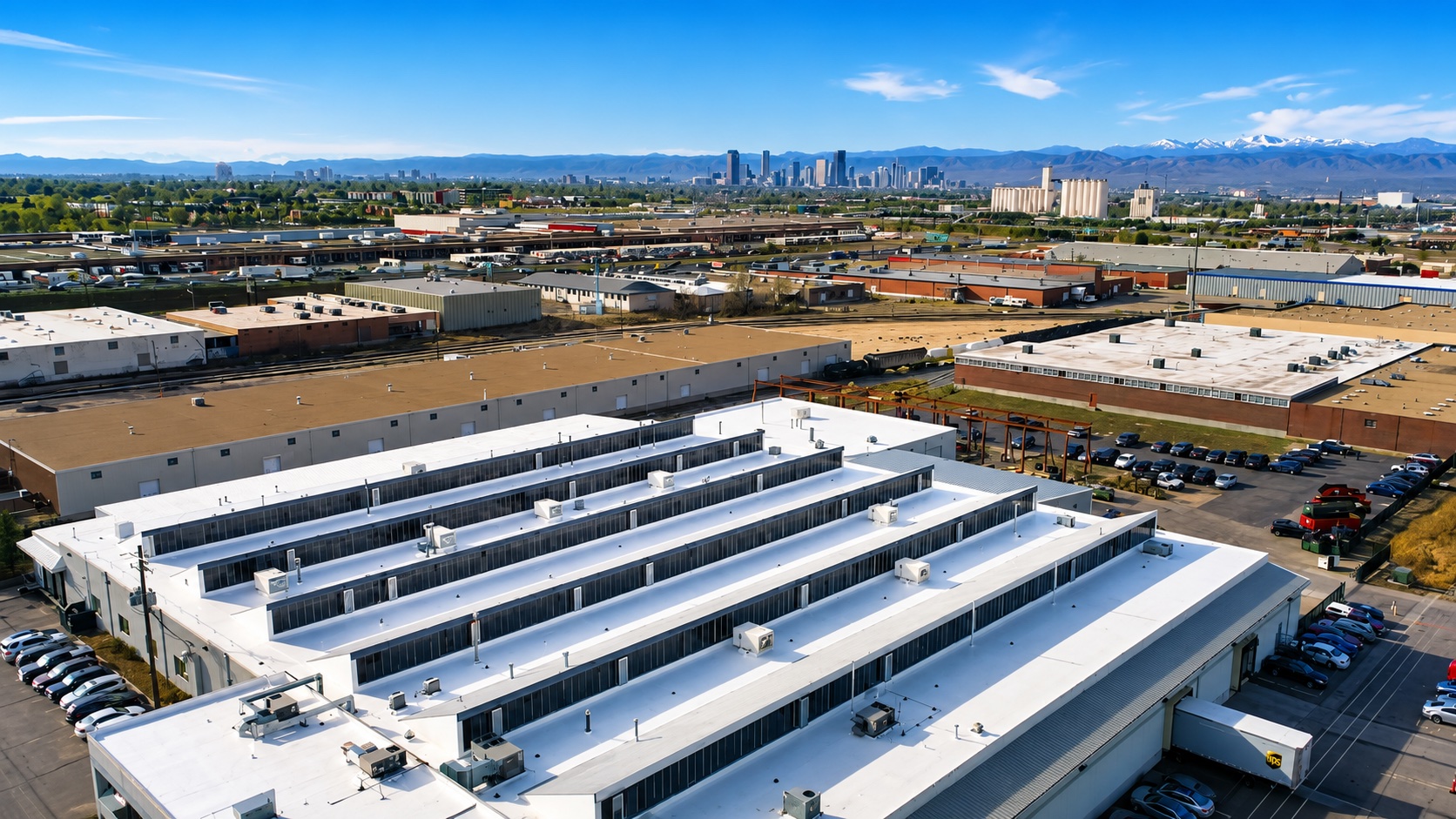
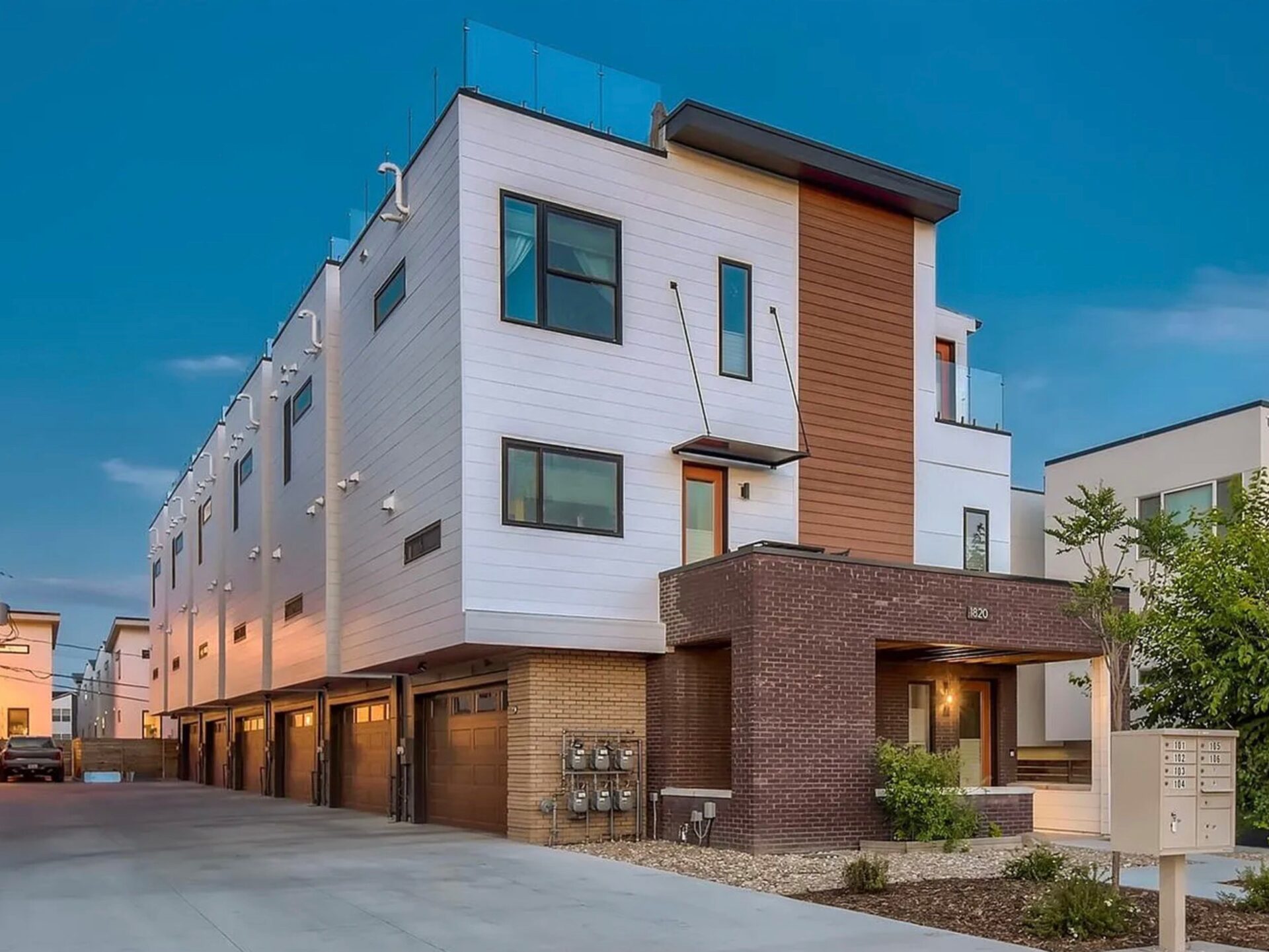
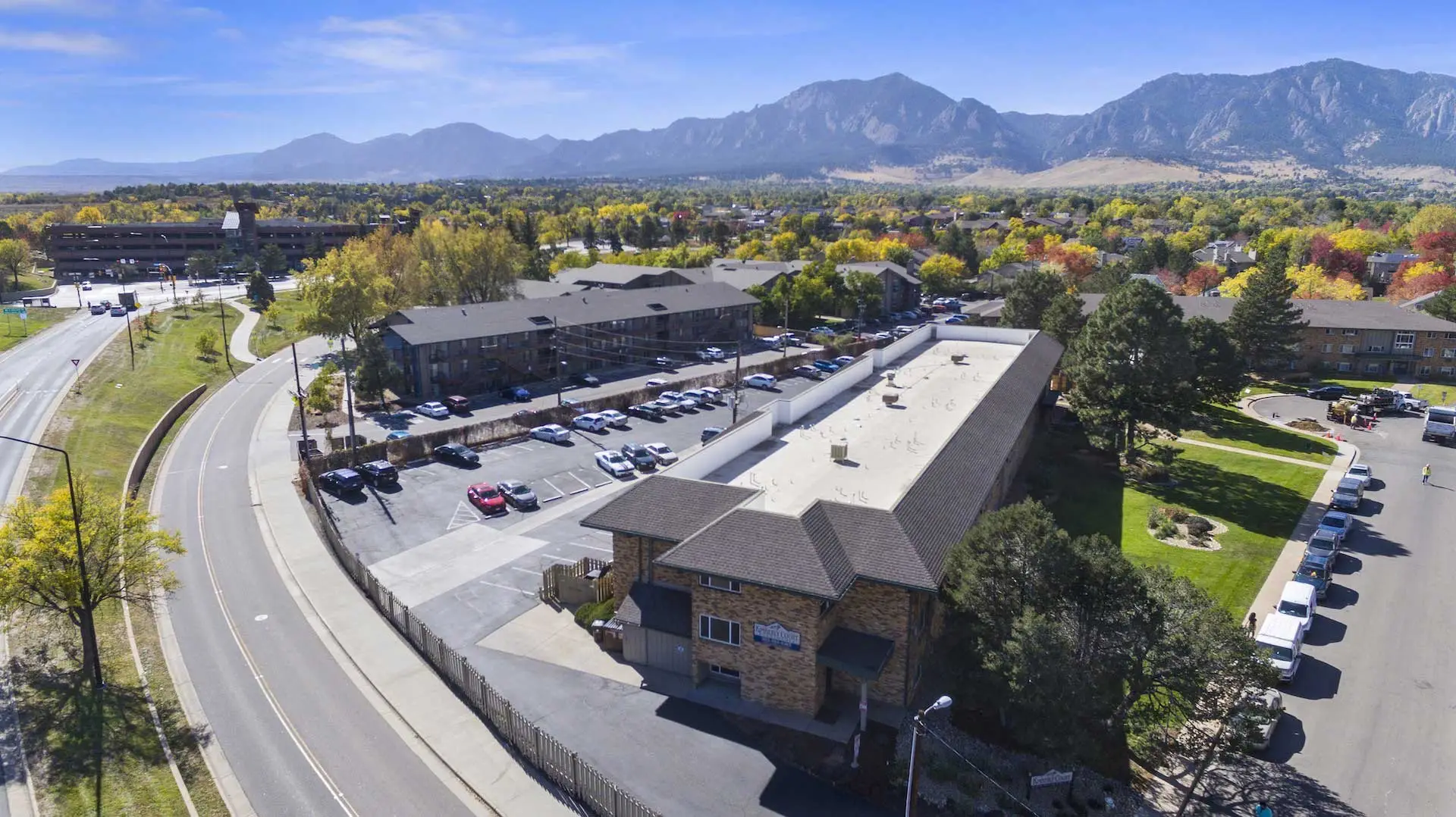
Greenwood Village is unusual among Front Range municipalities: alongside its large-lot residential neighborhoods it contains a substantial share of the Denver Tech Center. That means the commercial work here is not the strip retail and small storefront mix of most suburbs. It is offices, multi-tenant flex, medical and professional buildings, and the residential communities that grew up around them.
Three practical consequences:
- Low-slope roofing dominates. Most of this stock is flat or near-flat membrane roofing, not steep-slope shingle. That is a different trade, a different failure mode and a different maintenance cycle — see TPO and EPDM.
- The buildings are occupied while you work on them. Tenants have business hours, leases have quiet-enjoyment provisions, and parking is frequently the constraint that actually governs the schedule.
- Decisions go through committees and budgets. A property manager, an owner’s asset manager or an HOA board needs documentation they can circulate and defend — not a one-page number.
We work across all of it as a licensed Class C general contractor, which matters on commercial work because a re-roof frequently exposes parapet, coping, flashing and cladding issues that a roofing-only contractor cannot legally or practically finish.
Who We Work For in Greenwood Village
Office and multi-tenant flex
Low-slope roof replacement and repair, parapet and coping work, panel and cladding re-skins, sealant and flashing programs, and window and storefront surrounds.
HOA and community associations
Full-community siding, roofing and window programs phased building by building, with board-ready scopes, unit-by-unit schedules and homeowner communication built in.
Multifamily and apartments
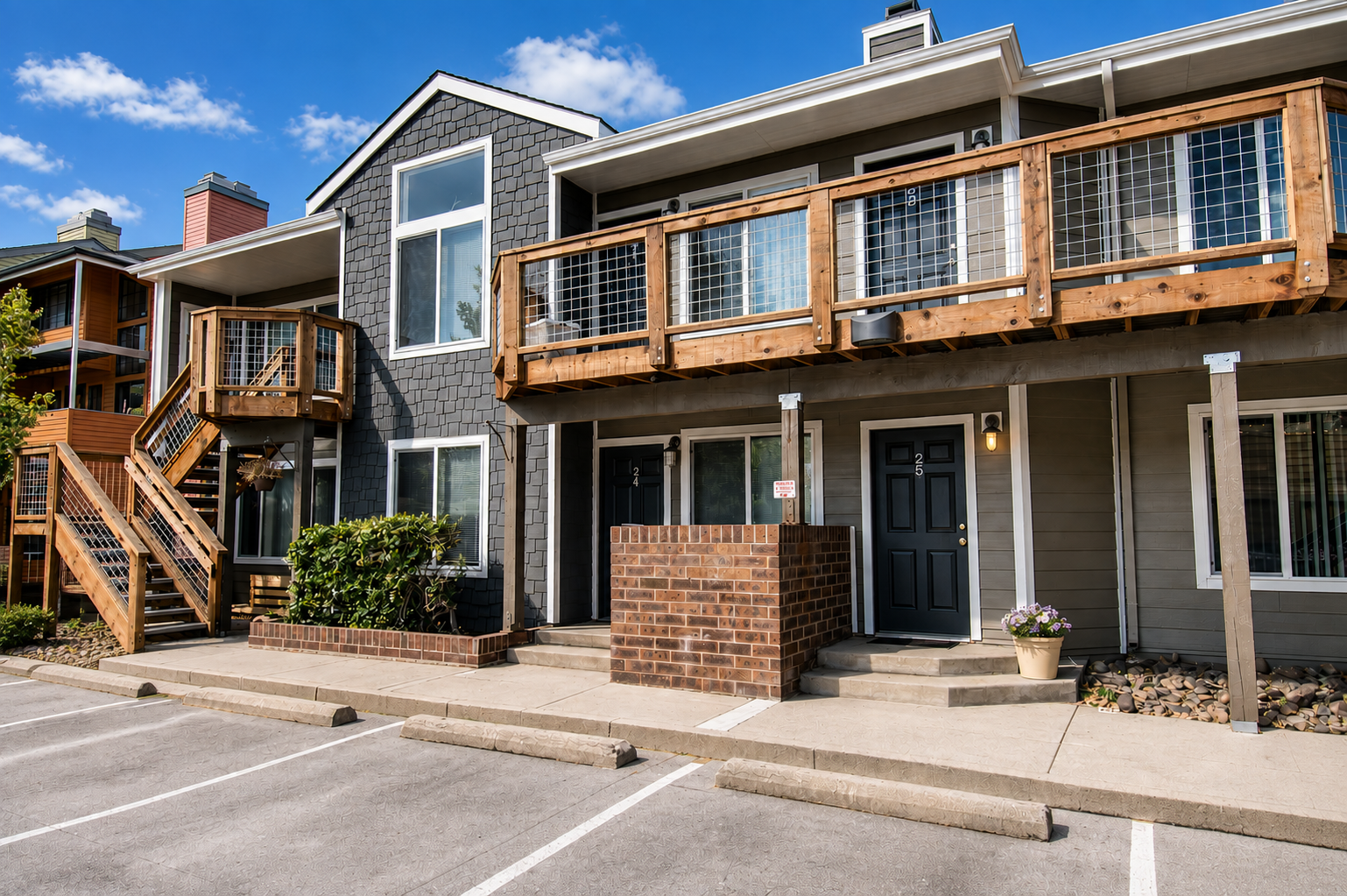
Occupied-building exterior work sequenced around residents, with access notices, balcony and walkway coordination and phased turnover.
Medical, professional and institutional
Where noise, access, hours and infection-control or life-safety constraints have to drive the schedule rather than the other way round.
The full range of services sits on our commercial exteriors pages; this page covers what is specific to working in Greenwood Village and the DTC.
Low-Slope Roofing: Repair, Restore or Replace
The most consequential decision on a commercial building here is usually what to do with a low-slope roof that is aging but not yet failing. Three genuine options, and the case for each:
| Option | When it is the right call | What it does not fix |
|---|---|---|
| Targeted repair | Isolated leaks on a membrane with real service life left, and the substrate below is dry | Nothing systemic. If the insulation is already wet, repairs sit on top of a problem that keeps growing |
| Coating / restoration | A sound membrane nearing the end of its life, where the goal is to extend service and defer capital cost | Wet insulation, failed seams at scale, or drainage that was wrong from the start. A coating over a wet roof buries it |
| Full replacement — TPO or EPDM | Widespread seam failure, wet insulation, or a roof that has had its economic life | It is the highest capital cost, so it needs to be justified with evidence rather than assertion |
The evidence step matters, and it is the one most often skipped: before recommending a coating we want to know whether the insulation under the membrane is wet. Core cuts, or a moisture survey on a larger roof, answer that. Coating over saturated insulation looks like a saving and is not — it seals the water in, and the deck underneath keeps deteriorating out of sight until the replacement costs more than it would have originally.
Two other low-slope items that drive more leaks than the field membrane ever does: drainage — ponding water means drains, scuppers or slope are inadequate, and any new roof that does not address it will fail the same way — and penetrations, because rooftop mechanical units, conduit and vents are where commercial roofs actually leak.
Working on an Occupied Building
On commercial and multifamily work the technical scope is rarely what goes wrong. Access, noise and parking are. How we plan around them:
- A phasing plan before pricing is final. Which elevations or buildings in which order, how long each phase blocks which parking, and where the crane, lift or dumpster stands. On a DTC site the parking count is often the real constraint.
- Hours agreed against the lease and the use. Tear-off is loud. For office and medical tenants that frequently means early starts, weekend phases, or noisy operations confined to defined windows. It belongs in the contract, not in a conversation on the first morning.
- Notices written for tenants and residents. We supply the notice text and schedule so management can distribute it — what is happening, when, what it affects, and who to call.
- Life-safety access kept clear. Egress routes, fire lanes and hydrant access are planned around, and inspected daily rather than assumed.
- Daily close-down. Debris removed, magnetic sweep of drives and parking for fasteners, site left presentable. On an occupied property this is the thing tenants judge the whole project by.
Documentation Your Board or Owner Can Actually Use
Most commercial and HOA decisions in Greenwood Village are made by a group, often at a monthly meeting, sometimes across a reserve-study cycle. A single price on a single page does not survive that process. What we provide instead:
- A documented condition assessment — photographs, locations, and what each finding means, so the board can see the building rather than take our word for its condition.
- An itemized scope with options priced separately, so “repair now”, “restore and defer” and “replace” can be compared rather than argued about.
- A phasing and schedule outline that shows how the work fits around occupancy, and how it could be split across budget years if that is what the reserve allows.
- Warranty and specification documentation, including manufacturer system warranties where the assembly qualifies for them.
- Current insurance certificates and license information up front, because they will be asked for anyway.
We are also comfortable presenting to a board directly and answering questions in the room. On a large phased project that usually saves a month of back-and-forth.
The System Behind the Work
On a commercial or HOA project the reporting is not a nicety — a property manager has to answer to ownership, and a board has to answer to its members, usually at a meeting where we are not in the room.
Two things make that possible, and they are the reason to choose us over a cheaper quote.
First, experience and scope. We have been working on Colorado’s Front Range since 2001, and we hold a Class C general contractor license (Colorado license #C120350) rather than a single-trade license. That is not a technicality: it means roofing, siding, windows, decks and outdoor living can run under one contract, with one project manager accountable for the flashings where those trades meet — which is precisely where multi-contractor projects leak, literally and figuratively. James Hardie recognizes us as an Elite Preferred contractor and a President’s Club winner, their highest contractor distinction. Our rating is 4.9 out of 5 from 552 verified reviews. Alongside that license we hold manufacturer certifications from James Hardie (Elite Preferred since 2011), GAF (Master Elite), Pella, TimberTech and Deckorators, and we have been named a Qualified Remodeler Top 500 contractor three years running — all of it listed, with the issuing body for each, on our awards and credentials page.
Second, a proprietary on-demand client portal we built ourselves. Most of what people hate about a remodel is not the construction. It is not knowing — who to call, whether the permit went in, when material arrives, what has been paid, whether it passed inspection. We built a system to remove exactly that, and as far as we know no other exterior contractor in this market offers it:
Every conversation in one place
Messages, decisions and change requests are logged against your project rather than scattered across texts, voicemails and three different crew members’ phones.
Contracts and scope, always retrievable
Your signed contract and itemized scope live in the portal, so you can easily get a refresh on what was agreed — on your own, any time.
Permit status you can see
Where the permit is in the process, and when inspections are scheduled — without having to phone anyone to find out.
Delivery and install schedules
When material lands and when each trade starts, so you can plan around the work instead of waiting for a truck to appear.
Before, during and final photography
Documented condition before we start, progress images through production, and final photography — including the parts of the building you will never see again once it is closed up.
Payments tracked per trade
What is paid and what is outstanding, broken out by trade rather than as one running balance you have to reconcile yourself.
Inspection records
Each inspection and its result, recorded against the project and available when you sell the house and someone asks.
Access is an individual, custom URL issued to you — and you get it when we start talking, at the lead and project meeting, not after you sign something. That is deliberate: you can see how we run a project before you commit to one. It then stays available after the work is finished, which matters more than it sounds, because the documentation, images and inspection records are exactly what a buyer’s agent, an appraiser or an insurer asks for years later. If you have high expectations of how a project should be run, this is the part of our offer worth judging us on.
Where We Work in Greenwood Village, Colorado
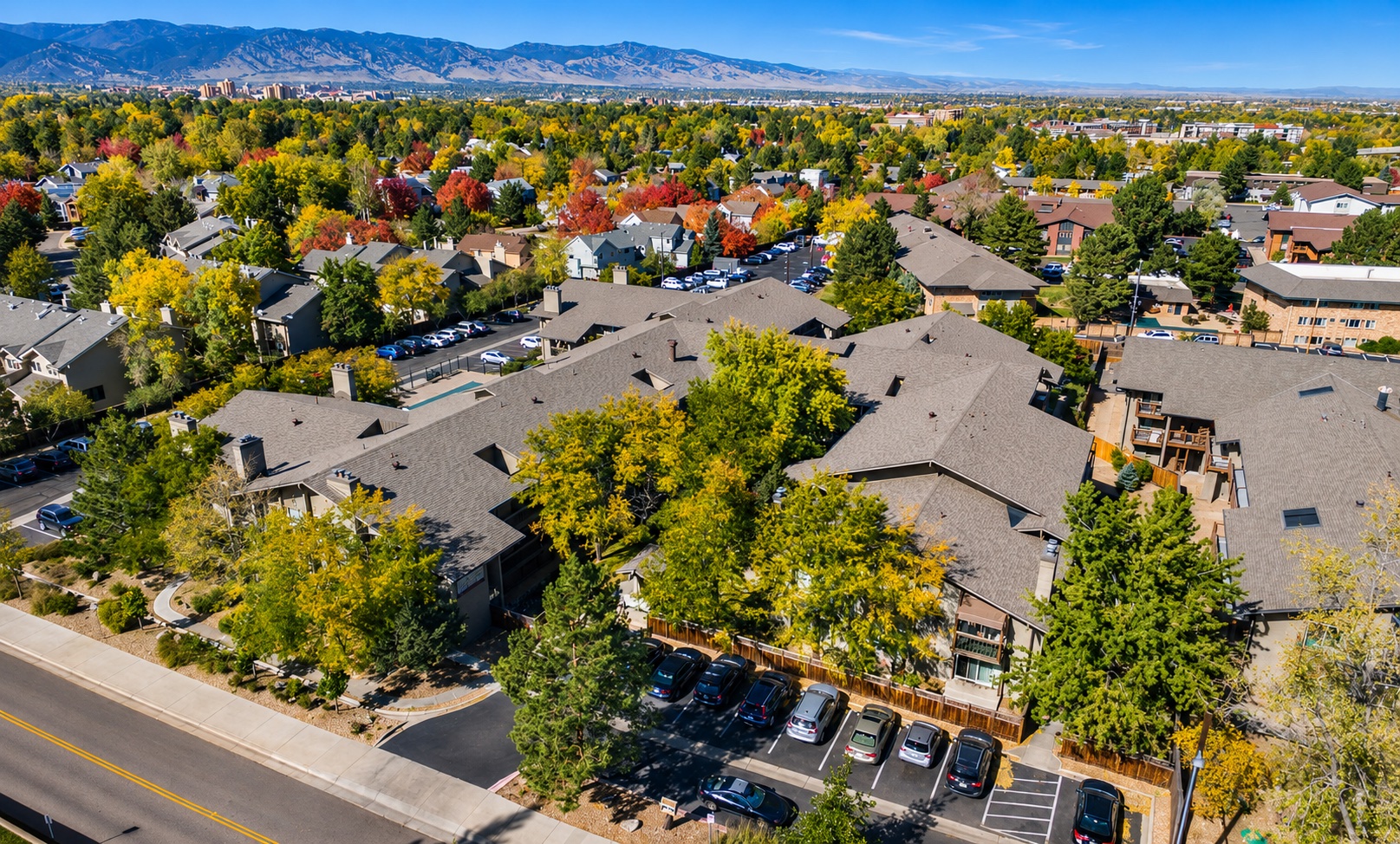
Greenwood Village sits in Arapahoe County in Denver’s south metro, between Cherry Hills Village to the north-west, Englewood to the west, Centennial to the south and Cherry Creek State Park to the east, with I-25 and Arapahoe Road running through it. We cover the whole city for commercial, HOA and multifamily exterior work — the large-lot custom homes west of I‑25, the newer pockets east of Yosemite, and the Denver Tech Center offices in between.
- Cherry Creek Village
- Greenwood Hills
- Sundance Hills
- Orchard Hills
- The Preserve
- Belleview Village
- Denver Tech Center
We also work across the rest of the south metro — Cherry Hills Village, Centennial, Englewood, Littleton, Glendale and the City of Denver.
One thing worth clearing up, because it confuses almost everybody: three separate places here carry a similar name. Cherry Creek Village is a neighborhood inside Greenwood Village. Cherry Hills Village is its own incorporated town next door. And Cherry Creek is a neighborhood of the City of Denver. We serve all three. The reason to know which one you are in is purely practical — each has its own permit authority, so it changes who issues your permit and how long review takes.
We also work next door in Denver and across the south metro in Centennial, Englewood, Littleton, Glendale and Cherry Hills Village.
Nearby Cities We Also Serve
Crews run across the Denver metro rather than out of a single branch, so the towns either side of Greenwood Village are ordinary work for us, not a travel job:
Request a Commercial Assessment in Greenwood Village
Send us the property and we will walk it, document the condition with photographs, and come back with an itemized scope that prices repair, restoration and replacement separately so your board or ownership can compare them on the merits.
Request Your Free Estimate → 📞 (303) 776-5263
Prefer email? Reach us at office@nlexteriors.com. Ask about financing options when we walk the property.
Greenwood Village Commercial & HOA FAQs
Do you work on Denver Tech Center properties?
Yes. Greenwood Village contains a large share of the DTC, and we work on office, multi-tenant flex, medical and professional buildings there — low-slope roof replacement and repair, parapet and coping, cladding re-skins, sealant and flashing programs, and storefront surrounds. As a licensed Class C general contractor we can finish the parapet and cladding work a re-roof exposes, which a roofing-only contractor cannot.
Should we coat our flat roof or replace it?
It depends on whether the insulation under the membrane is wet, and that has to be established rather than assumed — with core cuts, or a moisture survey on a larger roof. Coating a sound membrane that is nearing end of life is a legitimate way to extend service and defer capital cost. Coating over saturated insulation seals the water in and the deck keeps deteriorating unseen, so the eventual replacement costs more.
Why does our flat roof keep leaking in the same places?
Almost always penetrations or drainage rather than the field membrane. Rooftop mechanical units, conduit and vents are where commercial roofs genuinely leak, and ponding water means the drains, scuppers or slope are inadequate. A new roof that does not correct the drainage will fail the same way, so that has to be part of the scope.
Can you phase work around our tenants and parking?
Yes, and on a DTC site parking is usually the real constraint rather than the roof itself. We produce a phasing plan before pricing is final: which elevations or buildings in what order, how long each phase affects which parking, and where lifts and dumpsters stand. Work hours are agreed against the leases and the tenant use, and written into the contract.
Do you work with HOA boards on full-community projects?
Yes. We provide a documented condition assessment with photographs, an itemized scope with repair, restore and replace priced separately so they can be compared, a phasing outline that can be split across budget years if the reserve requires it, and warranty and insurance documentation. We are happy to present to the board and take questions in the room.
What kind of documentation do you provide for a reserve study or budget cycle?
A photographed condition assessment tied to locations, an itemized scope with options priced separately, a phasing and schedule outline showing how the work could be split across budget years, and specification and warranty documentation. The intent is that a board can compare the options and defend the decision without needing us in the room.
Are you licensed and insured for commercial work?
Yes — a Colorado Class C general contractor license plus liability and workers’ compensation coverage, and we provide current certificates up front rather than waiting to be asked. On commercial and HOA work they are normally required before a contract is executed anyway.
How disruptive is a commercial re-roof to tenants?
Tear-off is genuinely loud, which is why it is planned rather than absorbed. For office and medical tenants that often means early starts, weekend phases, or confining noisy operations to agreed windows. We supply notice text and schedules for management to distribute, keep egress routes and fire lanes clear, and do a daily magnetic sweep of drives and parking.