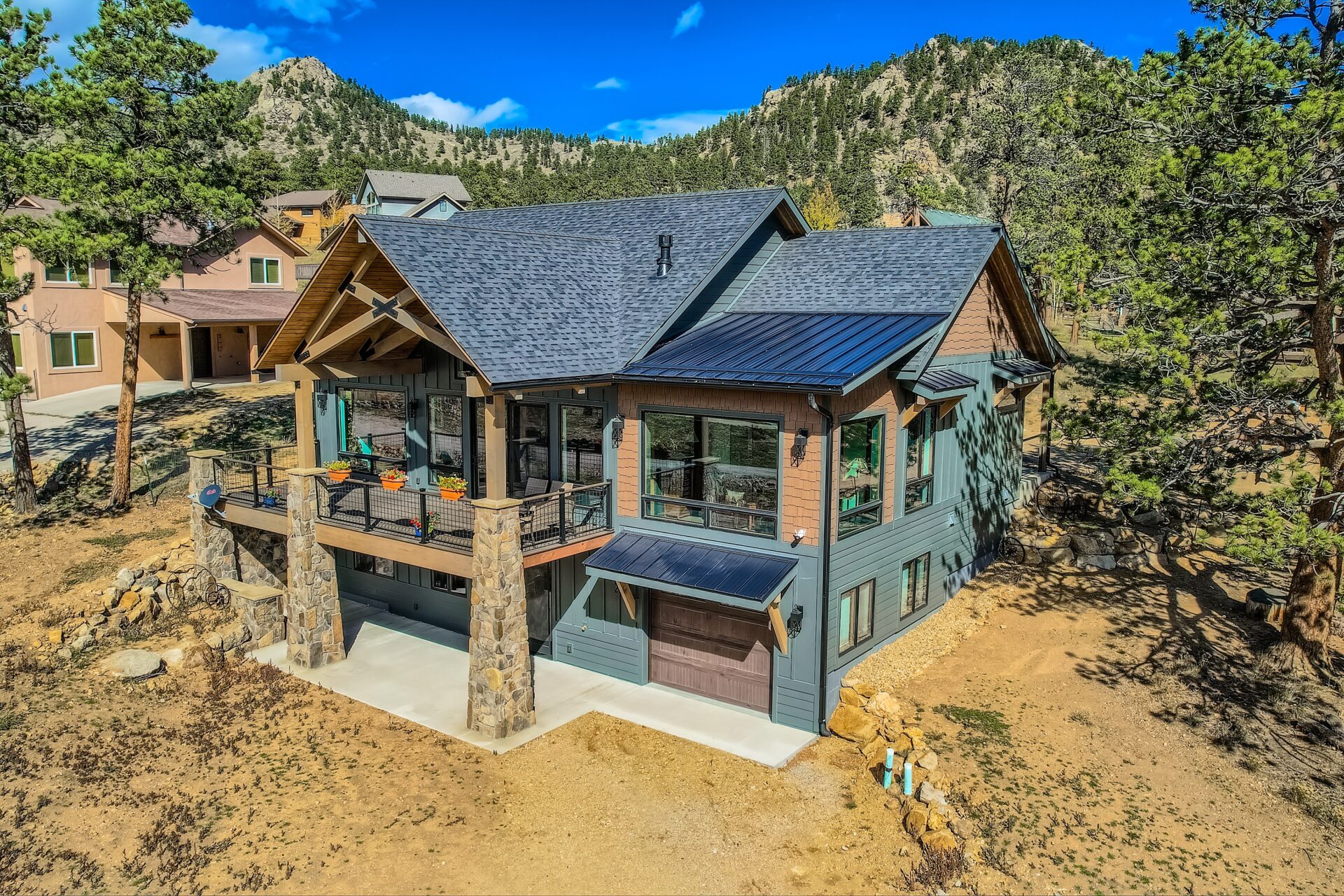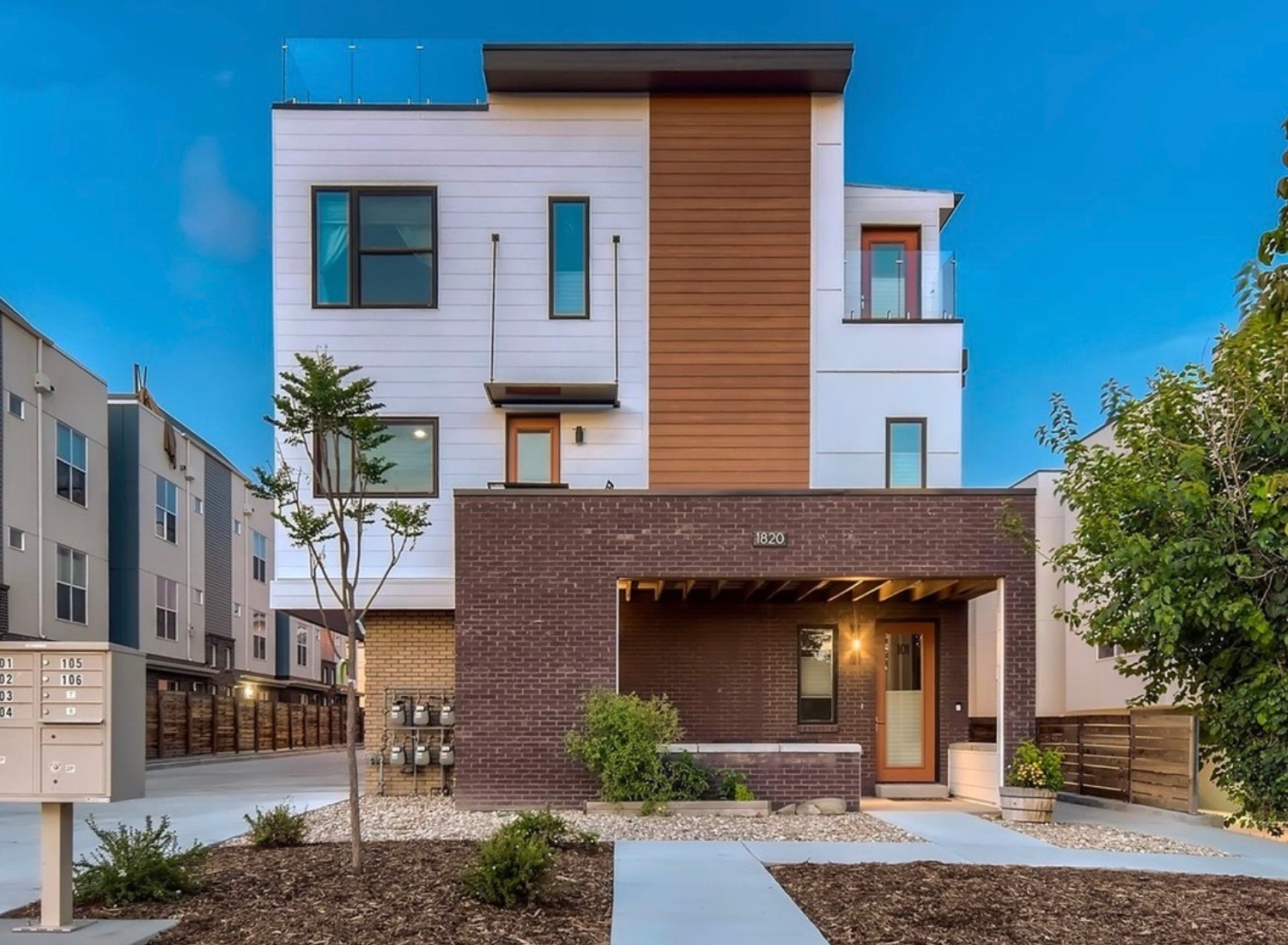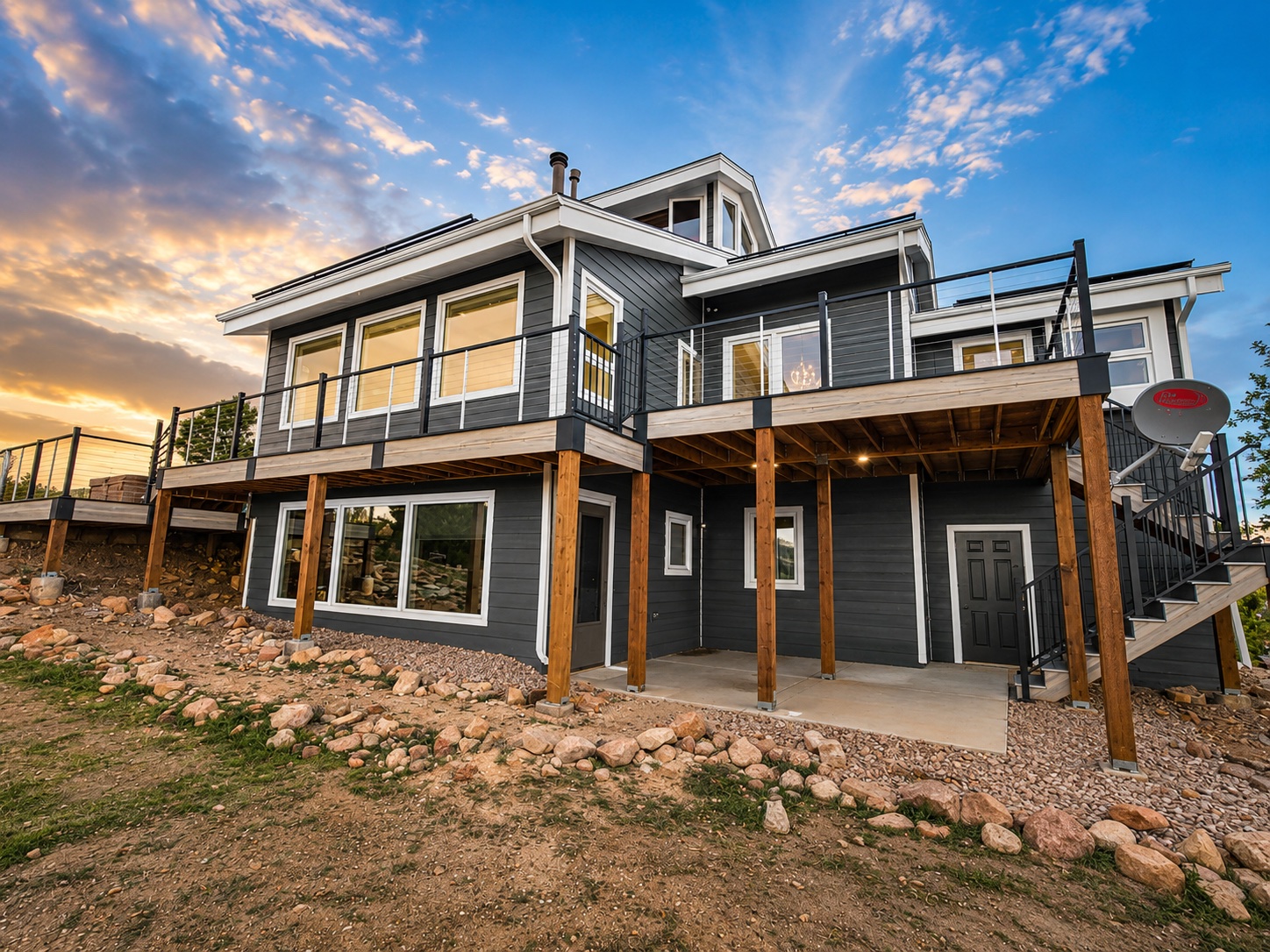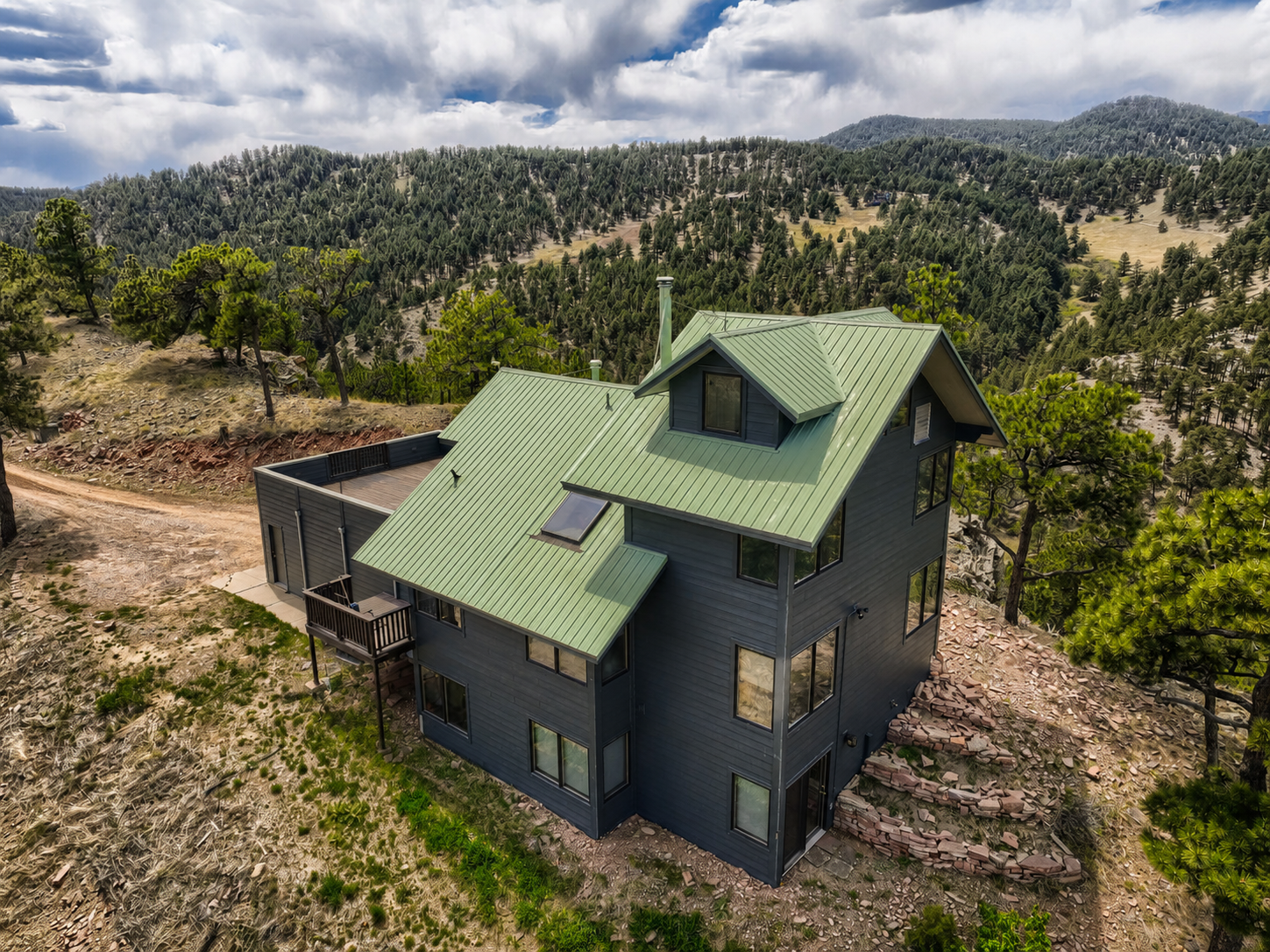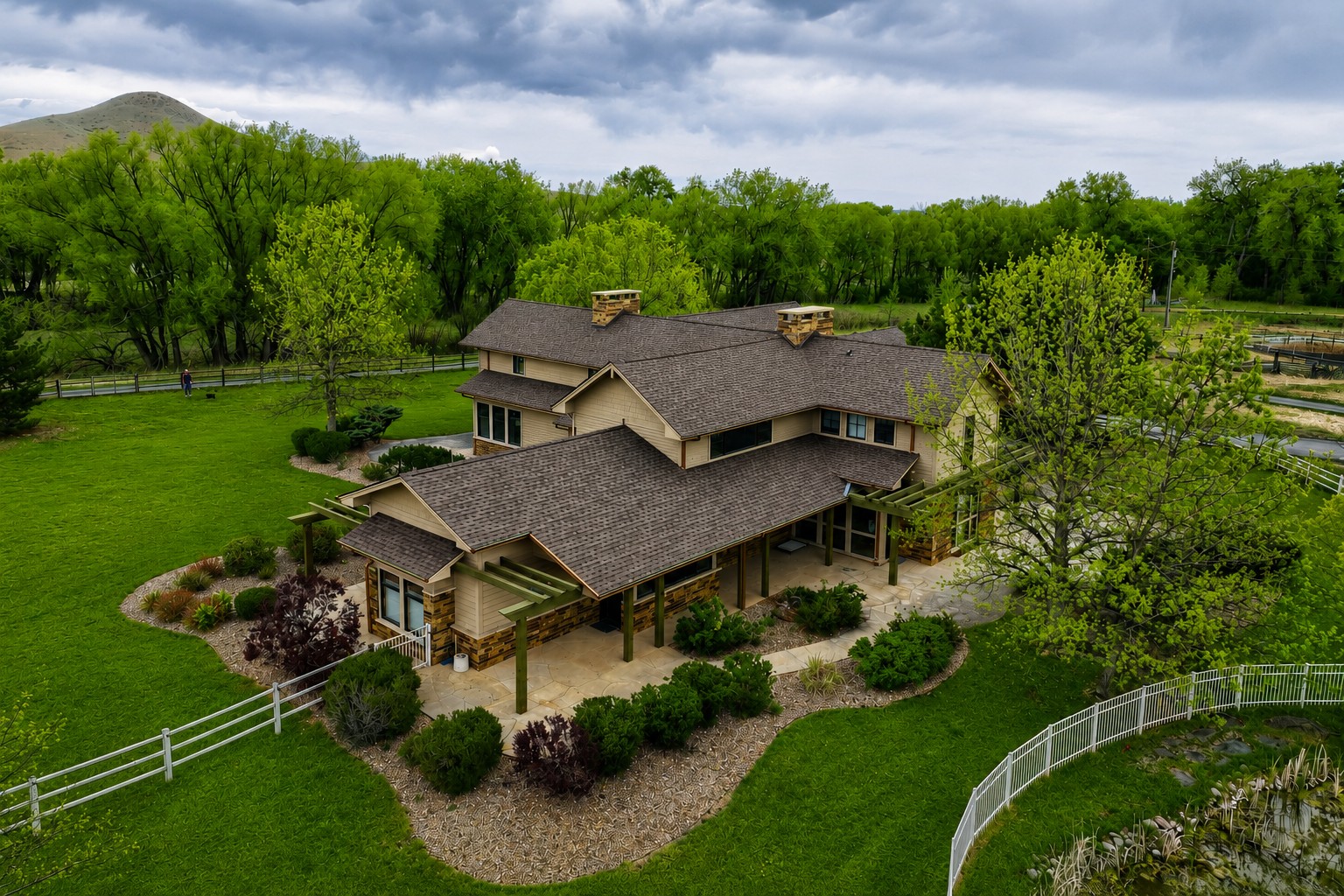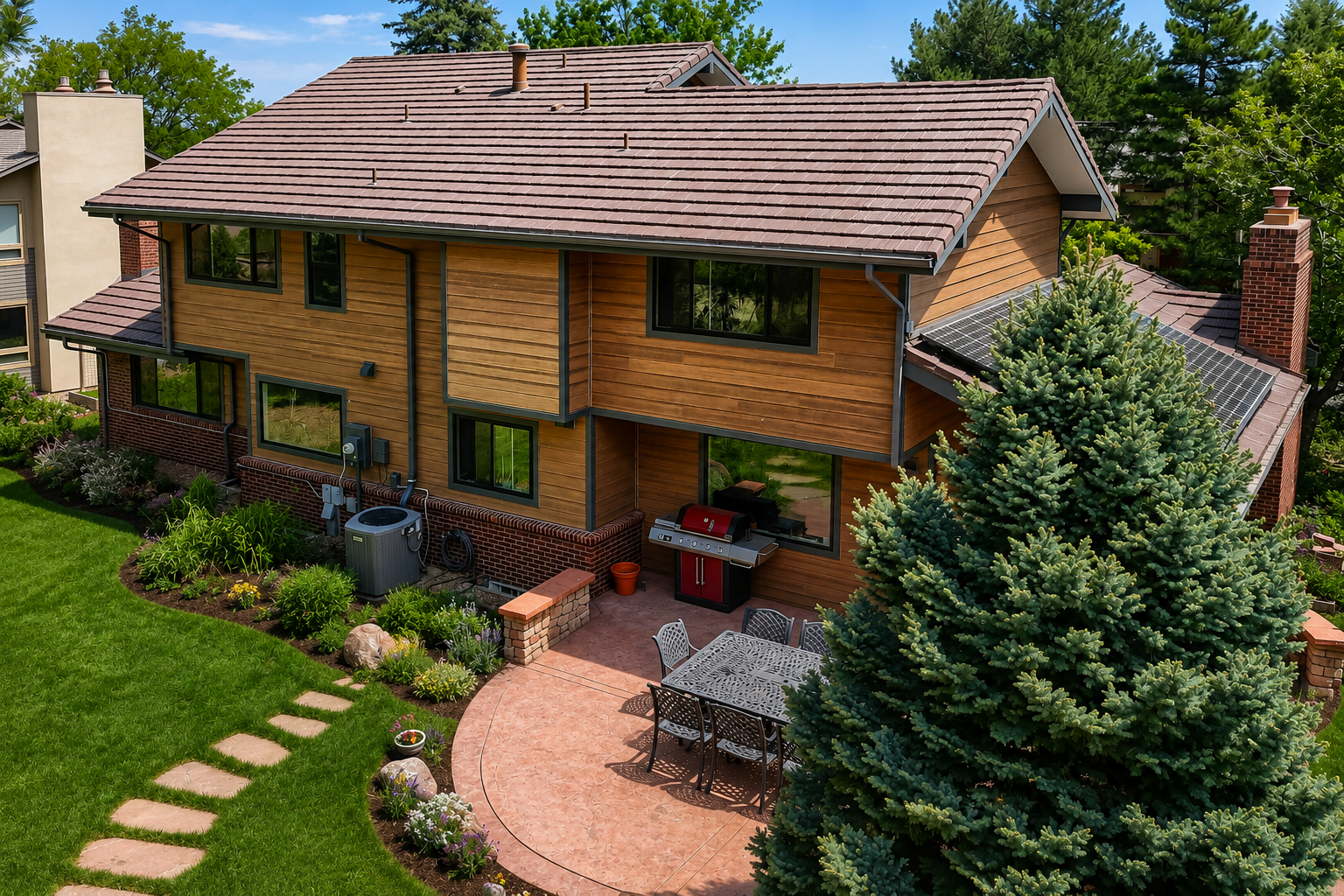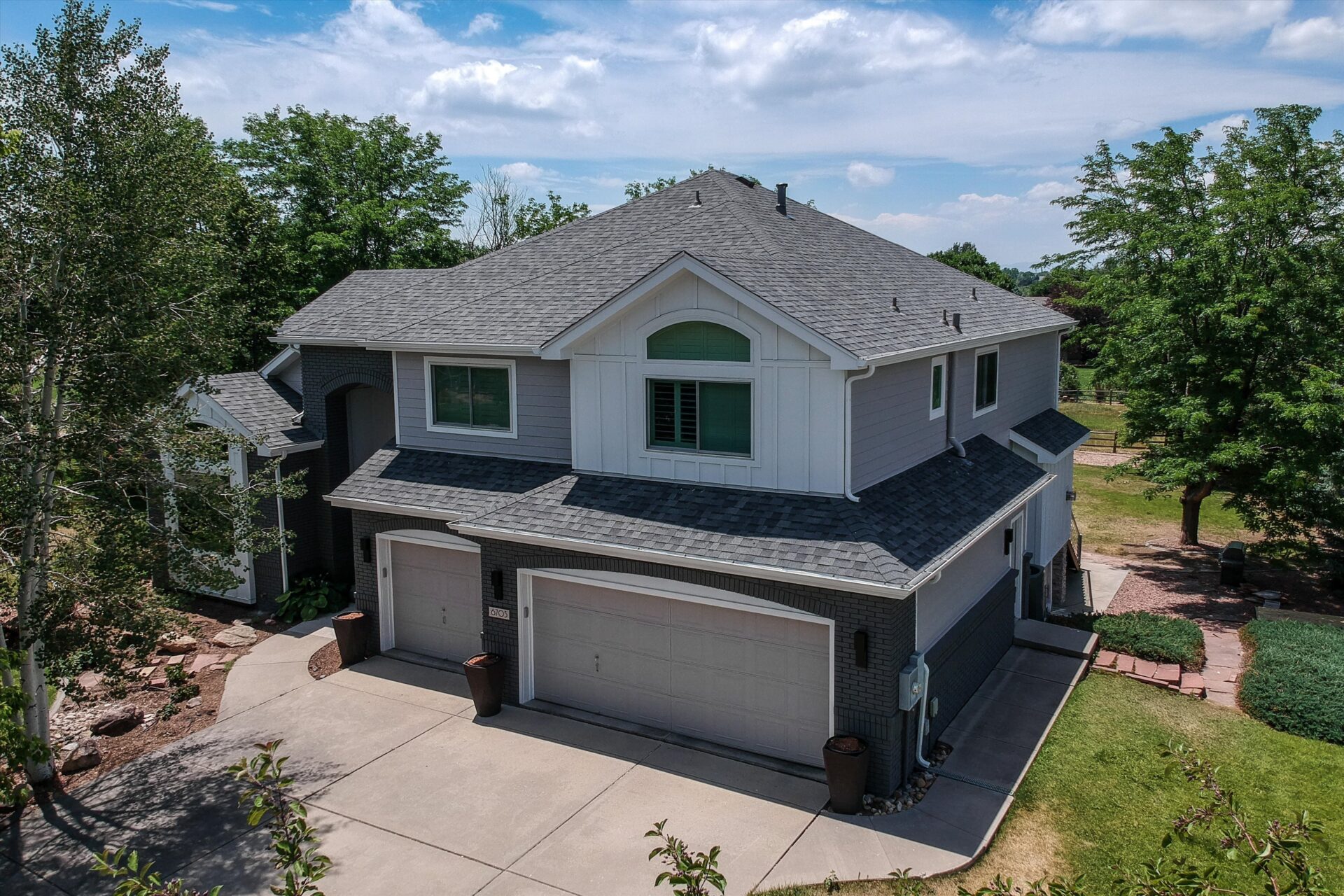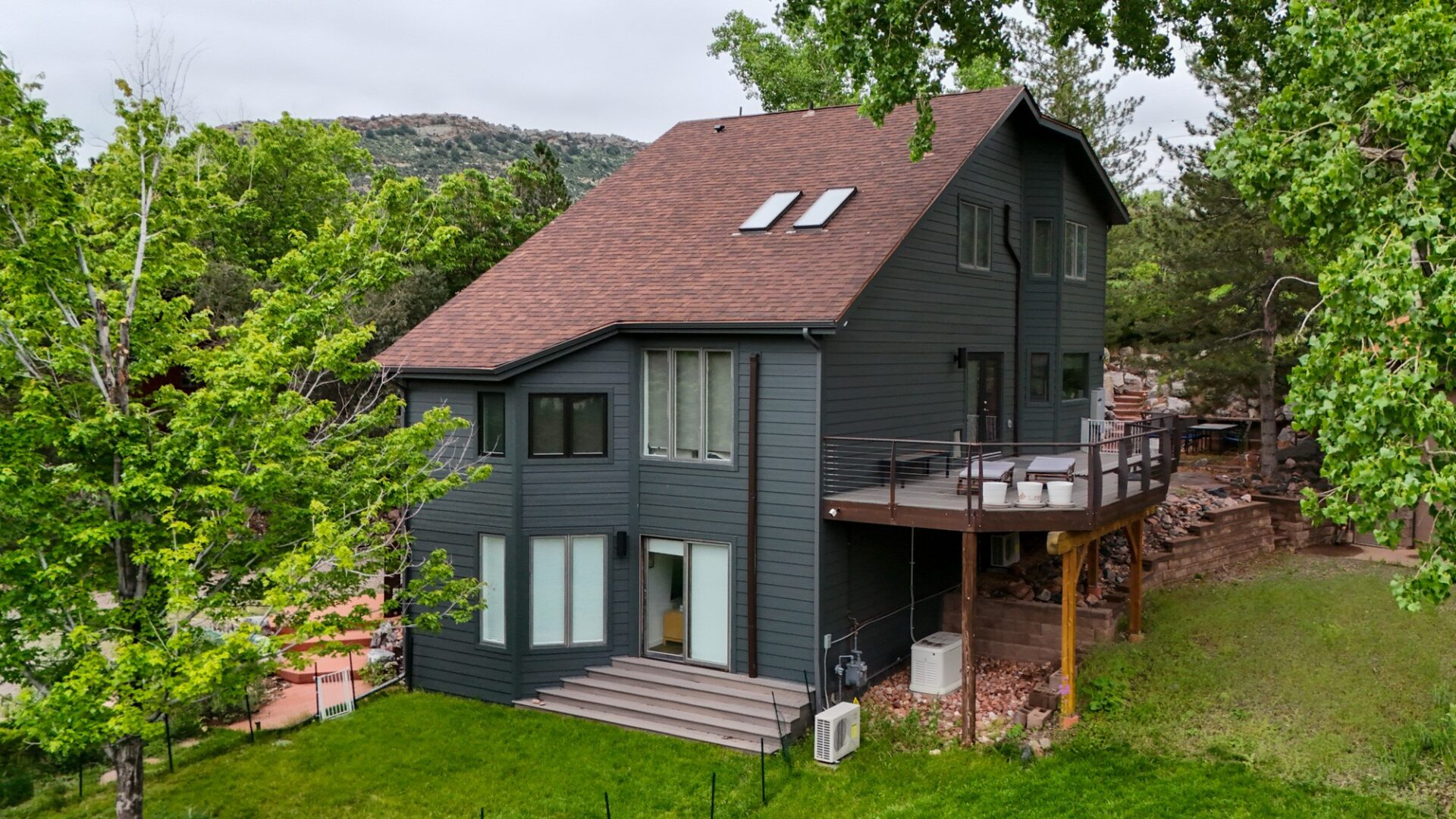
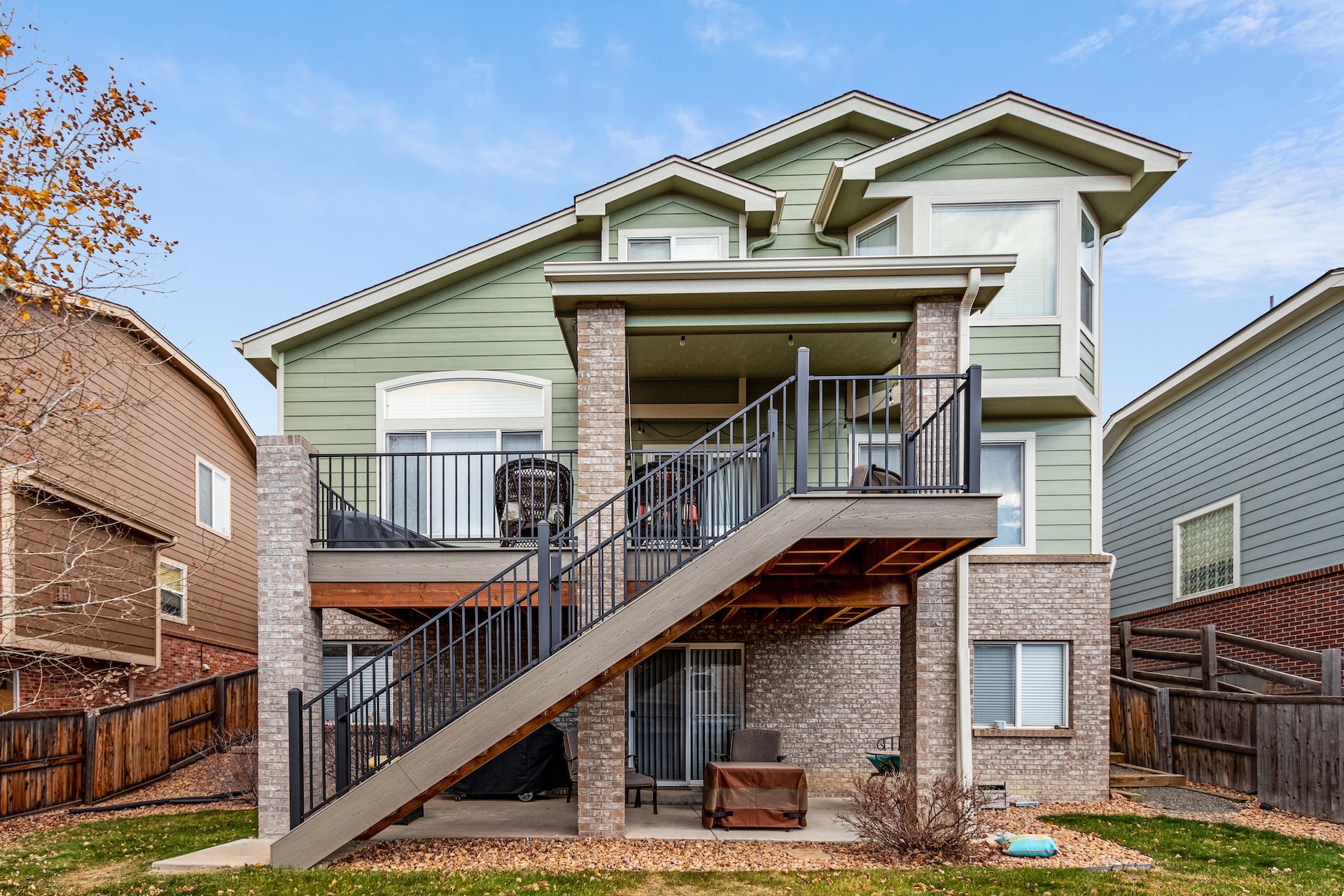
Louisville, CO · Deck Builders Since 2001
Deck Builders in Louisville, CO — Composite Decks, Pergolas & Patio Covers
Composite and PVC decks designed and built for Louisville, Colorado. Engineered for Front Range snow load, footed below frost depth, permitted through the City of Louisville, and detailed so the deck is not the weak point against your house.
Get Your Free Estimate → 📞 (303) 776-5263
Quick Answer: Who Builds Decks in Louisville, CO?
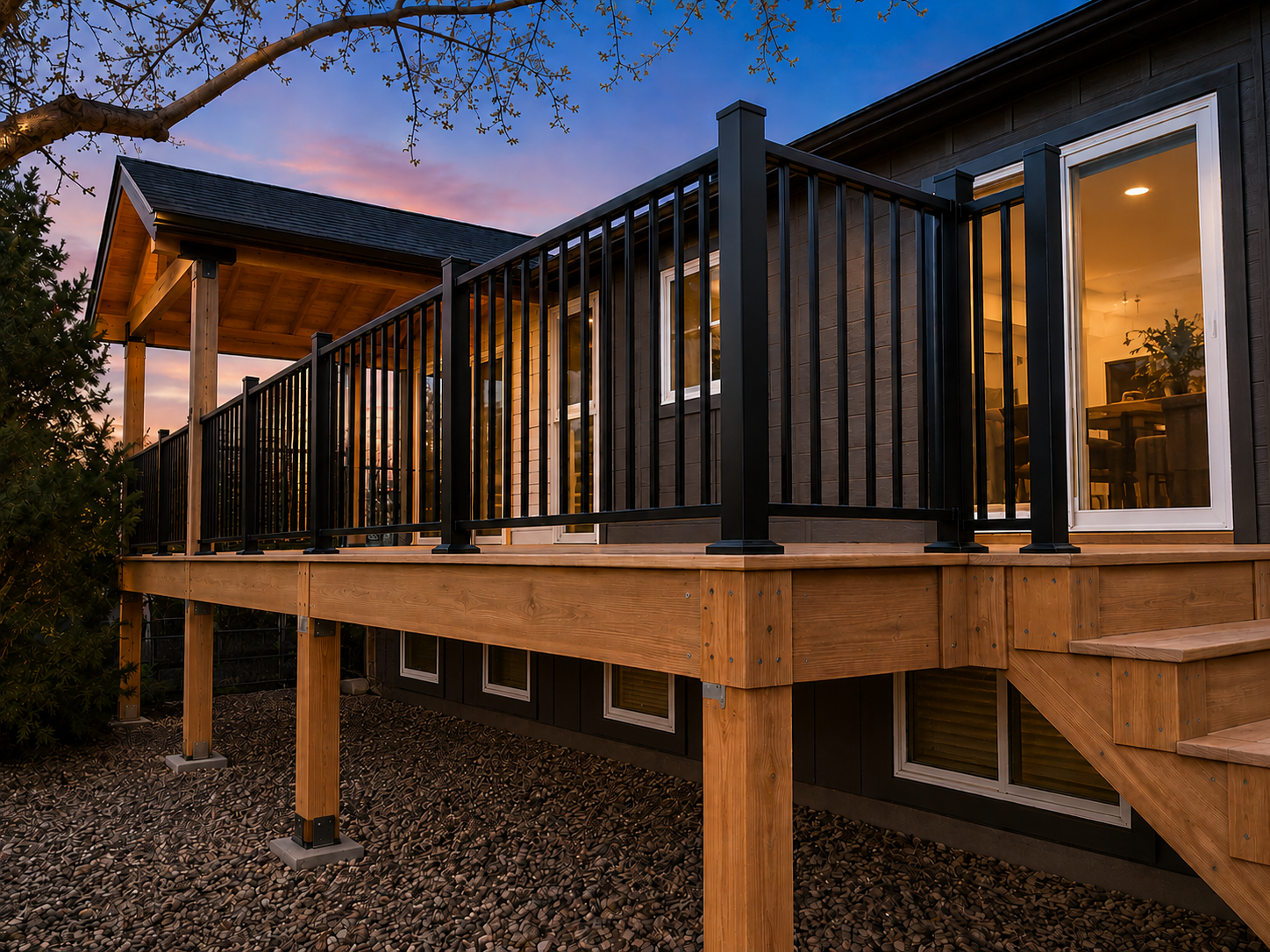
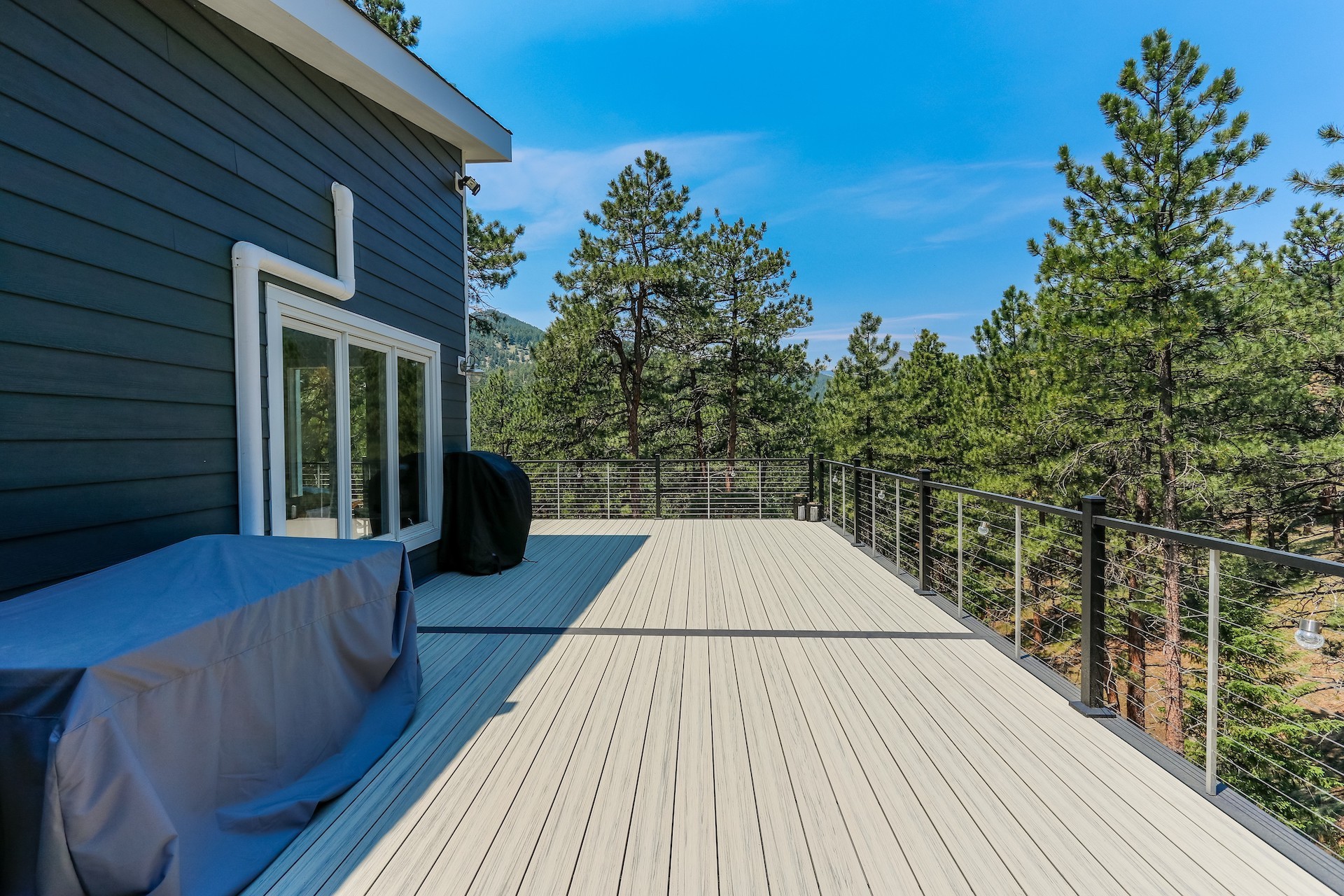
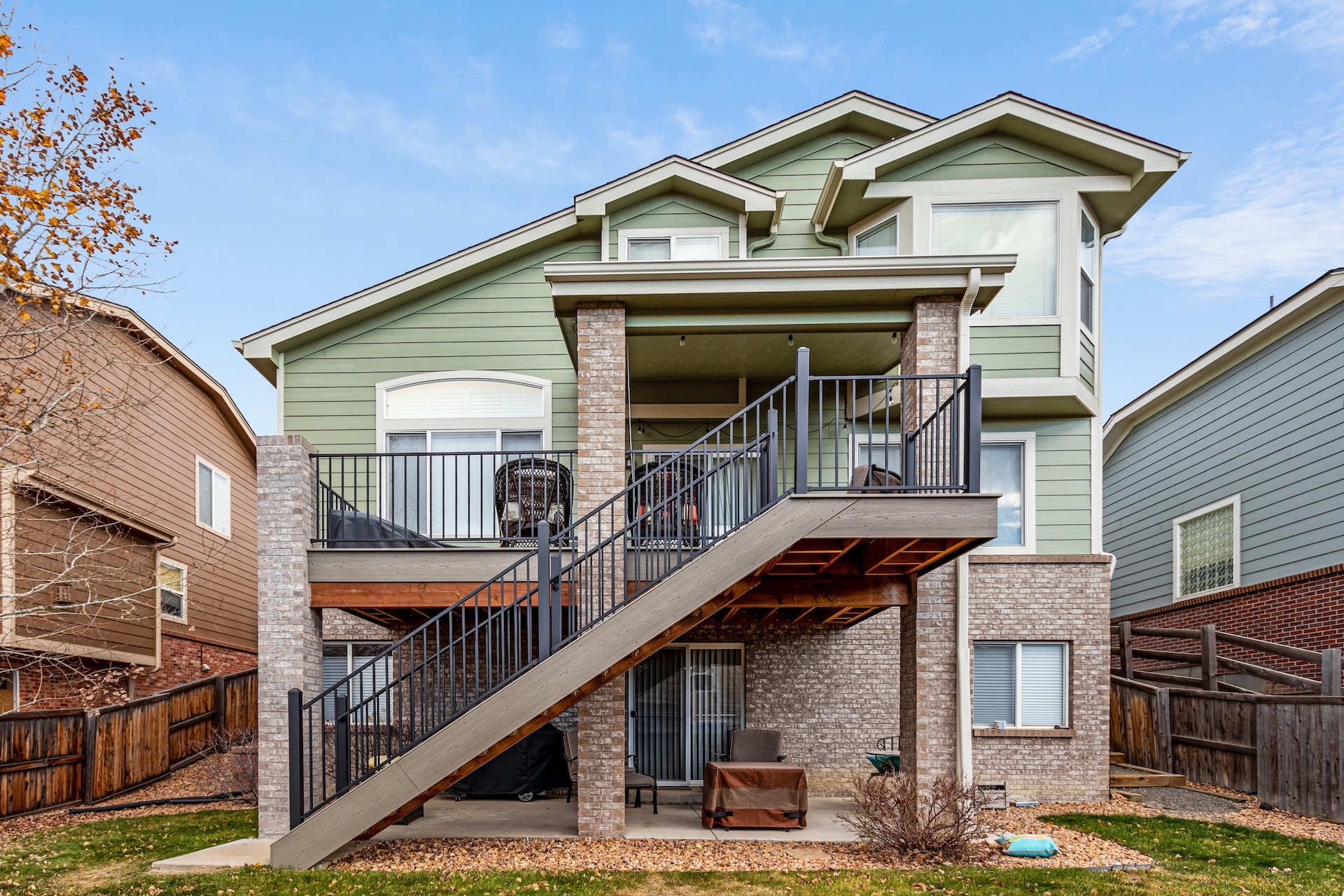
Northern Lights Exteriors designs and builds decks across Louisville, Colorado (ZIP 80027, Boulder County) and has since 2001 — Old Town, Coal Creek Ranch, Takoda, Steel Ranch, North End, Centennial Valley and the Enclave, plus Superior across McCaslin. We build in composite and PVC decking — Trex®, TimberTech® and Deckorators® — along with pergolas, patio covers and covered porches.
We do not build wood decks. That is a deliberate choice, not a capability gap. Colorado’s UV, freeze-thaw cycling and dry air are brutal on timber, and a wood deck here means sanding and re-staining more or less forever. Composite and PVC cost more up front and less over the life of the deck, and they do not feed a fire the way wood does. We are happy to compare them against wood honestly — we just will not install wood.
Three things we do that most Louisville deck quotes do not: we size the structure for real Front Range snow load, we set footings below frost depth, and we detail the deck-to-wall connection properly — which is both the most common source of water damage and, here, a fire detail.
- Licensed & Insured
- Fire Resistant Code-Compliant Installations
- Steel Frame / Fire-Resistant Options
- Trex® Specialists
- TimberTech® Specialists
- Deckorators®
- Louisville HOA & Permit Help
Your Price, Decided With You — Not a Surprise Quoted Price Later
The worst part of most deck projects is the gap. You spend an hour describing what you want, someone measures, everyone leaves — and days later a number lands that you either swallow or argue with. If it comes in high, you start over. We took the gap out.
① Watch the price move while you decide
On the first visit we walk your foundation, structure, decking and finish options together on software we built ourselves. Change the framing, change the boards, change the railing — the price updates in front of you, in real time. You are not waiting days to find out what your decisions cost.
② Build to your number, in the same sitting
Tell us what you want to spend and we work toward it while we are standing on the site with you, instead of mailing a proposal that misses by twenty percent and starting again. Every option is priced as you consider it, so the budget conversation happens with you rather than to you.
③ Find out what you can actually live without
When every change is priced the moment you make it, the trade-offs get obvious fast. Most people end up cutting one thing they were sure they wanted, and protecting one thing they had not realized mattered to them. That only happens when you can see it.
④ This is our own technology
Not a catalog and not an off-the-shelf calculator. We built it because deck pricing genuinely is complicated — footings, framing, spans, rail systems and finishes all move the number differently — and we would rather show you why than ask you to trust a lump sum. You leave the first appointment with the scope of work in hand.
⑤ And no, this is not a high-pressure close
Worth saying plainly, because real-time pricing on a first appointment is exactly what high-pressure home-improvement sales looks like — so the suspicion is fair. We are not doing that. Nobody is going to sit in your kitchen for ninety minutes waiting for a signature, and there is no discount that expires when we walk out the door. This is education: what the options are, what each one costs, and which ones are genuinely worth it on your build. You end up with a project moving at a price you understood from the start — and you decide on your own time.
Looking for More Than Decks?
See Louisville-area Deck Projects →
Visit our Louisville Exterior Remodeling hub for windows, roofing, siding, and commercial services.
Northern Lights Exteriors is a local Louisville deck builder designing and installing composite decks and custom outdoor living spaces built for Colorado’s hail, snow, high UV, and freeze–thaw cycles. If you’re searching for the best deck company near me for deck installation, Trex® or TimberTech® specialists, or a contractor who understands Class A / fire-resistant composite and steel framing options, you’re in the right place.
We handle the details that make decks last: proper footings and ledger attachment, water management, railing and stair code, HOA submissions, permits, and inspections—so your project moves faster and finishes clean.
See Recent Deck Projects In & Near Louisville
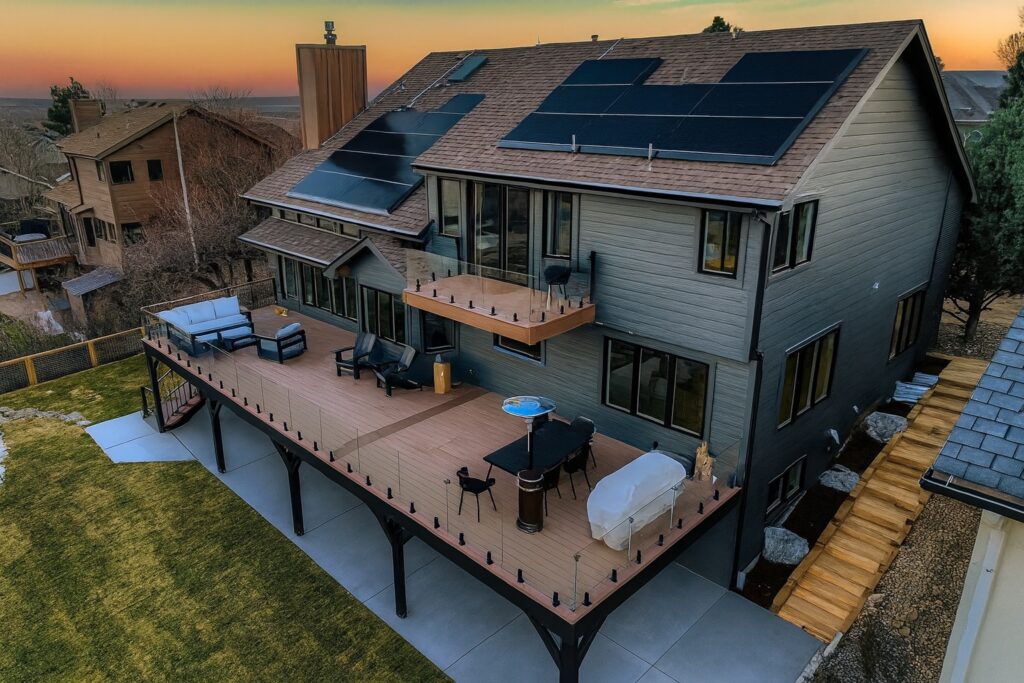
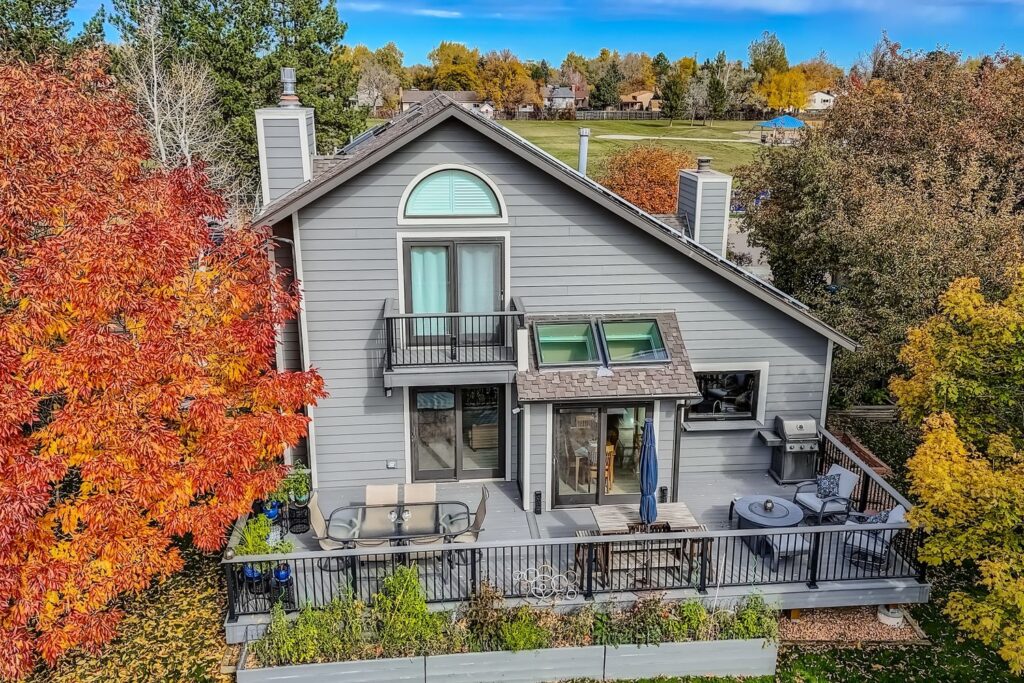
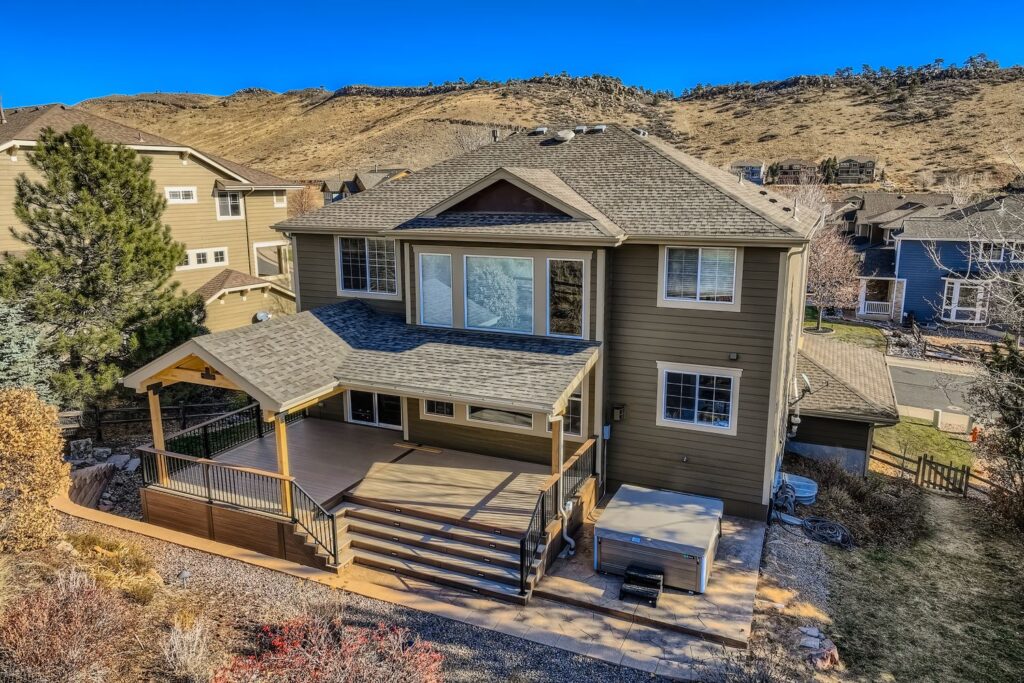

Why Louisville Homeowners Choose Us for Decks
- Permit & Inspection Pros: We prepare submittals, coordinate reviews, and schedule inspections to meet local code requirements.
- Fire-Resistant / Class A Options: Ask about Class A composite, ember-resistant detailing, and steel framing options for performance and longevity.
- Engineered Structures: Footings, beams, joists, connections, and lateral bracing specified for safety, height, and long-term movement control.
- Colorado-Tough Materials: Composite, PVC, and steel solutions that resist UV, hail, snow/ice, and freeze–thaw cycles.
Popular Deck Systems & Features in Louisville
- Composite decking (TimberTech®, Trex®, Deckorators®) with hidden fasteners
- Steel framing or pressure-treated framing; helical pile or concrete pier footings
- Modern aluminum, cable, or tempered-glass railings
- Built-in stairs, benches, planters, privacy screens
- Pergolas, shade structures, and integrated lighting
- Fire-smart detailing for ember resistance and under-deck protection where appropriate
Deck Build Cost in Louisville
Deck pricing varies by size, height, framing type (wood vs. steel), footing type, railing system, stairs, and custom features. We provide clear budgeting during design so your plan aligns with your investment.
Neighborhoods We Serve in Louisville
- Old Town Louisville
- Coal Creek Ranch
- Steel Ranch
- North End
- Harper Lake
- Centennial Heights
- Nearby Superior & Lafayette
Louisville Deck Builder FAQs
Why are you the best Louisville deck builder near me?
We’re a local design-build contractor that handles the details homeowners care about: clear planning, code compliance, HOA/permits, clean job sites, and durable materials built for Colorado weather. You get a deck that looks great and performs long-term.
Do you install Trex or TimberTech composite decks?
Yes. We design and install Trex® and TimberTech® composite decks, plus other premium systems. We’ll recommend the right line based on sun exposure, aesthetics, budget, and performance.
Can you do Class A / fire-resistant composite or steel-framed decks?
Yes. Ask about Class A composite options, ember-resistant detailing, and steel framing for added durability and performance.
Do you handle permits and inspections in Louisville?
Yes. We prepare drawings and documentation, submit for permits, coordinate any plan-review comments, and schedule inspections.
How long does a deck installation take?
Most single-family decks take about 1–3 weeks depending on size, materials, and inspections. Your proposal includes a clear schedule.
Start Your Louisville Deck Project
From concept to final inspection, our team streamlines design, permitting, and construction so you can enjoy your outdoor space with confidence.
Snow Load, Frost Depth and Why Louisville Decks Fail
Most deck failures in Boulder County are structural or drainage problems, not decking problems, and they trace to three shortcuts.
- Snow load. A deck here has to carry sustained snow, and a drifting load against the house is heavier than the open-field figure. That drives joist sizing, spacing and beam spans. A deck framed to the minimum for a mild climate is over-spanned here from the day it is signed off.
- Frost depth. Footings must bear below the frost line. Shallow footings heave with the freeze-thaw cycle, and a heaving deck racks its own frame, pops fasteners and pulls at the ledger. This is the single most common defect we are called out to look at, and it is not economically repairable — it is a rebuild.
- The ledger. A deck bolted to the rim joist without proper flashing is a water leak into the wall on a delay. Correct ledger flashing, correct fasteners at the correct spacing, and where the wall detail does not permit a sound ledger, a free-standing frame instead. We will tell you if yours needs that.
Every deck we build is permitted through the City of Louisville and inspected. If you are in an HOA — and much of Louisville is — we prepare and submit the architectural review package before a board is ordered, not after.
Deck Detailing in Louisville After the Marshall Fire
On 30 December 2021 the Marshall Fire burned through Louisville and Superior, destroying roughly 550 homes in Louisville alone and more than a thousand structures across the area. It was not a mountain wildfire. It was a grassland fire pushed by downslope winds gusting past 100 mph, and it moved through ordinary subdivisions on ordinary lots. That distinction matters when you are choosing exterior materials here, because the threat profile is embers and radiant heat at close range on the plains — not tree crowns.
Decks are worth talking about specifically, because in a wind-driven ember event the deck is one of the most common ways a house is lost. Embers do not have to land on the deck surface. They collect in the space underneath, in the gap between deck and wall, and in whatever has accumulated between the boards. Then they burn against the wall of the house from a place nobody is watching. Here is what actually helps, stated carefully:
- The gap between the deck and the wall. The deck-to-wall junction is where embers gather. Closing and flashing it properly is the highest-value detail on the whole structure, and it is the same detail that stops water damage.
- Under-deck screening. Enclosing the underside, or screening it with 1/8-inch stainless mesh, keeps embers out of the cavity. Standard quarter-inch mesh does not do this job.
- Keeping it clear. Unglamorous and genuinely effective — nothing stored underneath, no leaf litter in the board gaps, and no combustible fence running straight into the deck or the wall. A wood fence is a fuse leading to your house.
- Framing. Steel or aluminum framing removes the structural fuel entirely and is worth pricing. We want to be straight with you here: wood framing is often still perfectly legal, and we do not use fear to sell an upgrade. We confirm current requirements against your specific address with the City of Louisville before we specify, and then you decide with real information.
- Surface. Composite and PVC boards vary in fire performance and several carry flame-spread ratings suitable for exposed applications. We will show you the actual published rating for the board you are considering rather than a general claim.
Decking Systems We Build in Louisville
| System | Strengths | Best for |
|---|---|---|
| Trex® | The most recognized composite; wide color range; strong warranty | Most Louisville projects — the reliable default |
| TimberTech® | Capped polymer (PVC) lines resist heat and fading best; convincing wood grain | Full-sun south and west exposures; owners who want the most realistic look |
| Deckorators® | Mineral-based composite — lighter, high slip resistance, very stable | Larger spans, pool and hot-tub surrounds, wet-use areas |
Compare them on our Trex vs TimberTech vs Deckorators page, or see how to compare deck builders in Colorado.
Pergolas, Patio Covers and Covered Porches
A large share of Louisville inquiries are not really about a deck — they are about shade and usable outdoor time. Front Range sun at this altitude makes an unshaded west-facing deck unusable for most of a summer afternoon, which is exactly when people want to be on it.
- Pergolas — open or louvered, freestanding or attached. Louvered systems let you adjust through the day and close down in rain.
- Patio covers — solid roofs giving genuine rain and hail protection, and shading the adjacent room enough to cut cooling load.
- Covered porches — a roof structure integrated into the house rather than added on, which is a framing and roofing job as much as a deck one. Being a general contractor is why we can do that as one project.
All of it is engineered for snow load and permitted, same as a deck — a patio cover carries snow just as a roof does. See our covered porch and patio cover page.
What a Deck Actually Costs in Louisville
Most deck pages will not put a number on this. Ours will, with the caveat that a fixed quote after a site visit is the only number that means anything.
| Project | Typical Louisville range | What moves it |
|---|---|---|
| Ground-level composite deck off a walk-out | ~$45–$60 / sq ft | Simplest framing, minimal railing, shallow structure |
| Raised composite deck with stairs and railing | ~$55–$75 / sq ft | Taller posts, deeper footings, more railing, guard requirements |
| Elevated deck, premium boards and railing | ~$70–$85+ / sq ft | PVC decking, cable or aluminum railing, heavier snow-load frame |
| Pergola (attached or freestanding) | Quoted separately | Open vs louvered; span; whether it carries snow |
| Solid patio cover / covered porch | Quoted separately | Roof structure, tie-in to the house, matching the existing roof |
Three cost drivers people are usually surprised by. Height above grade matters more than area — a deck two feet up and the same deck eight feet up are not the same structure. Railing is frequently 20–30% of the total, so it is where a budget is genuinely flexed. And footings are invisible in the finished job but are where a cheap quote gets cheap; if a bid is well under everyone else’s, look at the footing schedule and the joist spacing before you celebrate.
How to Read Three Louisville Deck Quotes
If you are collecting bids, these are the line items that actually differ, and they are rarely presented in a way that lets you compare like for like:
- Footing depth and diameter. Ask for the number. “Code compliant” is not an answer. Below frost depth is the whole point.
- Joist size and spacing. 16″ centers versus 12″ changes both the feel underfoot and what the deck carries in snow. Some composite boards require 12″ for diagonal patterns — if a quote uses 16″ with a diagonal layout, the board warranty may not stand.
- Ledger or free-standing. And if ledger, what flashing is specified.
- Fastening. Hidden fasteners versus face screws changes appearance and cost, and hidden systems are not all equal.
- Who pulls the permit and who prepares the HOA architectural submittal. If a quote is silent on both, that work has not been priced — it has been left with you.
- What happens if the ground says no. Rock or unexpected fill at footing depth is not unusual here. Ask what that costs before it happens, not after.
We put all of that in writing up front, including the honest “if we find X, it adds Y” items, because the alternative is a change order conversation halfway through.
Deck Repair, Resurfacing and the Honest Rebuild Conversation
Not every deck needs replacing, and not every deck is worth saving. How we assess it:
Worth resurfacing: the frame is sound, footings are below frost depth and not heaving, the ledger is properly flashed, and it is the boards and railing that have aged out. Here you keep the structure and change the surface — a genuinely good-value job.
Worth rebuilding: footings are shallow or heaving, the frame is under-sized for snow load, or the ledger was never flashed and there is damage in the wall behind it. Putting expensive composite boards on a failing frame is money thrown away, and we will say so rather than take the easier sale.
We will give you that assessment straight, including when the answer is that your deck has several good years left and you should call us later.
Where We Work in Louisville, Colorado
Louisville, Colorado — ZIP 80027, in Boulder County, between Superior and Lafayette off US 36. (If you landed here looking for Louisville, Kentucky, this is not that Louisville — we work only in Colorado’s Front Range.) We cover the whole city for every trade we offer, from the small lots and older cottages of Old Town out to the newer subdivisions north and east.
- 80027
- Old Town Louisville
- Coal Creek Ranch
- Takoda
- Steel Ranch
- North End
- Centennial Valley
- Enclave
We also work next door in Broomfield, Lafayette, Boulder and Erie, plus Superior immediately across McCaslin.
Louisville FAQs
How much does a deck cost in Louisville, CO?
Composite decks in Louisville generally run about $45–$85 per square foot installed, depending on the decking line, height above grade, railing choice, and how much structure the design needs. A ground-level deck off a walk-out is at the lower end; an elevated deck with stairs, a heavier snow-load frame and premium railing is at the upper end. Pergolas and patio covers are quoted separately. We price fixed after a site visit.
Do you build wood decks in Louisville?
No, and it is a deliberate choice. Colorado’s UV, freeze-thaw cycling and dry air are hard on timber, so a wood deck here means sanding and re-staining more or less forever, and it adds combustible material against the house. We build in composite and PVC — Trex, TimberTech and Deckorators — which cost more up front and less across the life of the deck. We are happy to compare the two honestly; we just will not install wood.
Do I need a permit for a deck in Louisville, CO?
Yes. Decks are permitted and inspected through the City of Louisville, and the structural design has to account for snow load with footings bearing below frost depth. If you are in an HOA — and much of Louisville is — there is usually an architectural review as well. We prepare and submit both, and we do the HOA package before ordering material rather than after.
How should a deck be built to reduce fire risk in Louisville?
The highest-value details are the deck-to-wall junction, which is where embers collect and which is the same detail that prevents water damage; screening or enclosing the underside with 1/8-inch stainless mesh rather than standard quarter-inch; and simply keeping the underside clear of storage and the board gaps clear of leaf litter. Steel or aluminum framing removes the structural fuel and is worth pricing. To be straight with you, wood framing is often still perfectly legal — we confirm the current requirement against your specific address with the City of Louisville before specifying, rather than using the fire to sell an upgrade.
Can you replace just the boards and keep my existing deck frame?
Sometimes, and it is good value when it works. It needs a sound frame, footings below frost depth that are not heaving, and a properly flashed ledger. If the footings are shallow, the frame is under-sized for snow load, or the ledger was never flashed and there is damage in the wall behind it, resurfacing is money thrown away and we will tell you so. We give you that assessment straight.
Do you build pergolas and patio covers as well as decks?
Yes — pergolas including louvered systems, solid patio covers, and covered porches integrated into the house structure. At this altitude an unshaded west-facing deck is unusable through a summer afternoon, so shade is often what the project is really about. All of it is engineered for snow load and permitted, because a patio cover carries snow the same way a roof does.